











Why Costa Rica for Your Honeymoon
Few destinations so close to home offer so much variety. In a small country roughly the size of West Virginia, you can move from cloud forest to volcano to tropical beach in a matter of hours. Costa Rica protects a large share of its land in national parks and reserves, which pays off in extraordinary wildlife: monkeys, sloths, toucans, scarlet macaws, sea turtles and countless frogs and butterflies.
It is also a country that makes travelers feel at ease. Tourism is well developed, English is widely spoken in the travel industry and US dollars are commonly accepted. The lodges and resorts are some of the best in Latin America. And unlike many tropical honeymoons, Costa Rica gives you shared adventures, like zip-lining, rafting and waterfall hikes, that become the stories you tell for years.
Best Time to Visit
Costa Rica has two main seasons. The dry season, which Costa Ricans call summer, runs roughly from December through April. This is peak travel time, with the most sunshine, especially on the Pacific coast in Guanacaste. Expect higher rates and book well ahead for Christmas, New Year's and Easter.
The green season runs from May through November. Mornings are often bright, with showers arriving in the afternoon. The landscape turns intensely lush. Prices drop, crowds thin and the rainforest is at its most alive. September and October are generally the wettest months on the Pacific side.
The sweet spots for honeymooners are often late November, early December and May, when you can enjoy good weather with more availability. Remember that rainforest regions such as Arenal see rain in every month.
Top Honeymoon Destinations
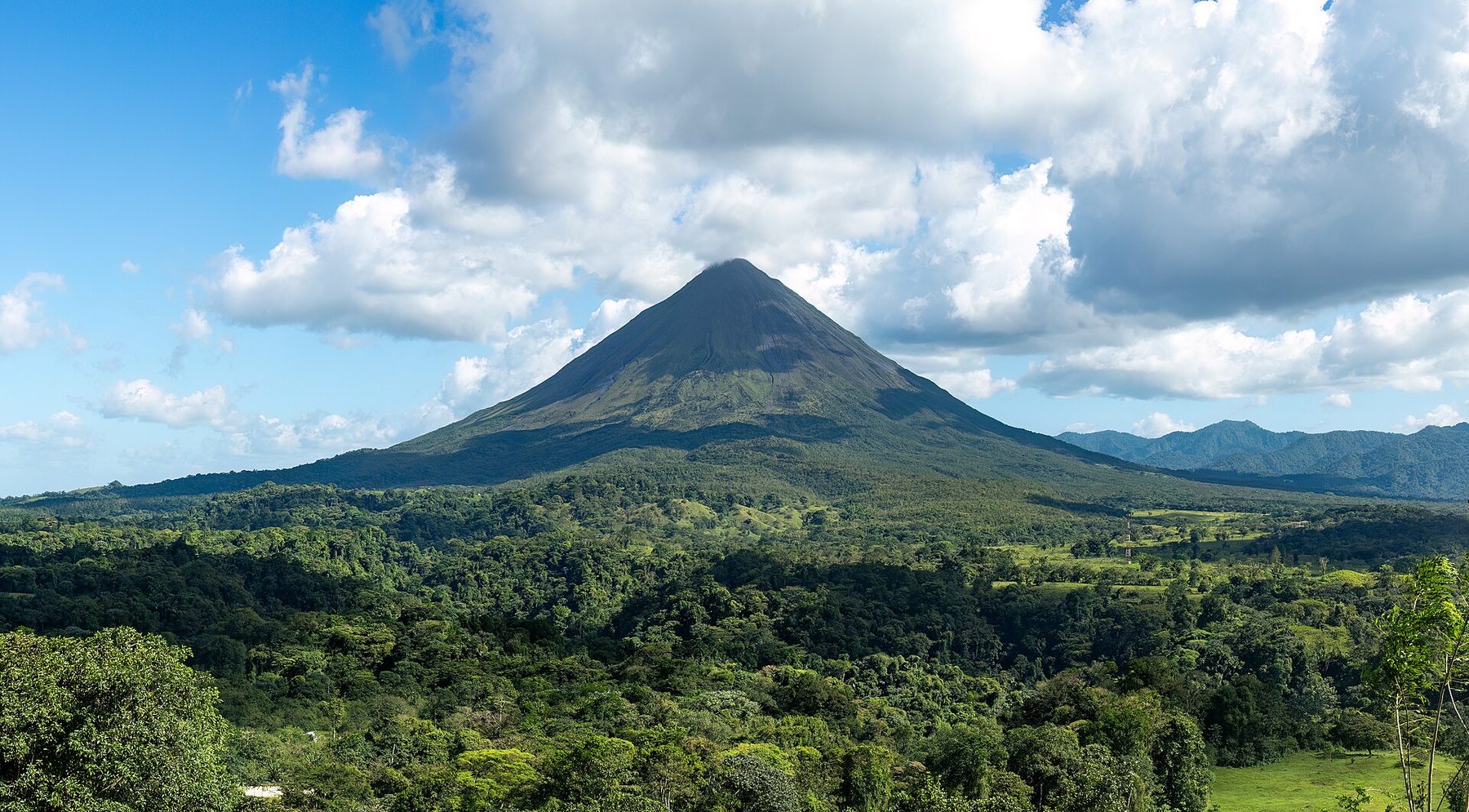
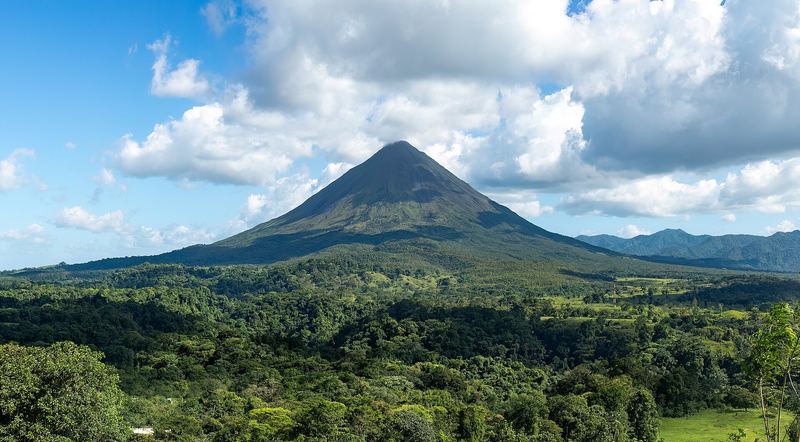
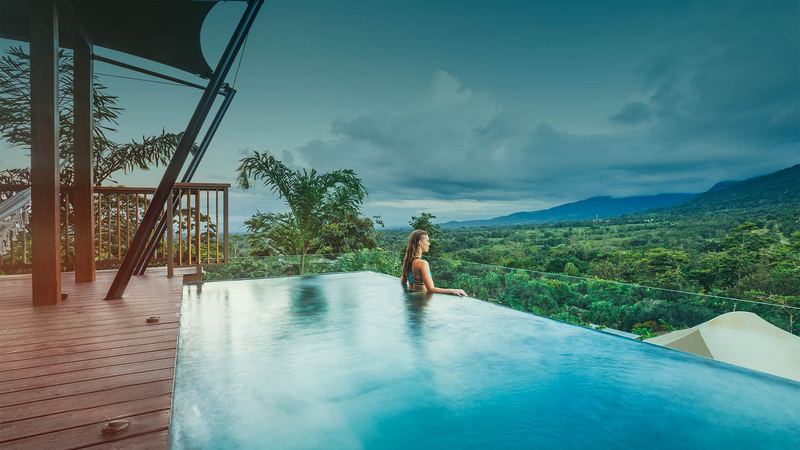
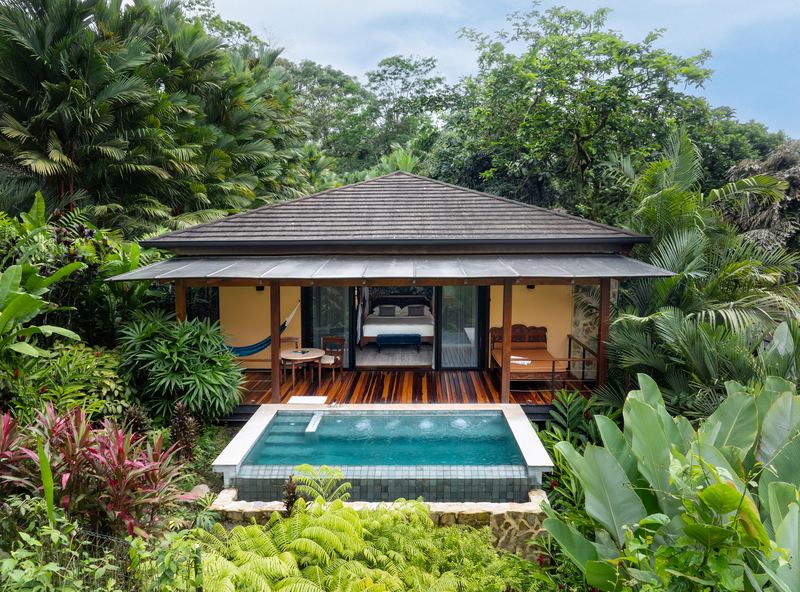
Arenal is the country's adventure capital and its most romantic inland escape. The cone-shaped Arenal Volcano rises above rainforest, waterfalls and naturally heated hot springs. Several of the best lodges give each room a private warm pool. Two Nayara properties top our shortlist. Nayara Tented Camp has stilted safari-style tents and an on-site sloth sanctuary, while the kid-free Nayara Springs has villas hidden in gardens and in-villa breakfast. Days here are for zip-lines, hanging bridges, La Fortuna Waterfall and night walks; evenings are for soaking.
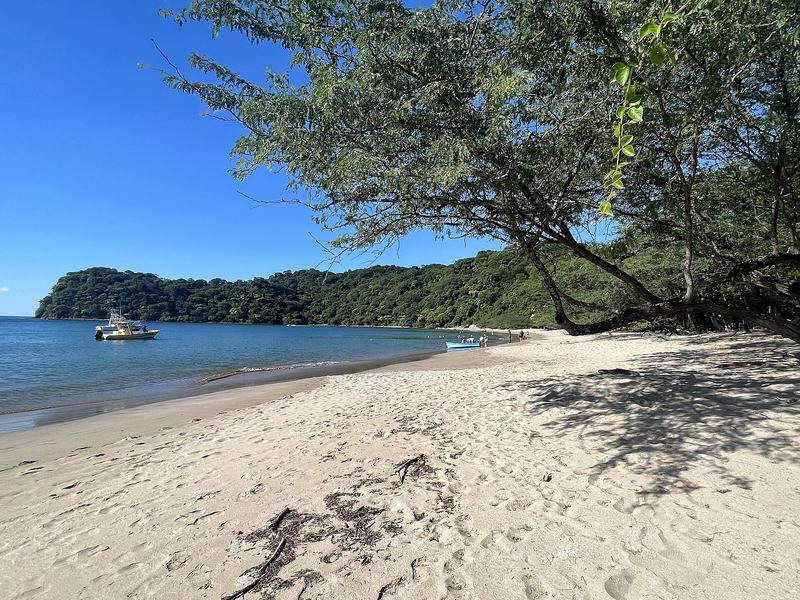
Guanacaste, in the dry northwest, is where you go for sunshine and sand. The Papagayo Peninsula is its luxury enclave, home to Four Seasons Resort Costa Rica at Peninsula Papagayo, a Forbes Five-Star resort set between two beaches with a kid-free pool and plunge-pool suites. Sunset catamarans, surf lessons in Tamarindo, horseback rides and the volcanic mud pots of Rincón de la Vieja fill the days. The two regions are about three hours apart by road, making them natural partners on one itinerary.
How Long to Stay & Sample Itinerary
Plan on at least seven nights to enjoy two regions without feeling rushed; ten nights lets you add a third stop or simply slow down. A classic honeymoon flows from adventure to relaxation:
- Day 1: Fly into San José (SJO) and transfer to Arenal, about three hours.
- Days 2 to 4: Arenal. Hike to La Fortuna Waterfall, walk the hanging bridges, zip-line or go canyoning, take a night wildlife walk and spend afternoons in your hot-spring pool. Book a couples' mud treatment.
- Day 5: Transfer to Guanacaste, about three hours.
- Days 6 to 8: Guanacaste. Beach and pool days, a sunset catamaran, a surf lesson or horseback ride and a long spa afternoon.
- Day 9: Fly home from Liberia (LIR).
Flying into San José and out of Liberia, or the reverse, avoids backtracking.
Budget & Costs
Costa Rica is not a bargain destination, especially at the luxury level, but it offers excellent value for what you get. All figures below are approximate and vary widely by season.
- Luxury lodges and resorts: roughly $700 to well over $1,500 per night in high season, with the top beach resorts and suites higher still.
- Upscale boutique hotels: roughly $300 to $700 per night.
- Private transfers between regions: often a few hundred dollars per trip; shared shuttles cost much less.
- Guided tours such as zip-lining or rafting: commonly about $75 to $150 per person.
- Dinner for two at a nice restaurant: roughly $80 to $200 with drinks.
Note that restaurant bills typically include a service charge and sales tax. Many luxury rates exclude meals. Green-season travel can bring meaningful savings.
Practical Tips for US Travelers
There are nonstop flights to both San José (SJO) and Liberia (LIR) from many US hubs, typically about three to six hours depending on your departure city.
The local currency is the colón, but US dollars are widely accepted in tourist areas. Credit cards work at most hotels and restaurants. Carry some small bills for tips and roadside stops. Electrical outlets generally match US plugs.
If you drive, rent a 4x4 or high-clearance vehicle, use a navigation app and avoid driving after dark on mountain roads. Many couples prefer private transfers. Pack layers, a light rain jacket, quick-dry clothes, good walking sandals, insect repellent and reef-safe sunscreen. Travel insurance is a sensible addition, especially for adventure activities.
Costa Rica is generally relaxed for visitors, but petty theft is common: never leave bags in a parked car, even for a quick stop at a viewpoint. Many Pacific beaches have strong rip currents and few lifeguards, so swim where your hotel says it's safe. Mosquitoes carry dengue in lowland areas; if you're pregnant or hoping to be soon, check CDC travel health notices for Costa Rica.
Culture & Etiquette
Costa Ricans call themselves Ticos and Ticas. The national motto, pura vida, captures the culture well. It means pure life and is used as a greeting, a goodbye, a thank-you and a general expression of contentment. Use it freely; it will earn smiles.
Costa Ricans tend to be polite, warm and non-confrontational. A friendly buenos días before asking a question goes a long way. A few words of Spanish are always appreciated. Pace is relaxed, so allow extra time and keep your patience in good humor.
Respect for nature runs deep. Do not feed or touch wildlife, stay on marked trails and choose operators with good environmental practices. Tipping is appreciated for guides, drivers and spa staff, though restaurant bills usually include a service charge already.
Quick tips
- Combine Arenal (volcano and hot springs) with Guanacaste (beaches); they're about 3 hours apart by car.
- The 'green season' (May–November) brings afternoon showers but lusher forests and lower prices.
- Rent a 4x4 if you plan to drive between regions.