Europe

Honeymoon in Switzerland

Glaciers before breakfast, a lakeside dinner at sunset and trains that make it all easy

10 destinations11 staysUS advisory level 1
Original illustration
The short answer

Switzerland suits couples who want big mountain scenery without hard effort, thanks to trains that run to the minute. Come late June to mid-September for hiking and lakes, mid-December to early April for skiing, or September for fewer crowds. Pair one mountain base, such as Zermatt or the Jungfrau Region, with a lake town. It is expensive: comfortable mountain hotels run roughly CHF 250 to 450 a night. Don't miss a morning at Gornergrat facing the Matterhorn.

Best for
  • Couples who love scenic train rides
  • Hikers and skiers who like comfort
  • Couples who want effortless logistics
Maybe skip it if
  • You are on a tight budget
  • You want hot beaches and warm sea

Switzerland is about twice the size of New Jersey, yet a couple can wake up below the Matterhorn, eat lunch beside a lake lined with palm trees and finish the day in a vineyard village where most of the wine never leaves the country. The trains make that possible. They run to the minute, they climb slopes other countries would tunnel under and they drop you in car-free villages where the loudest sound after dark is a cowbell in the next meadow.

This is not a cheap honeymoon. A plain hotel room in Zermatt can cost what a good one costs in Lisbon. A mountain lunch for two can rival a dinner bill back home. What the money buys is a country that works. Mountain lifts publish their opening dates months ahead, luggage can travel separately by rail and the water in the village fountains is safe to drink.

Couples who like to hike, ski or ride scenic trains will be very happy here. So will couples who mostly want a balcony, a blanket and a view of a glacier. Couples set on hot beaches should pair a week in the Alps with the Italian or French coast.

Best time for Switzerland

Peak months: January, February, March, May, June, July, August, September, December

BestGood / shoulderLow season (rain, heat, storms or closures)
Flights from the US
Zurich has nonstops from New York JFK, Newark, Boston, Washington Dulles, Philadelphia, Atlanta, Chicago O'Hare, Miami, Los Angeles and San Francisco, many on SWISS; Geneva adds nonstops from JFK, Newark and Washington Dulles. Expect roughly 7.5 to 8.5 hours overnight from the East Coast and about 11 from California.
Currency
Swiss franc (CHF)
Language
German, French and Italian by region (plus Romansh in Graubünden); English is widely spoken in hotels and on trains
Entry
Entry and visa rules depend on your citizenship and can change at short notice. Check the official government website for Switzerland and your own government's travel advice before you book.
US advisory
Level 1: Exercise normal precautions (US State Department). Check the latest
Where to stay

Every Switzerland stay

Style
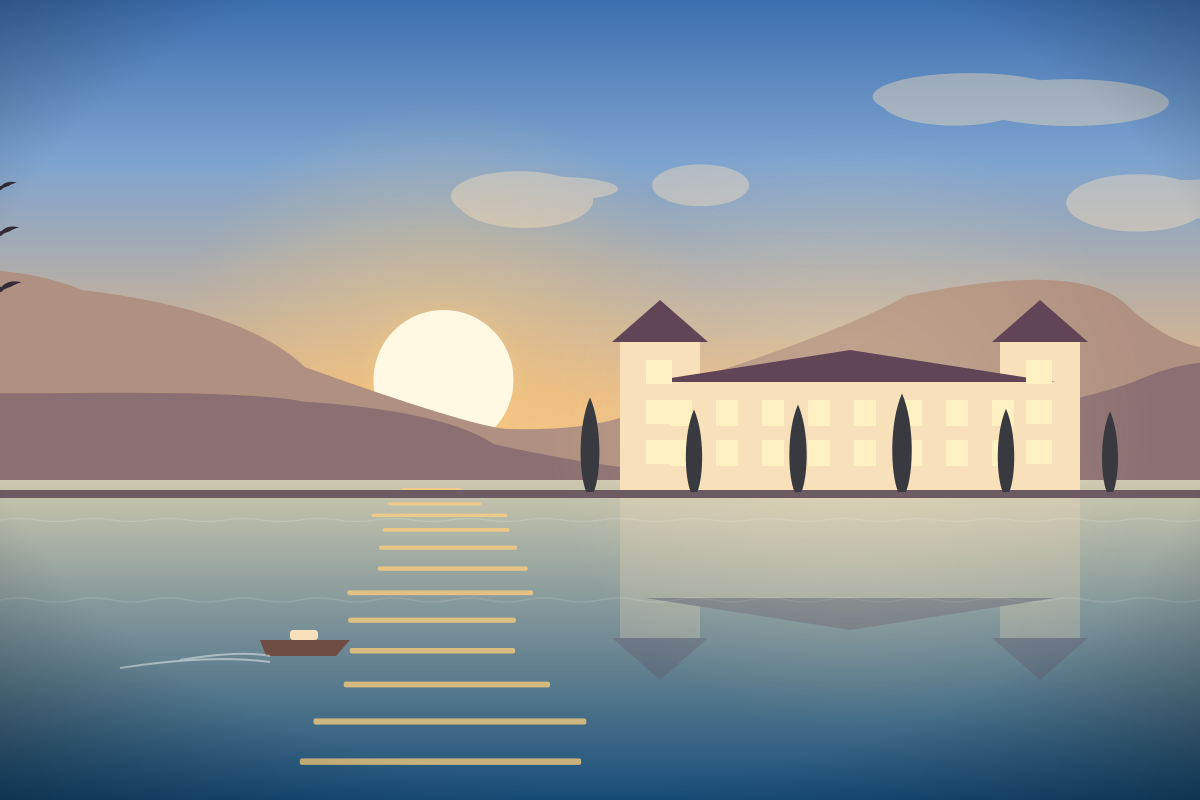
Illustrated impression of Badrutt's Palace Hotel
Historic Grand Hotel
Engadine and St. Moritz, Switzerland

Badrutt's Palace Hotel

A turreted 1896 grand hotel above the lake, still run in the Badrutt spirit

Historic Grand Hotels
Illustrated impression of The Alpina Gstaad
Historic Grand Hotel
Gstaad, Switzerland

The Alpina Gstaad

Old timber, new chalet luxury and a heated pool that stays open in the snow

Historic Grand Hotels
Illustrated impression of Bergwelt Grindelwald
Spa & Wellness Retreat
Jungfrau Region, Switzerland

Bergwelt Grindelwald

A modern alpine hotel with the Eiger filling the window

Spa & Wellness Retreats
Illustrated impression of Grandhotel Giessbach
Historic Grand Hotel
Jungfrau Region, Switzerland

Grandhotel Giessbach

A Belle Époque hotel beside a waterfall, reached by boat and an 1879 funicular

Historic Grand Hotels
Illustrated impression of Victoria-Jungfrau Grand Hotel & Spa
Historic Grand Hotel
Jungfrau Region, Switzerland

Victoria-Jungfrau Grand Hotel & Spa

Interlaken's grande dame, with the Jungfrau framed at the end of the lawn

Historic Grand Hotels
Illustrated impression of Bürgenstock Hotel & Alpine Spa
Spa & Wellness Retreat
Lucerne, Switzerland

Bürgenstock Hotel & Alpine Spa

A clifftop resort above Lake Lucerne, reached by catamaran and funicular

Spa & Wellness Retreats
Illustrated impression of Grand Hotel Villa Castagnola
Historic Grand Hotel
Lugano, Switzerland

Grand Hotel Villa Castagnola

An 1880 villa in a subtropical park, with its own lido on Lake Lugano

Historic Grand Hotels
Illustrated impression of Hôtel des Trois Couronnes
Historic Grand Hotel
Montreux and Lavaux, Switzerland

Hôtel des Trois Couronnes

An 1842 palace on the water in Vevey, with the Alps across the lake

Historic Grand Hotels
Illustrated impression of Mont Cervin Palace
Historic Grand Hotel
Zermatt, Switzerland

Mont Cervin Palace

Zermatt's grand hotel since 1852, with a red horse carriage at the door

Historic Grand Hotels
Illustrated impression of Riffelalp Resort 2222m
Spa & Wellness Retreat
Zermatt, Switzerland

Riffelalp Resort 2222m

A mountain hotel at 7,290 feet, with the Matterhorn and the stars all to yourselves

Spa & Wellness Retreats
Illustrated impression of The Omnia
Cliffside Suite
Zermatt, Switzerland

The Omnia

Thirty rooms on a rock ledge above Zermatt, reached by a lift through the cliff

Cliffside Suites

Why Switzerland for a Honeymoon

The short answer is scenery you can reach without effort. In most mountain countries the best views require a long drive or a hard climb. Here a cogwheel railway built in the 1890s will carry you to a glacier in 40 minutes while you sit in a heated car with a coffee.

The country also rewards couples who like variety. Four language regions mean the food and the mood change every few hours by train. German-speaking Lucerne feels orderly and old-world. French-speaking Montreux feels like a lakeside resort town from a 1920s poster. Italian-speaking Lugano has piazzas, risotto and Merlot.

Then there is the practical side, which matters more than people admit on a honeymoon. Trains connect with boats and buses on the same timetable. Hotels in mountain villages often send an electric cart or a porter to the station. Crime against visitors is low, mostly limited to pickpocketing at big stations. You spend your energy on each other instead of on logistics.

Best Time to Visit

Switzerland has two high seasons and two awkward ones. Summer, from late June through mid-September, is the time for hiking, lake swimming and the high passes. Wildflowers peak in the alpine meadows in late June and July. August is busiest, so book Zermatt and the Jungfrau area early.

Winter, from mid-December to early April, brings skiing, sleigh rides, frozen-lake events in St. Moritz and Christmas markets in Montreux, Lucerne and Zurich. February is peak ski season, with European school holidays filling resorts.

The shoulder months need care. May and November are quiet and cheaper, but many mountain lifts and hotels in ski villages close for a few weeks of maintenance. September and early October are the sweet spot for many couples: settled weather, harvest in the Lavaux vineyards, golden larches in the Engadine and fewer crowds once European summer holidays end. The lakeside south, around Lugano and Locarno, stays pleasant from April to late October.

Where to Go

Most honeymoons combine one high-mountain base with one lake base. Our destination guides cover six that work well together.

  • Zermatt: a car-free village under the Matterhorn, with year-round glacier skiing and some of the best mountain dining in the Alps.
  • Jungfrau Region: Interlaken, Grindelwald, Wengen, Mürren and the Lauterbrunnen Valley, with waterfalls, cliff-top villages and the railway to the Jungfraujoch.
  • Lucerne: a medieval lake town with paddle steamers, covered wooden bridges and easy day trips up Pilatus and Rigi.
  • Engadine and St. Moritz: high, sunny valleys in the southeast with glamorous hotels, frozen-lake polo and quiet Sils Maria.
  • Lugano: the Italian-speaking south, with palm-lined promenades, lakeside grottos and the Verzasca Valley nearby.
  • Montreux and Lavaux: Lake Geneva's riviera, terraced vineyards, Chillon Castle and wine bars in tiny stone villages.

With 10 days, two or three of these is plenty. Moving every second night is the most common mistake.

Sample 10-Day Itinerary

This route works from June to September and uses trains the whole way.

  • Days 1 to 3: Fly into Zurich and take the train straight to Lucerne, about an hour away. Walk the old town, ride a paddle steamer across the lake and spend a day on Pilatus or Rigi.
  • Days 4 to 6: Ride the Luzern-Interlaken Express to the Jungfrau Region. Stay in Wengen or Mürren for the car-free quiet. Give one clear day to the Jungfraujoch or the Schilthorn and another to hiking above Grindelwald.
  • Days 7 to 8: Take the GoldenPass Express from Interlaken to Montreux. Walk the Lavaux vineyard trail, taste Chasselas in a cellar and tour Chillon Castle.
  • Days 9 to 10: Continue to Zermatt through the Rhône Valley. Spend a morning at Gornergrat for Matterhorn views, then return to Zurich or Geneva for your flight.

In winter, swap Montreux for St. Moritz and connect it to Zermatt on the Glacier Express, a ride of about eight hours.

Budget and Costs

Switzerland is among the most expensive countries in Europe, so plan with approximate figures and a cushion. A comfortable three-star or simple four-star double in a mountain village often runs roughly CHF 250 to 450 a night in high season. Well-known lakeside palaces and ski-resort five-stars commonly start around CHF 700 to 1,000 and climb fast at Christmas and in February.

Food is the other big line. A sit-down dinner for two with wine typically lands around CHF 120 to 200 at a normal restaurant. Supermarket picnics from Coop or Migros save real money and are a Swiss habit anyway.

Transport costs depend on how you buy. Mountain excursions are priced individually and add up quickly, with the Jungfraujoch the costliest in the country. A Swiss Travel Pass covers trains, buses, lake boats and some summits, with discounts on most others. Couples staying put in two or three bases often do better with the Half Fare Card. Prices vary each year, so check SBB and the mountain railways before you commit.

Getting There and Around

Zurich is the main gateway, with nonstops from about ten US airports. Geneva is closer to Montreux and Zermatt and has a few nonstops from the Northeast. Both airports have train stations under the terminal, so you can step off a red-eye and be on a lake or in the mountains within a few hours. Basel and Milan Malpensa are useful alternatives, especially Milan for Lugano.

Inside the country, the train is the answer. Swiss Federal Railways (SBB) runs a clockface timetable where connections are designed to meet each other. The SBB app shows platforms, delays and real-time seat occupancy. Seat reservations are only needed on the panoramic trains such as the Glacier Express, Bernina Express and GoldenPass Express. Those sell out in summer.

Renting a car makes sense only for remote valleys. Zermatt, Wengen and Mürren ban private cars entirely. Drivers on Swiss motorways need a vignette, which rental cars include.

Rail Passes and Mountain Tickets

The ticket question confuses almost every first-time visitor, so it deserves its own minute of planning.

The Swiss Travel Pass gives unlimited travel on trains, buses and lake boats for a set number of consecutive days. It also covers entry to hundreds of museums and includes some mountains outright, such as Rigi and Stoos. On most other summits, including Pilatus, Schilthorn and the Jungfraujoch, it brings a discount rather than a free ride.

The Half Fare Card does what it says for a month: half price on almost every train, bus, boat and most mountain lifts. Couples who spend several days in one base and ride lots of cable cars often come out ahead with it.

Regional passes cover lifts in one area, such as the Jungfrau Travel Pass or the Peak Pass in Zermatt. Before you buy, add up your planned trips on the SBB site. Panoramic trains need a separate seat reservation whatever pass you hold.

Culture and Etiquette

Swiss manners are quiet and precise. Arrive on time for dinner reservations and tours; ten minutes late is noticed. Greet staff when you walk into a shop, with grüezi in the German-speaking areas, bonjour around Geneva and Montreux and buongiorno in Ticino.

Service is included in Swiss prices by law, so tipping is optional. Rounding up or leaving five to ten percent for good service at dinner is appreciated but never expected.

Sundays are genuinely quiet. Most shops close, though stations and airports keep grocery stores open. Many apartment buildings and small hotels observe quiet hours at night, so keep celebrations at a reasonable volume.

On trains, keep feet off the seats and luggage out of the aisles. On mountain trails, close gates behind you and give cows a wide berth, especially cows with calves. Tap water and the water from village fountains is drinkable unless a sign says kein Trinkwasser or eau non potable.

Quick tips

  • Buy the Swiss Travel Pass or Half Fare Card before you price individual train and lift tickets; the math usually favors one of them.
  • Ship big suitcases ahead with the SBB luggage service so you ride mountain trains with a daypack.
  • Check lift opening dates before booking May, early June or November stays, when many mountain railways close for maintenance.
Plan the rest

Make Switzerland effortless

Experiences & tours

Sunset cruises, snorkel trips, cooking classes and private guides. Most offer free cancellation.

Private airport transfers

A private driver waiting at arrivals with your name on a sign. No taxi lines after a long flight.

Stay connected (eSIM)

Install a travel eSIM before you fly so your phone works the moment you land, with no roaming bill.

Travel insurance

Compare trip-cancellation and travel-medical plans built for US travelers.

Flights

Search flexible fares and clever routings to your honeymoon gateway.

Trains, ferries & buses

Book trains, ferries and buses between towns and islands.

Flight delay compensation

Flight delayed or canceled to or from Europe? You may be owed compensation.

FAQ

Switzerland honeymoon FAQ

What should we pack for a Swiss honeymoon?

Layers above all. Even in July, a morning at a high station can sit near freezing while the lake towns are in the high 70s. Bring a warm fleece, a light waterproof jacket, sunglasses and strong sunscreen. Shoes with good grip matter more than fashion, since mountain paths and old-town cobbles are steep. Pack swimwear in every season for lake lidos in summer and hotel spas or thermal baths in winter. Smart casual works in almost every restaurant, even in St. Moritz.

Is Switzerland safe for a honeymoon?

Yes. The US State Department rates Switzerland Level 1, its lowest advisory level. The main risk for visitors is petty theft in crowded stations, airports and tourist sites, so keep phones and wallets secure in Zurich and Geneva. The bigger hazards are in the mountains: sudden weather changes, avalanches in winter and slippery trails. Stick to marked paths and check conditions before high-altitude outings.

Is the Swiss Travel Pass worth it for a couple?

It depends on how much you move. If you change bases every two or three days and ride boats and buses daily, the pass often pays for itself and removes the hassle of tickets. If you stay in one or two places and take many cable cars, the Half Fare Card is frequently cheaper. Price your exact plan on the SBB website before deciding.

Should we go in summer or winter?

Summer, from late June to mid-September, suits couples who want to hike, swim in lakes and ride the scenic trains with every pass open. Winter suits skiers and anyone who loves snow, fondue and Christmas markets. September is a strong compromise with mild weather and fewer crowds. Avoid May and November in ski villages because many lifts and hotels close.

Can we use euros or US dollars in Switzerland?

The currency is the Swiss franc. Some shops and stations accept euros, but change comes back in francs at a poor rate. US dollars are not accepted. Credit cards and contactless payment work almost everywhere, including mountain huts more often than you might expect. Carry a little cash in francs for small cafes, farm stands and the odd mountain restaurant that is cash only.

How many days do we need in Switzerland?

Ten days lets you enjoy two or three bases without rushing, such as Lucerne, the Jungfrau Region and Zermatt. A week works if you pick one mountain area and one lake town. Allow at least two nights in any mountain village, because clouds can hide the peaks for a day and a spare morning gives you a second chance at the view.

Honeymoon Huts is reader-supported. When you book through links on this page we may earn a commission, at no extra cost to you. Our picks are editorially independent. How we earn money.