Two Kinds of Forest
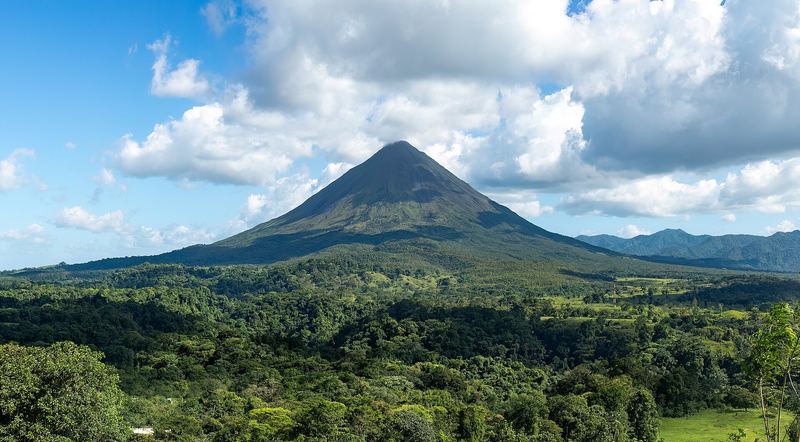
Arenal is classic lowland rainforest: hot, humid and loud with birds and frogs. The volcano dominates the view when the clouds lift and steam rises from rivers warmed underground. Toucans cross the road, sloths hang in roadside trees and guided night walks turn up red-eyed tree frogs. La Fortuna, the gateway town, is friendly and full of tour outfitters and sodas serving rice and beans.
Monteverde is cloud forest, a rarer habitat. Every branch carries moss, ferns, orchids and bromeliads and the light is soft and green. The reserves hold hundreds of orchid species and more than a hundred kinds of mammals. The small town of Santa Elena has a handful of restaurants and cafés along the road to the reserve.
Couples who want drama and warmth lean toward Arenal. Couples who want something quieter, cooler and slightly otherworldly fall for Monteverde. Neither is a beach, so pair either with the coast if sand matters.
Lodges and Where to Stay
Arenal has the stronger luxury scene by a wide margin. Nayara Springs is the kid-free pick, with 35 villas hidden in gardens, each with its own mineral-spring plunge pool, from around US$900 a night with breakfast. Next door, Nayara Tented Camp has safari-style tents on stilts with private hot-spring plunge pools and a reforested sloth sanctuary, from around US$1,200 a night with breakfast. It welcomes families but still feels intimate. Other lodges in the hills west of La Fortuna offer volcano views and thermal pools at lower prices.
Monteverde is more modest and cozy. Hotel Belmar, a wood chalet-style hotel on a hillside with views toward the Gulf of Nicoya and a strong farm-to-table kitchen, is a longtime favorite with couples, from around US$300 a night. Other lodges sit in gardens closer to the reserve, where nights are quieter and starts earlier.
If the room itself is part of the romance, Arenal wins. If you want warmth by a fire after a day in the mist, Monteverde delivers. Prices are approximate.
Adventure and Activities
Both have hanging bridges and zip-lines, so the difference is in what surrounds them. In Arenal, mornings might bring canyoning, rappelling down waterfalls, a hike over old lava flows or the steep stairs down to La Fortuna Waterfall. Afternoons are for soaking. Several thermal resorts channel warm rivers into pools and falls and an evening soak under the stars is the signature Arenal ritual.
Monteverde is gentler and more about observation. Start with a guided dawn walk in the Monteverde Cloud Forest Reserve, the Santa Elena Reserve or the private Curi-Cancha, where guides know where quetzals have been feeding. Walk the hanging bridges through the canopy, take a night tour for sloths and tree frogs and visit a coffee or chocolate farm for a tasting. The zip-lines here cross misty valleys and are among the country's most famous.
For a couple where one partner wants thrills and the other wants calm, Arenal's combination of adrenaline and hot springs keeps both happy. Monteverde suits couples who share a love of nature walks.
Weather and Best Months
Arenal sits on the Caribbean-facing side of the mountains, so it is wetter than the Pacific coast and green year-round. The drier stretch runs from roughly late December through April, when trails are firmer, waterfall pools clearer and the volcano shows itself more often. May and November are pleasant shoulder months. From June through October, expect regular rain, though the hot springs are just as good in a shower.
Monteverde's drier months run from about January through April, but December through February can be very windy on the ridge. Gusts occasionally shut zip-lines for a few hours. From May through November, expect rain most afternoons and mist much of the day, with September and October the wettest.
Temperature is the big contrast. Arenal is warm and humid all year. Monteverde can swing from warm midday sun to chilly mist after dark, so bring a fleece and a rain jacket. Both reward patience: give each at least two or three nights for clear-weather chances.
Getting There and Between Them
Both are about three hours or more from the main airports. From Juan Santamaría (SJO) near San José or Guanacaste Airport (LIR) in Liberia, Arenal is around three hours by road. Monteverde is about three to four hours from either, with a final stretch of steep curves. SJO usually has more flights. LIR is smarter if you plan to finish on a Guanacaste beach.
Private transfers and shared shuttles cover all these routes and remove the stress of mountain roads. If you rent a car, a 4x4 or high-clearance SUV is wise, especially in the rainy season.
To travel between the two, consider the lake crossing often sold as jeep-boat-jeep. A van takes you to Lake Arenal, a boat crosses the water with the volcano behind you, then another van climbs to Monteverde. It is scenic, fairly quick and far more fun than the long road around the lake.
Food, Coffee and Evenings
Arenal is a good place to explore Costa Rican home cooking. Start with a casado at a local soda in La Fortuna, the lunchtime plate of rice, black beans, salad, plantains and meat or fish. Breakfast means gallo pinto, often with eggs and natilla. Farms nearby supply coffee, cacao and tropical fruit and many lodges offer tours that end in a tasting. The luxury lodges handle special dinners with polish.
Monteverde's pride is coffee grown on the slopes below. Farm tours let you taste beans where they were picked and roasted. The cheese factory started by the Quaker settlers still sells local cheeses and ice cream. Santa Elena has sodas, wood-fired pizza and vegetarian cafés and a fireside dinner at your lodge is the classic way to end the day.
Evenings differ in mood. In Arenal, it is a warm soak under the stars. In Monteverde, it is a blanket, a glass of wine and the sound of rain on the roof.