Two Kinds of South Pacific
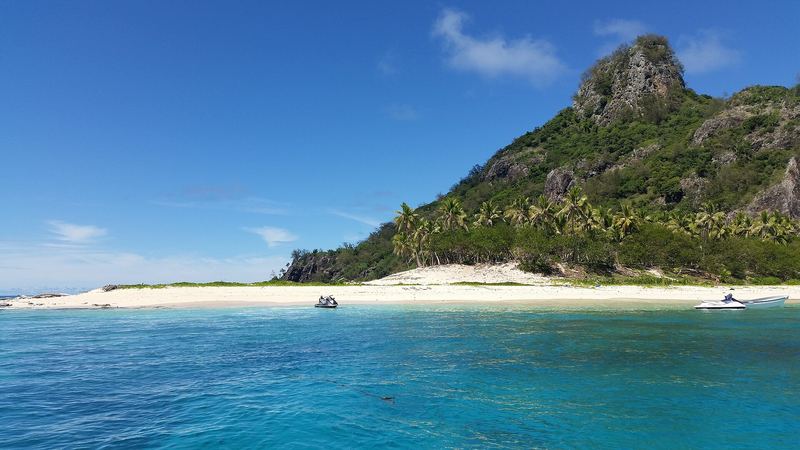
Fiji is an island-resort honeymoon. Most couples never spend a night on the main island of Viti Levu beyond the airport. Instead they transfer by boat or seaplane to a resort island and stay put, swimming, snorkeling, picnicking on sandbars and joining a kava ceremony in a nearby village. The pace is barefoot and the mood is family-like.
Tahiti is a big, mountainous island with a real city. Papeete has a municipal market for flowers, fruit and pareos, the Museum of Tahiti and the Islands and the roulottes, food trucks on Place Vai'ete that serve poisson cru and steak frites at night. The island is shaped like a figure eight: Tahiti Nui holds the airport and most hotels, while Tahiti Iti is wilder, with roads that end at the cliffs.
If you want to settle into a resort and stop moving, Fiji. If you want to explore and see the culture behind the lagoons, Tahiti.
Where You Would Stay
Fiji's resorts are a big reason to go. In the Mamanucas, Likuliku Lagoon Resort was Fiji's first kid-free resort with overwater bures, set on a calm lagoon facing a marine sanctuary. Tokoriki Island Resort faces west, so every bure gets the sunset. In the Yasawas, Turtle Island hosts just 14 couples at a time on the lagoon where The Blue Lagoon was filmed. In Northern Fiji, Laucala Island is one of the world's most exclusive private-island resorts, with its own airstrip.
Tahiti's stays cluster on the west coast near the airport and Papeete, where the larger resorts offer lagoon views toward Moorea and some have overwater bungalows. Hotels near the airport are handy for late flights home. On the east side you can sleep beside a black sand beach. For a quieter night, Tahiti Iti has small eco lodges with wooden bungalows on hillsides above the lagoon.
Lagoons, Reefs and Valleys
Fiji wins for water time. The Mamanucas are sunny, calm and ideal for snorkeling straight off the beach. The Yasawas add empty beaches, volcanic peaks and village life. Northern Fiji around Taveuni is famous for waterfalls, birdlife and soft-coral diving on the Rainbow Reef.
Tahiti's best moments are on land. A 4x4 trip into the Papenoo Valley brings waterfalls, river crossings and archaeological sites. The east coast drive passes the Arahoho blowhole, the Faarumai waterfalls and Point Venus, where a lighthouse stands above black sand. On Tahiti Iti, a boat trip out to watch surfers at Teahupo'o is a thrill, with the biggest surf from about May to September.
For the classic turquoise lagoon and overwater bungalow, French Polynesia saves its best for Moorea and Bora Bora, a short flight or ferry from Tahiti. Fiji gives you that in a single resort.
Flights and Island Hopping
Both are a straightforward overnight flight from California. Fiji Airways flies nonstop from Los Angeles and San Francisco to Nadi (NAN) in about 10 to 11 hours, usually arriving early in the morning, so you can be on your island the same day. Transfers are by boat, seaplane or helicopter.
Tahiti Faa'a International Airport (PPT) is about 8 hours from Los Angeles. Nonstops run from Los Angeles on Air Tahiti Nui and Air France and from San Francisco on French bee and, seasonally, United. Hawaiian Airlines flies from Honolulu. From Papeete, Air Tahiti flies to the other islands and ferries to Moorea take roughly 30 to 45 minutes.
Fiji is west of the International Date Line, so you lose a day flying out and gain it back coming home. Tahiti is east of it. Many flights home from Tahiti leave late at night, so book a late checkout or day room.
Weather Patterns
The two share a South Pacific rhythm. The dry season runs roughly from May to October in both, with lower humidity, sunny days and cooler nights. Fiji's peak is June to September, when Australian and New Zealand families travel, so book popular resorts six to twelve months ahead. Tahiti's high point is July, when the Heiva i Tahiti festival fills Papeete with traditional dance, music and sports.
November to April is the wet season in both, hotter and more humid with heavy rain at times. Fiji sees roughly one cyclone a year on average, while cyclones are rare but possible in the Society Islands, mostly from January to March. On Tahiti, rivers can rise quickly and valley trips may be canceled after heavy rain.
April, May, October and early November are good compromises for both. In Fiji, the western islands are generally drier than the east and north. Buy insurance that covers weather disruption in the wet season.
Budgets Compared
Fiji tends to cost less than French Polynesia at a comparable level of luxury. Our Fiji guide puts upscale boutique resorts at roughly $700 to $1,500 a night for two and top kid-free and all-inclusive resorts at about $1,500 to several thousand. Private islands like Laucala run several thousand dollars a night and up. Seaplane and helicopter transfers can add several hundred dollars per person each way.
On Tahiti itself, larger hotels run about $250 to $600 a night, with overwater bungalows higher. The costs climb once you continue to Bora Bora, where overwater stays are among the priciest in the world. Food on Tahiti can be a bargain at the roulottes or pricey in French restaurants.
All figures are approximate and vary by season. Tipping is not expected in either, though many Fiji resorts have a staff fund. Carry French Pacific francs for Papeete's market and roulottes.
Planning Your Route
Fiji and Tahiti are about five hours apart by air with few direct flights, so most couples choose one rather than combining them.
For Fiji, plan at least seven nights and ideally ten to twelve, split between two contrasting regions. A classic shape is five nights in the Mamanucas at Likuliku or Tokoriki, then a seaplane north to Turtle Island in the Yasawas or Laucala for the rest.
For French Polynesia, give Tahiti two or three nights at the start or end, then spend four to five nights on Moorea and four to five on Bora Bora. Tahiti works as a recovery stop after the flight and as a chance to see Polynesian culture before the resorts.
In both, dress modestly in villages and towns, with shoulders and knees covered for both of you. Mosquito-borne illness including dengue occurs in both, so use repellent. If you're pregnant or hoping to be soon, check CDC travel health notices.