What Each Place Really Is
Denarau is about convenience. After a long overnight flight from the US, a short transfer to a resort with a pool, spa and good restaurants is welcome. Port Denarau Marina has a cluster of bars and restaurants for sunset drinks. A shuttle bus links the resorts. It is reliable comfort rather than island romance.
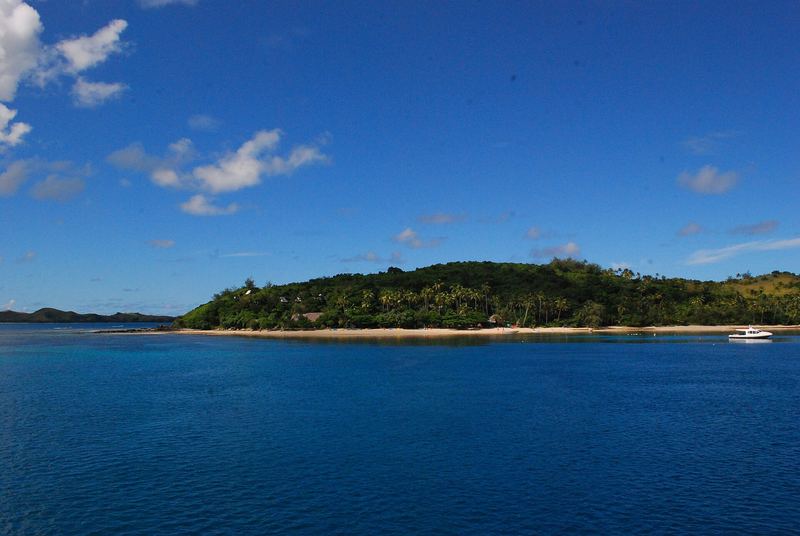
The Yasawas are about distance. Peaks rise from roughly 800 to nearly 2,000 feet, so there is real drama: grassy ridgelines over turquoise channels, beaches tucked between headlands and bays without a building in sight. Because tourism arrived late, village life is still at the center. A Sunday church service with soaring harmonies or a kava session on the sand can be the most moving part of the trip.
Think of Denarau as a well-run hub and the Yasawas as the destination. Couples who stay only on Denarau often leave wishing they had seen more of the islands.
Getting There From Nadi
Both begin at Nadi International Airport (NAN). Fiji Airways flies nonstop from Los Angeles and San Francisco in roughly 10 to 11 hours, usually arriving early in the morning.
Denarau is about 20 minutes by road. You can be at the pool before breakfast is over.
The Yasawas take longer. Seaplanes are the fastest and most scenic way in, with multiple daily flights from Nadi. Turtle Island is about 30 minutes away. The flight over the Mamanucas and northern reefs is a highlight. Weight limits apply and seaplanes do not fly after dark, so time your international arrival with that in mind. The Yasawa Flyer catamaran runs from Port Denarau and stops along the chain, an affordable but lengthy option that can take several hours to reach the northern islands. Private boats and helicopters are also possible.
If your flight lands too late for a daylight seaplane, a night on Denarau solves the problem neatly.
When to Travel
Both follow Fiji's seasons. The dry season, May to October, brings sunny days, lower humidity and the calmest seas. July is usually the driest month.
The Nadi side of Viti Levu is drier and sunnier than the south and east, which helps Denarau year-round. July and August are peak season with Australian and New Zealand school holidays, so book early. November to April is hot and humid with heavy showers. Cyclone risk is highest from about January to March. Day cruises may be canceled in rough weather.
In the Yasawas, the dry season is also manta season, when rays gather in the channels of the central islands from about May to October. The wet season brings highs near 90°F, heavier rain with March usually wettest and possible cyclones. Seaplane schedules can be affected by weather. With few rooms at top resorts, book six to twelve months ahead for the dry season.
April, May and October balance weather and value for both.
Resorts on Each
Denarau's resorts line the beach along the island's western edge. The Westin Denarau Island Resort and Spa and the Sheraton Fiji Golf and Beach Resort sit side by side. Hilton Fiji Beach Resort and Spa spreads villas and suites along the shore. Sofitel Fiji Resort and Spa and Radisson Blu are also popular with couples. Some set aside kid-free pools or areas, so ask when you book. Expect about $200 to $450 a night at the major resorts, with suites and villas costing more (approximate).
In the Yasawas, Turtle Island stands above the rest. On the private island of Nanuya Levu, it welcomes just 14 couples at a time to thatched bures across about 500 acres and a dozen beaches. Meals, drinks and most activities are included. Each couple has a personal Bure Mama. Rates run well into four figures a night for two (approximate). Elsewhere, boutique resorts usually cost a few hundred dollars a night, often with a compulsory meal plan, while simple lodges on islands like Tavewa cost far less.
Cost Beyond the Room
Denarau looks cheaper. The room usually is. All figures are approximate. But meals at resort restaurants, drinks, spa visits and day cruises add up, since little is included. Package deals sometimes bundle meals or spa credits. Taxis to Nadi town for local curry are an inexpensive break.
The Yasawas front-load the cost. Seaplane transfers are a significant expense for two. Dining is almost entirely resort-based, so meal plans are common and often required. At Turtle Island the all-inclusive rate covers food, drinks and most activities, which makes the total easier to predict. Boutique resorts with meal plans sit in the middle.
A sensible split for many couples is one or two Denarau nights at a mid-range rate, then the rest of the budget on the best Yasawa resort you can afford. Bring cash in Fijian dollars for village visits, handicrafts and church collections.
Days Out and Days In
From Denarau, the islands come to you by boat. Take a day cruise to the Mamanucas for snorkeling and lunch on white sand. Spend an afternoon at Cloud 9, a floating bar anchored on a reef. Visit the Sabeto mud pools and hot springs north of Nadi, then the orchids at the Garden of the Sleeping Giant. See the colorful Sri Siva Subramaniya temple in Nadi, dressed modestly. One of you can play the 18-hole course at Denarau Golf and Racquet Club while the other books the spa.
In the Yasawas, the sea is the program. Swim in the Sawa-i-Lau caves, a sunlit chamber inside a limestone island. With a guide, the bolder swimmer can duck through a short underwater passage to a darker inner cave while the other floats in the first chamber. Snorkel with mantas near Drawaqa Island in season. Ask for a private beach drop-off with a hamper, a horseback ride on the sand or a sunrise ridge hike. Evenings belong to kava, lovo feasts and stars.
Food and Island Customs
Denarau has the most choice. Port Denarau's restaurants range from seafood and Italian to Indian and Japanese. Each resort runs several kitchens with lovo and Indo-Fijian buffet nights. Nadi town has curry houses and a busy market. Try kokoda, raw fish cured in citrus and coconut cream.
In the Yasawas you eat where you stay. The best resorts cook fresh reef fish, tropical fruit and garden produce. Turtle Island draws on a large organic garden and serves everything from communal dinners to private meals on a floating pontoon.
Kava is central to Fijian hospitality. Clap once before you accept the coconut-shell cup, drink it in one go, then clap three times. In villages, both of you should cover shoulders and knees with a sulu or sarong and remove hats and sunglasses. Use reef-safe sunscreen and repellent. Dengue occurs in Fiji, so if you're pregnant or hoping to be soon, check CDC travel health notices.
The Two-Stop Plan
The best Fiji honeymoons usually use both. A simple ten-night plan: land in Nadi and spend one night on Denarau to sleep off the flight. Take a morning seaplane north for seven nights in the Yasawas, ideally five or more at one resort, since getting there takes effort and Turtle Island has a multi-night minimum. Fly back to Denarau for a final night, so a weather delay cannot cost you your flight home.
For more variety, add three or four nights in the Mamanucas between the two, closer to Nadi and sunnier than much of Fiji. The contrast between the easy Mamanucas and the remote Yasawas works well.
If you only have five or six nights, skip the Denarau bookends where you can and head straight to the islands on a daylight seaplane. Every night on the outer islands counts.