Getting There Makes a Big Difference
For most US couples, this decides it. Fiji Airways flies nonstop from Los Angeles and San Francisco to Nadi (NAN) in roughly 10 to 11 hours. Most flights leave late at night and arrive early in the morning, so you can sleep on board and be on a Mamanuca island by lunch. From other US cities you connect through California.
The Maldives has no nonstop service. Couples usually connect through Doha, Dubai or Istanbul to Velana International Airport (MLE), with 20 or more hours of total travel. Seaplanes to the farther atolls fly only in daylight, so a late arrival can mean a night near Malé.
One quirk with Fiji: you cross the International Date Line, so you lose a day flying out and gain it back on the way home. Fiji is 19 or 20 hours ahead of the West Coast, which still tends to feel easier than the Maldives' long Gulf routing.
The Style of Hospitality
Both countries do service extremely well, but the feel is different.
In the Maldives, service is often built around a personal butler who handles every reservation and surprise. It is polished, discreet and designed to give you privacy. You may see very few other guests.
Fiji is warmer and more personal. You hear "Bula!" from customs officers, drivers and resort staff alike. They mean it. Resorts love celebrating newlyweds with flowers, songs and thoughtful touches. On your last morning, staff often gather on the beach to sing "Isa Lei," the Fijian farewell song, as your boat pulls away. Few couples get through it dry-eyed.
Fiji also offers culture close at hand. Visit a village with your shoulders and knees covered, bring a gift of kava root for the chief in a sevusevu ceremony and clap once before you drink. That kind of connection is harder to find on a Maldivian resort island.
Overwater Villas and Resorts
If the overwater villa is the dream, the Maldives wins outright. It has a huge range of them, from Gili Lankanfushi's rustic villas with rooftop star beds to Soneva Jani's water slides, Waldorf Astoria Ithaafushi's pools and Anantara Kihavah's glass-bottom tubs. Hurawalhi is kid-free.
Fiji has far fewer. Likuliku Lagoon Resort in the Mamanucas introduced the country's first overwater bures and is kid-free. Tokoriki Island Resort, also kid-free, has west-facing pool bures for sunsets. Turtle Island in the Yasawas hosts just 14 couples at a time on the lagoon where The Blue Lagoon was filmed. COMO Laucala Island in Northern Fiji is among the most exclusive private-island resorts anywhere, with an overwater residence.
Fiji's strength is intimate, kid-free and all-inclusive stays. The Maldives' strength is variety and the overwater experience. Because overwater bures in Fiji are rare, book early if you want one.
Seasons and Weather
Both are warm year round, but their best months differ.
The Maldives is most reliable from January to April, with sunshine, calm seas and the highest rates. June to September is the wetter southwest monsoon, usually with short heavy showers, lower prices and manta season in Baa Atoll.
Fiji's dry season runs from May to October, with lower humidity and cooler nights. June through September is busiest, when Australian and New Zealand families travel, so book popular resorts six to twelve months ahead. November to April is hotter and wetter, with heavier rain often in short bursts. It is also cyclone season, with roughly one cyclone a year on average. April, May, October and early November are good compromises. The western islands, including the Mamanucas and Yasawas, are generally drier than the east and north.
A summer wedding points to Fiji. A winter or early spring wedding points to the Maldives. Dengue occurs in Fiji, so if you're pregnant or hoping to be soon, check CDC travel health notices.
What It Costs
Fiji is generally the better value at a comparable level of luxury. All figures are approximate.
In Fiji, upscale boutique resorts run roughly $700 to $1,500 a night for two. Top kid-free and all-inclusive resorts are often $1,500 to several thousand dollars. Ultra-exclusive private islands such as Laucala start at several thousand dollars a night. Island transfers by boat are affordable, while seaplanes and helicopters can cost several hundred dollars per person each way.
In the Maldives, the luxury resorts we cover often start above $1,500 a night in high season. A service charge, tourism tax and daily green tax can add roughly a quarter or more. Seaplane transfers run from several hundred to over a thousand dollars per person round trip.
In both, dining is mostly at your resort, so check meal plans carefully. Fiji's all-inclusive resorts can make budgeting simpler. West Coast couples also usually save on airfare to Fiji.
Days on the Island
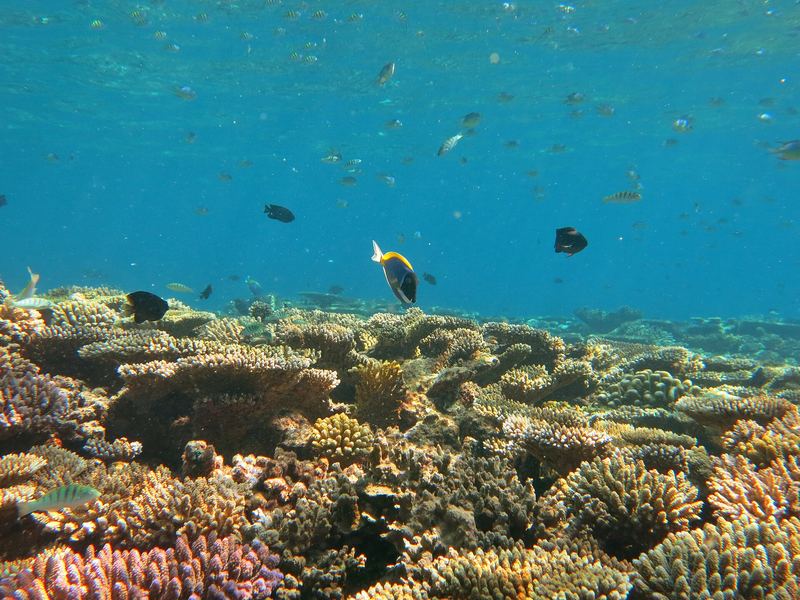
Days in the Maldives center on the water. Snorkel the house reef with turtles and reef sharks, take a sunset dhoni cruise, book a sandbank dinner or dive with mantas and whale sharks. Some resorts add underwater restaurants and observatory telescopes. It is a place to swim, eat and rest.
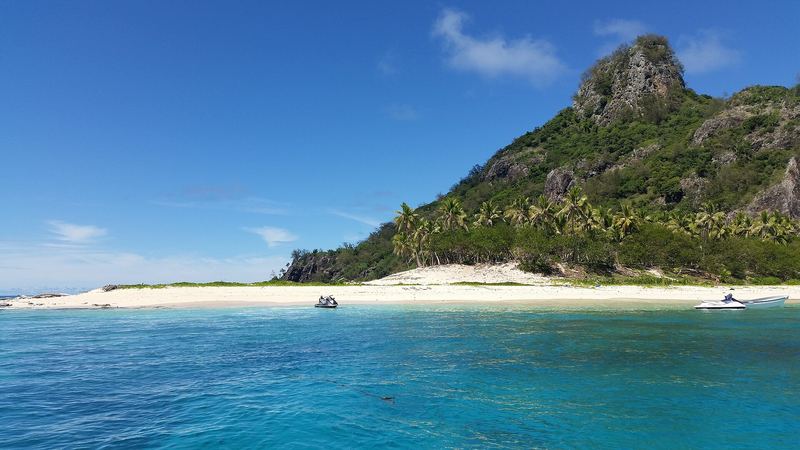
Fiji offers a little more on land and a lot on the water. The Mamanucas are calm and sunny for snorkeling, with sandbar picnics and sunset cruises. The Yasawas bring volcanic peaks, empty beaches and horseback rides along the sand. Northern Fiji, around Taveuni, has waterfalls, birdlife and soft-coral diving on the Rainbow Reef.
Village visits and kava ceremonies add depth that pure beach destinations sometimes lack. If one of you wants culture while the other wants to dive, Fiji makes room for both. If you both want uninterrupted lagoon time, the Maldives is more focused.
Planning the Trip
For the Maldives, aim for at least seven nights and ten to twelve if you can. Many couples start at a speedboat resort near Malé to shake off jet lag, then take a seaplane to Baa, Ari or Noonu for the rest of the stay. Put the remote atoll first if you'd rather end close to the airport.
For Fiji, plan at least seven nights and ideally ten to twelve, split across two regions. A classic pattern is four or five nights in the Mamanucas at Likuliku or Tokoriki, then five or six in the Yasawas at Turtle Island or up north at Laucala. Return to Nadi for an evening flight home.
Pack light for either, since seaplanes in both countries have strict baggage limits. Fiji uses Australian-style plugs, while the Maldives generally uses British three-pin outlets. Travel insurance that covers weather disruption is wise, especially in Fiji's wet season.