Why Honeymoon in Hakone
After the energy of Tokyo or the temple-hopping of Kyoto, Hakone is where you exhale. It is Japan's classic hot-spring escape. Few experiences are as romantic as a private onsen soak under the stars, followed by a long, unhurried dinner.
The area combines culture and nature beautifully. Within a small radius you can find excellent art museums, historic shrines, mountain hikes and lake cruises. Everything is linked by an endearing network of trains, cable cars and boats.
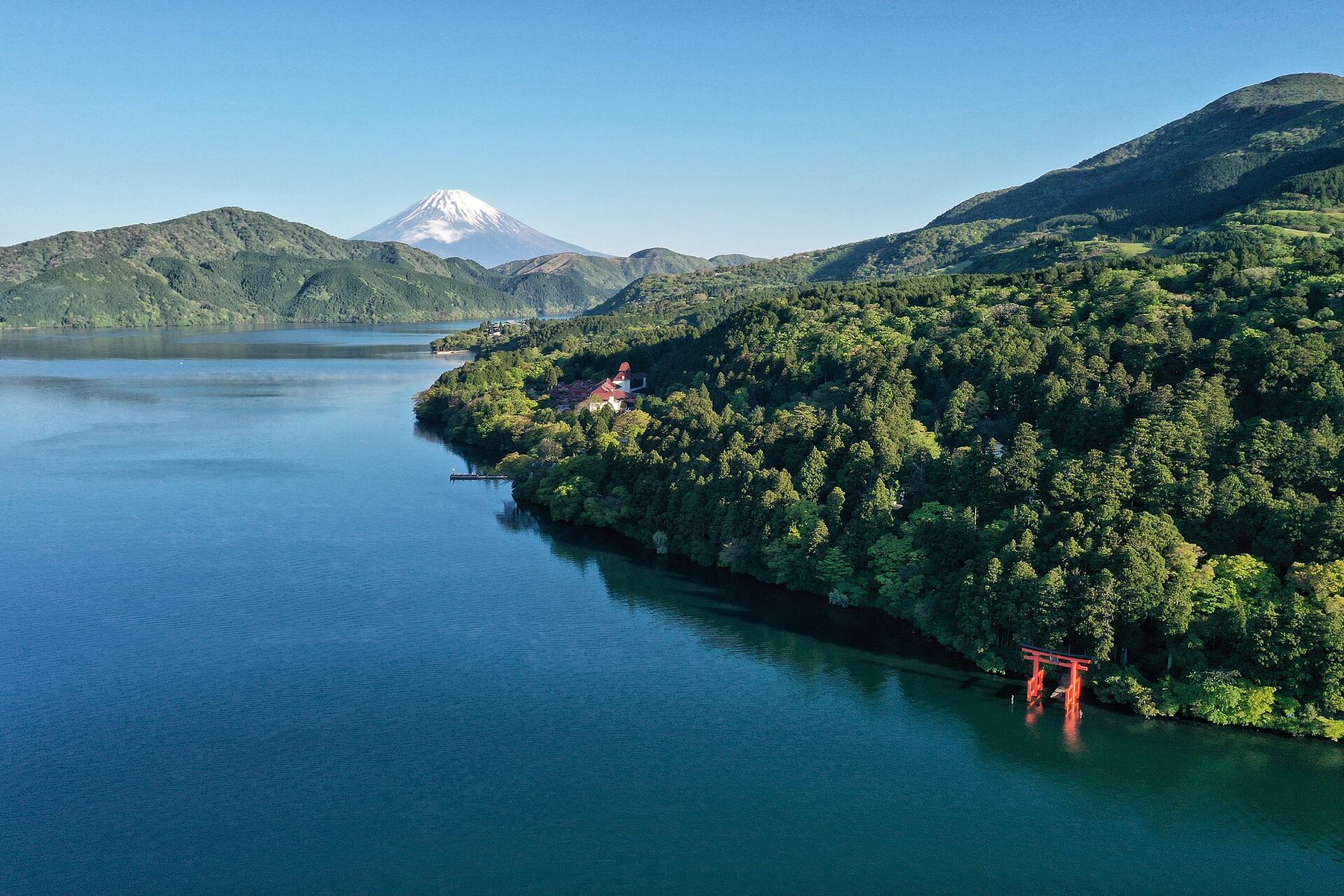
Hakone is also wonderfully convenient. It sits on the bullet train route between Tokyo and Kyoto, so you can slip a night or two into your itinerary without long detours. And while Mount Fuji's appearance is never guaranteed, glimpsing its snowy peak from Lake Ashi or a ropeway gondola is one of the moments couples remember long after the honeymoon.
When to Go
Hakone is lovely year-round and each season offers something different.
- Spring (late March to April): cherry blossoms bloom along the valleys, slightly later at higher elevations.
- Early summer (May to June): fresh greenery and blooming azaleas and hydrangeas, which line the Hakone Tozan Railway in June and July. The rainy season begins in June.
- Summer (July to August): cooler than Tokyo, but humid, with frequent cloud that hides Fuji.
- Autumn (late October to November): one of the most beautiful times, with brilliant foliage across the mountains.
- Winter (December to February): the best months for clear views of Mount Fuji and the most atmospheric time for steaming outdoor baths, especially after a dusting of snow.
Weekends and Japanese holidays are busy, so midweek stays offer calmer trains and baths.
Where to Stay
Hakone's accommodation landscape is dominated by ryokan, from modest family inns to some of Japan's most famous luxury retreats.
Gora Kadan is the best known of them. It is set in a former villa of the imperial Kan'in family in the hillside village of Gora and is a long-standing Relais & Châteaux member. Expect impeccable service, seasonal kaiseki, indoor and outdoor hot-spring baths and rooms and suites with private hot-spring tubs.
Elsewhere, Hakone offers a range of options. Gora and Miyanoshita on the mountain railway are convenient bases and Hakone-Yumoto at the bottom of the valley is the busiest area, while the shores of Lake Ashi offer quieter hotels with potential Fuji views. For honeymooners, a room with a private open-air bath, known as a rotenburo, is the upgrade that matters most, since communal baths are separated by gender.
Romantic Things to Do
The classic way to explore is the Hakone loop. Take the Hakone Tozan Railway as it zigzags up the mountain, transfer to the cable car at Gora, then ride the ropeway over Owakudani, a steaming volcanic valley where you can try black eggs boiled in the sulfurous springs. Descend to Lake Ashi and cross the water on a sightseeing pirate ship toward Hakone-machi or Moto-Hakone.
At Moto-Hakone, walk to the lakeside torii gate of Hakone Shrine, framed by the water and, on a clear day, by Fuji. Nearby, a section of the old Tokaido road is lined with towering cedars.
Art lovers will enjoy the Pola Museum of Art in the forest and the Hakone Open-Air Museum, where sculptures dot a hillside garden and a pavilion displays works by Picasso. Then, of course, return to your ryokan for an evening soak and kaiseki dinner.
Getting There & Around
Most visitors arrive from Tokyo. The fastest option is the shinkansen from Tokyo or Shinagawa to Odawara, about 35 minutes, followed by a short train or taxi ride into the mountains. Alternatively, the Odakyu Romancecar limited express runs directly from Shinjuku to Hakone-Yumoto in about 85 minutes, with reserved seats and big windows.
From Haneda Airport, allow about two hours by train or car. From Kyoto, take the shinkansen to Odawara in roughly two to two and a half hours.
Within Hakone, the Hakone Freepass covers most trains, buses, the cable car, ropeway and lake boats for a set number of days, making the loop easy. For couples with luggage, taxis from Odawara save time. Japan's excellent luggage-forwarding service can send your bags ahead to Kyoto or Tokyo so you can travel light.
Food & Drink
In Hakone, dinner is usually part of the ryokan experience and kaiseki is the star. Expect a parade of seasonal dishes such as sashimi, simmered vegetables, grilled fish and delicate soups, served with care and often in your room. Many ryokan also offer shabu-shabu or hot pot as an alternative.
The region has its own specialties. Kuro-tamago, the black eggs cooked in the hot springs of Owakudani, are said to add years to your life. Nearby Odawara is known for kamaboko fish cake and fresh seafood from Sagami Bay. Hakone's spring water makes excellent tofu and soba noodles. Small shops serve both in Hakone-Yumoto and along the railway.
For drinks, local craft beers and sake from the wider Kanagawa and Shizuoka regions pair well with ryokan dinners. A quiet nightcap by your bath is hard to beat.
Honeymoon Tips
- Book a room with a private open-air bath so you can bathe together; public onsen are separated by gender and used without swimwear.
- Arrive by mid-afternoon. Ryokan dinners start at fixed times and you'll want a soak first.
- Send large luggage ahead with a forwarding service and bring a small overnight bag.
- Do the Hakone loop early in the day for the best chance of clear Fuji views and smaller crowds.
- Stay midweek to avoid weekend crowds from Tokyo.
- Check for volcanic activity alerts at Owakudani, which can occasionally close the ropeway.
- As a rough guide, a good ryokan with dinner and breakfast runs about $300 to $700 a night for two, while Gora Kadan and its peers often cost well over $1,000 (approximate).