What Each Place Is About
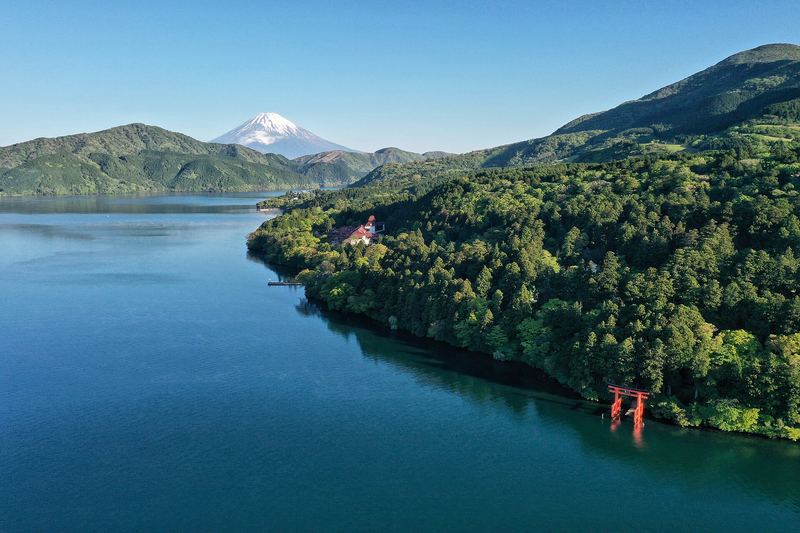
Hakone is about the ryokan and the loop. You arrive by mid-afternoon, change into a yukata, soak and then sit down to kaiseki served in your room. The next morning you ride the Hakone Tozan Railway as it zigzags up the mountain, cross the steaming volcanic valley of Owakudani by ropeway and sail across Lake Ashi. It is gentle, scenic and easy.
Nikko is about contrast. Toshogu's riot of carving and gold leaf is the opposite of Kyoto's quiet restraint, set in a hillside of giant cedars. Then you climb to the plateau and the trip changes character: Kegon Falls drops 97 meters, Lake Chuzenji spreads out below the peaks and Yumoto's sulfur water turns milky white. After about four o'clock, when day visitors head back to Tokyo, the town and the paths go quiet.
Hakone is the more polished retreat. Nikko gives you more to explore in a single trip.
Getting There From Tokyo
Both are easy without a car. Fly into Tokyo Haneda (HND) or Narita (NRT) first.
For Hakone, the fastest option is the shinkansen from Tokyo or Shinagawa to Odawara, about 35 minutes, then a short train or taxi into the mountains. The Odakyu Romancecar runs directly from Shinjuku to Hakone-Yumoto in about 85 minutes, with reserved seats and big windows. From Haneda, allow about two hours. The Hakone Freepass covers most local trains, buses, the ropeway and lake boats.
For Nikko, Tobu Railway trains leave Asakusa for Tobu-Nikko station in about two hours. JR Pass holders can take the Tohoku Shinkansen to Utsunomiya and change to the JR Nikko line, about 90 minutes in total. Tobu buses run up to the shrines, Lake Chuzenji and Yumoto. Multi-day passes cover the train and buses.
Hakone's big advantage is location on the route to Kyoto. Nikko is a separate round trip from Tokyo.
Timing Your Visit
Hakone is lovely year-round. Winter gives the clearest views of Mount Fuji and the most atmospheric outdoor baths, especially after snow. Late October to November brings brilliant foliage. Hydrangeas line the mountain railway in June and July, though the rainy season begins in June. Summer is cooler than Tokyo but cloudy, often hiding Fuji.
Nikko's headline season is mid-October to early November, when color starts at the top of the plateau and works down to the town. It is beautiful and busy. The Irohazaka switchback road can jam for hours on weekends. May is the quieter favorite, with bright new leaves and azaleas once Golden Week passes. Summer is warm in town and cool at the lake. Winter is cold and snowy up high, with some lake facilities closed.
For winter, Hakone is the stronger pick. For autumn color, Nikko is spectacular if you travel midweek. Both get crowded on weekends and Japanese holidays.
Ryokan and Hotels
Hakone's accommodation is dominated by ryokan, from family inns to some of Japan's most famous luxury retreats. Gora Kadan, set in a former villa of the imperial Kan'in family and a long-standing Relais & Châteaux member, is the best known, with rooms that have private hot-spring tubs. Gora and Miyanoshita are convenient bases. Lake Ashi has quieter hotels with potential Fuji views.
Nikko gives you three areas. In town, near the Shinkyo bridge, the Nikko Kanaya Hotel has welcomed guests since the 1870s, a Western-style classic with creaky wood and old photographs. On Lake Chuzenji, The Ritz-Carlton Nikko offers lake-view rooms and its own hot-spring baths, with smaller ryokan on the north shore. Yumoto Onsen, at the far end of the plateau, is the most remote and peaceful.
In both places, book a room with a private open-air bath. Public baths are separated by gender. Tattoos may also be restricted in them.
Days Out Together
Hakone's loop fills a perfect day. Ride the mountain railway to Gora, the cable car up and the ropeway over Owakudani, where black eggs boiled in the springs are said to add years to your life. Cross Lake Ashi by sightseeing pirate ship and walk to the lakeside torii of Hakone Shrine. A section of the old Tokaido road nearby is lined with towering cedars. The Hakone Open-Air Museum has sculpture on a hillside and a Picasso pavilion.
In Nikko, arrive at Toshogu at opening time and head for the Yomeimon gate before tour groups. Look for the three wise monkeys and the small sleeping cat. Follow the Daiya River to Kanmangafuchi Abyss, where moss-capped stone statues in red knitted caps line the bank. On the plateau, take the lake boat, ride the elevator to the lower platform at Kegon Falls and walk the flat boardwalk across Senjogahama marsh before a soak in Yumoto.
Food and Budget
In both, dinner is usually part of the ryokan stay, with seasonal kaiseki served in your room or a private dining space at a fixed time, often 6 or 7 p.m.
Hakone's specialties include the black eggs of Owakudani and tofu and soba made with its spring water. Nearby Odawara is known for kamaboko fish cake and seafood from Sagami Bay.
Nikko's specialty is yuba, the skin that forms on simmering soy milk, served rolled, fried or in broth. Vegetarian temple cooking is easy to find. Ryokan dinners on the plateau often include grilled river char and Tochigi wagyu. The old Kanaya Hotel dining room is fun for retro curry or trout meunière.
On cost, a good Hakone ryokan with dinner and breakfast runs about $300 to $700 a night for two, while Gora Kadan and its peers often cost well over $1,000. Nikko's range is broadly similar, from classic town hotels to lakeside luxury. All prices are approximate and climb in autumn.
Practical Comfort
Pack layers for both, especially outside summer. Nikko's Lake Chuzenji sits about 1,270 meters up. Evenings there can be ten degrees Fahrenheit colder than in town. Hakone's mountain air is also noticeably cooler than Tokyo's.
Send large luggage ahead with Japan's forwarding services and bring a small overnight bag. Mountain trains, cable cars and buses are much easier that way.
Wear slip-on shoes. Nikko's shrine visits involve stone steps, uneven paths and shoes off in some halls. Ryokan everywhere ask you to remove shoes at the door. Modest clothing is respectful at shrines for both of you.
In Hakone, check for volcanic activity alerts at Owakudani, which can occasionally close the ropeway. In Nikko, avoid driving the Irohazaka road on autumn weekends. Cash is handy for buses and small shops in both, though cards and IC transit cards work widely.
One, the Other or Both
If your trip runs Tokyo to Kyoto, Hakone is the natural pick. It sits on the way, so one or two nights there cost you very little extra travel time.
If your honeymoon is based around Tokyo, or you are visiting Japan for a second time, Nikko is the stronger side trip. Two nights is the sweet spot: one in town near the shrines and one up at the lake or in Yumoto, so the evenings feel like a retreat rather than the end of a day trip. Reserve the lake or Yumoto night first, since those rooms sell out quickest in autumn.
Doing both is possible on a longer honeymoon, with Nikko as a two-night trip from Tokyo early on and Hakone as the stop on the way to Kyoto. They are different enough to justify it: one for shrines and waterfalls, the other for Fuji views and a famous soak.