Island Hopping and Time on the Water
This is where the Philippines shines. El Nido's Bacuit Bay has 45 islands and islets, with lagoons so enclosed that you paddle through a gap in the rock and the engine noise stops. Coron adds Kayangan Lake, glass-clear and ringed by sheer limestone, plus Twin Lagoon and Japanese ships sunk in 1944 that snorkelers can see from the surface. Reefs start close to shore across much of the country, so even nervous swimmers get good snorkeling.
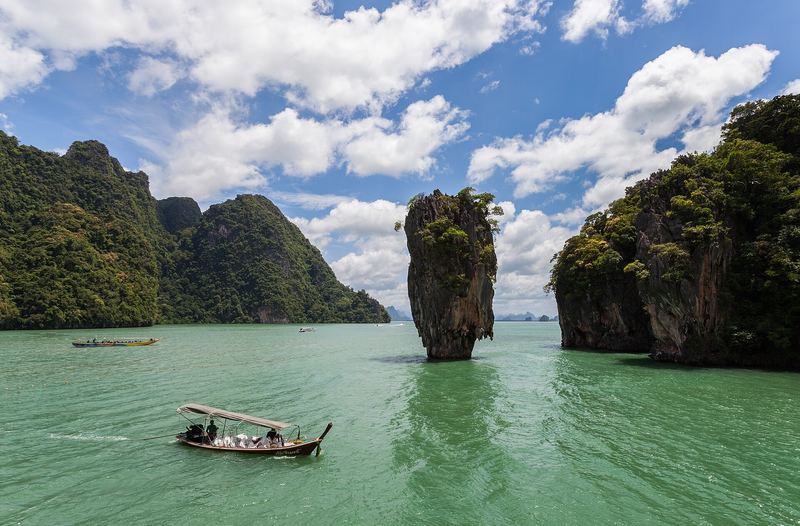
Thailand's boat days are excellent too. Phang Nga Bay's sea caves near Phuket, the Hong Islands' hidden lagoon off Krabi and Ang Thong National Marine Park near Samui are all memorable on a private long-tail or speedboat. Thailand's famous spots tend to be busier.
If your favorite days on past trips were spent salty and sunburned on a boat, the Philippines is the stronger pick. If a boat day is one item on a wider list, Thailand covers it well.
The Hotels
Thailand has more of them and more variety. Our favorites include Trisara on Phuket's quiet northwest coast, Keemala's tree house and bird's nest villas above Kamala, Rayavadee between three beaches on Railay, Six Senses Samui on its northern headland and Four Seasons Tented Camp Golden Triangle, with 15 all-inclusive tents reached by river boat. The Michelin Guide awards its hotel Keys to a number of Thai properties.
The Philippines has fewer luxury names but a distinctive format: the private-island resort. In El Nido, Pangulasian Island has pool villas on a long beach, Lagen Island has water cottages in a forested cove and Cauayan Island Resort sits on its own island too. In Coron, Huma Island Resort has overwater villas. Meal plans at Palawan's island resorts vary by package, so check what your rate covers; El Nido Resorts packages usually include breakfast and guided island hopping.
Seasons and Storms
Thailand is the more flexible of the two. The Andaman coast with Phuket and Krabi is best from about November to April, while Koh Samui on the Gulf is driest from January to April and often pleasant through summer. The north is at its best from November to February.
The Philippines has a clearer window. December to May is dry, with December to February cooler and busiest and April and May often driest in Palawan. From about June to October the southwest monsoon brings rain and choppy seas to El Nido, Coron and Boracay. Typhoon risk peaks from roughly July through October. Storms cancel ferries, boat tours and small-plane flights.
If your wedding is in June, July or August, Thailand's Koh Samui is the safer beach honeymoon. From January to April both countries are at their best.
Cost and Value
Both are strong value next to the Maldives, but the spending works differently. In Thailand, upscale pool-villa resorts run roughly $300 to $700 a night in high season and top-tier luxury roughly $700 to $1,500, with street food, massages and rides costing a fraction of US prices.
In the Philippines, a comfortable midrange sea-view hotel often runs roughly $100 to $250 a night outside Christmas week. Palawan's private-island resorts can run well over $1,000 a night, but meals and often boat days are included, which narrows the gap. Shared island-hopping tours are cheap, while a private boat for two costs several times more and is worth it.
The Philippines' hidden costs are transport and fees: small-plane flights to El Nido are pricier than other domestic routes. Environmental and terminal fees add up. Keep pesos in cash. All prices here are approximate and move with season and exchange rates.
Getting There and the Hassle Factor
The Philippines has the edge on the long haul: Philippine Airlines runs nonstop flights from the US to Manila (MNL). Thailand generally has no nonstops, so most couples connect through an Asian or Middle Eastern hub to Bangkok (BKK) or Phuket (HKT), with 20 or more hours of total travel.
After landing, Thailand is smoother. Domestic flights from Bangkok to Phuket, Krabi, Samui and Chiang Rai take an hour or so and run frequently. In the Philippines, the best spots take a second flight, often on small planes with tight bag limits, such as AirSWIFT into El Nido's Lio Airport. Delays are common and Manila terminal transfers can be slow, so allow at least three hours for connections and spend your last night in Manila before flying home.
Couples who stay calm when plans change will cope easily. Couples who need things to run on time will prefer Thailand.
People, Food and Culture
Filipino hospitality is a point of pride. Staff remember your names quickly, honeymooners often get a cake or a decorated bed and English is spoken nearly everywhere. The country is mostly Catholic, so cover shoulders and knees in churches.
Thai hospitality is famous too, shaped by Buddhist culture and a gentle calm known as jai yen. Temples ask both partners to cover shoulders and knees and remove shoes. The monarchy is deeply respected.
On food, Thailand is the clear winner for couples who travel to eat: southern curries, night markets, Phuket's Hokkien noodles and Michelin-recognized tasting menus. Filipino food is hearty and shared, with adobo, sinigang, kinilaw and lechon. The boat-day lunches grilled by your crew are often the best meals of a Palawan trip.
Dengue is present in both countries. If you're pregnant or hoping to be soon, check CDC travel health notices.
Safety in Plain Terms
The State Department rates the Philippines Level 2, exercise increased caution, with its higher warnings concentrated on parts of Mindanao, the Sulu Archipelago and Marawi. Palawan, Boracay, Bohol and the other places we recommend sit outside those areas. In Manila, watch for pickpockets and use Grab or hotel cars rather than street taxis.
For Thailand, review the current State Department advisory before you go and use normal precautions: watch belongings in crowded areas, use reputable boat operators and avoid scooters unless you are experienced. Late at night, take a Grab or hotel car rather than an unmarked taxi.
In both countries, nature is the bigger risk. Respect red flags on Thailand's Andaman beaches during the monsoon months. In Palawan, check the forecast before boat days and wear a rash guard with reef-safe sunscreen. Choose travel insurance that covers missed connections and weather delays.
Planning Your Route
A classic Thai honeymoon of 12 nights looks like two nights in Bangkok, three at a jungle camp near Chiang Rai and seven on the islands, either Phuket with Krabi in the dry season or Koh Samui in summer.
The classic Philippine route is ten days focused on Palawan: one night in Manila, four in El Nido for two boat days and a beach day at Nacpan, a fast ferry of about four hours to Coron when seas allow, two or three nights there, then back to Manila. Swap Coron for Bohol and Siquijor via Cebu if you want jungle and quiet small islands instead.
Combining the two countries is possible with a connection through Manila or another Asian hub, but most honeymoons work better focused on one. For your first big Asian trip together with flexible dates, Thailand is the easier yes. If you have both been to Thailand already, Palawan is the natural next step.