Sea Level or Cliff Top
El Nido's landscape is close up. Gray limestone walls rise straight out of the bay, fringed with trees. The famous lagoons sit between them. Big Lagoon is the wide, jade-colored one. Small Lagoon is entered through a low gap in the rock. Secret Lagoon on Miniloc Island is reached by squeezing through a hole in the wall. You experience all of it from a kayak or a bangka, usually wet and usually barefoot.
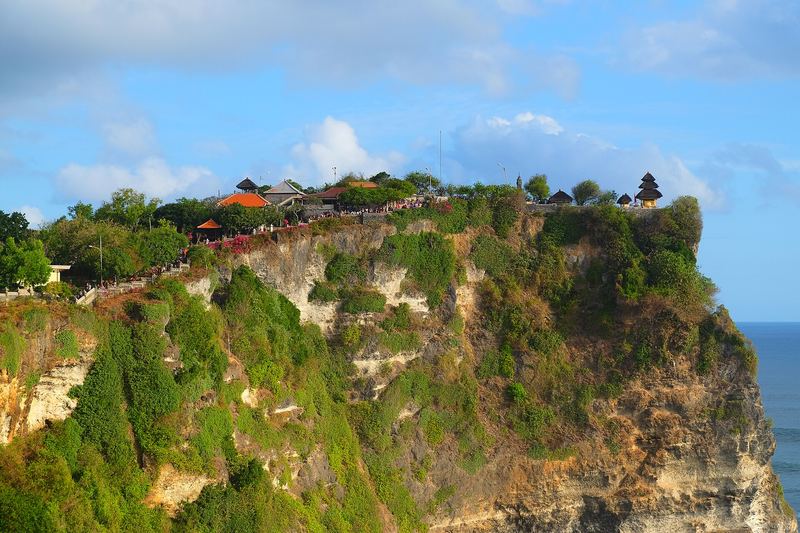
Uluwatu's landscape is seen from a height. The Bukit Peninsula ends in sheer cliffs above open ocean, with the water shifting from turquoise to deep blue below. Its beaches are small pockets of sand reached by long flights of steps. The biggest show is the sunset that turns the whole coast orange each evening.
If you want to be in the scenery, El Nido wins. If you want to look out over it from your own pool, Uluwatu does that better than almost anywhere in Bali.
Getting There From the US
Neither place has nonstop flights from the US, so expect a full day of travel either way.
For El Nido, fly into Manila, then take AirSWIFT's small-plane flight to Lio Airport (ENI), about 1 hour 15 minutes. It costs more than other domestic flights and the baggage allowance is tight, so pack light. The cheaper route is a flight to Puerto Princesa (PPS) followed by five to six hours in a van. Island resort guests are met and taken straight to the boat.
For Uluwatu, fly into Bali's Ngurah Rai International Airport (DPS), usually connecting through Singapore, Tokyo, Seoul, Taipei or Hong Kong. The drive to the clifftop resorts takes 30 to 45 minutes. That short final leg is a real advantage when you land tired.
El Nido adds one more link to the chain. Small-plane schedules can slip. Keep your last night in Manila before flying home.
Opposite Seasons
This is the most important difference between the two. It may make the choice for you.
El Nido's dry season runs from about December to May. January through April is the sweet spot, with calm seas, clear skies and boats running every day. The southwest monsoon arrives in June and rain peaks around August, when swells can cancel island-hopping tours and the ferry to Coron.
Uluwatu is best from about April to October, Bali's dry season. Skies are sunny, humidity drops and the west-facing surf breaks are at their best. July, August and the Christmas holidays are the busiest stretches. November to March brings heavier afternoon showers, though the Bukit is drier than much of Bali and most days still have bright hours.
So a winter honeymoon points to El Nido and a summer or early fall wedding points to Uluwatu. April and May work for both, which is useful if you want to combine them.
The Resorts
El Nido's best stays are about the setting rather than the décor. El Nido Resorts runs island properties in Bacuit Bay. Pangulasian Island is the most upscale, with pool villas and a long beach. Lagen Island has water cottages against a forested cove. Their packages usually include breakfast and guided island hopping, so check which meals your rate covers. Cauayan Island Resort and Spa is another island option at a lower price. On the mainland, Lio and Marimegmeg Beach have smaller hotels facing west.
Uluwatu is a luxury resort scene in its own right. Bulgari Resort Bali sits roughly 500 feet above the ocean, with private pool villas, an inclinator down to the beach and Il Ristorante led by chef Niko Romito. Alila Villas Uluwatu has WOHA's striking architecture and the Sunset Cabana hanging over the cliff. Smaller villas near Bingin and Padang Padang suit couples who want to surf at dawn.
In short: El Nido gives you an island, Uluwatu gives you a cliff and a chef.
What It Costs
Both can be done at many price points, but the honeymoon versions cost roughly the same with different things included.
In El Nido, the island resorts look expensive at first glance, often around $500 to well over $1,000 a night for two (approximate). The full-board rate usually covers meals, boat trips and kayaks, so there is little to add except drinks, spa visits and tips for the boat crew. Mainland beach hotels cost far less. A private bangka for a day is a modest splurge.
In Uluwatu, the top clifftop resorts run from several hundred to well over a thousand dollars a night (approximate), usually with breakfast only. Dinners, spa treatments, drivers and beach clubs add up. Smaller villas near Bingin can cost about $150 to $400 a night (approximate). Bali's everyday food and massages are very good value.
Flights to Bali are usually easier to find on points. El Nido's small-plane leg is a cost to budget for separately.
Days Together
In El Nido, book a private bangka for at least one day and leave around 7 a.m. to reach Big Lagoon before the shared tours. Your crew will grill lunch on a beach. It is often the best meal of the trip. On land, one of you can climb the Taraw Cliff via ferrata above town while the other reads on Nacpan Beach, a long arc of sand about 45 minutes north. End a day at Las Cabanas, ziplining to Depeldet Islet and watching the sun drop behind the islands.
In Uluwatu, the evenings carry the trip. Watch the Kecak fire dance on the cliff at Uluwatu Temple, with sarongs provided at the entrance and sunglasses held tight against the macaques. Spend lazy days at Padang Padang or Bingin. Take a surf lesson on a gentle break your instructor picks, or watch the pros on the famous reef waves. Book a Balinese flower bath after a couples' massage, then drive north for grilled seafood on the sand at Jimbaran.
El Nido is more active. Uluwatu offers more variety without a boat schedule.
Comfort and Safety Notes
El Nido is rustic once you leave the resorts. Bring a dry bag and water shoes, since boats drop you in shallow water over rock and coral. Carry pesos for the environmental fee and boat tips, because the ATMs in town sometimes run dry. Tricycles are the taxis, so agree on the fare first. Tap water is not for drinking.
Uluwatu is easier day to day, with ride-hailing apps, private drivers and plenty of polished restaurants. Its hazards are the ocean and the stairs. Currents are strong at many coves, so swim only where it is calm and lifeguards are present. Wear sandals that can handle steep steps. Roads get congested near the beaches at sunset, so plan outings for the morning.
Both places have mosquitoes. Dengue is present in the Philippines and Indonesia. Use repellent at dusk. If you're pregnant or hoping to be soon, check CDC travel health notices for both countries before you book.
Doing Both in One Trip
With twelve days or more, combining them makes sense. The reward is real contrast: lagoons and island life first, then cliffs, culture and restaurants.
The flight between Manila and Bali takes roughly four to five hours, either nonstop or with a connection through Singapore or Kuala Lumpur. Allow a full travel day from El Nido, including the small-plane hop back to Manila.
Timing is the catch. Aim for April or May, when El Nido is still dry and Bali's dry season has begun. A good split is five nights in El Nido, ideally on one of the island resorts, then four or five in Uluwatu. Finish in Bali, because its airport is close to the clifftop resorts and has more long-haul connections home. If you have more time, add a few nights in Ubud between the two for rice terraces and jungle.