Two Islands, Two Personalities
Tahiti is shaped like a figure eight. Tahiti Nui, the larger loop, holds Papeete, the airport and most of the hotels. Tahiti Iti, joined at the isthmus of Taravao, is wilder, with small villages and roads that simply stop at the cliffs. The interior rises to Mont Orohena, more than 2,200 meters high. The valleys are green and full of waterfalls after rain.
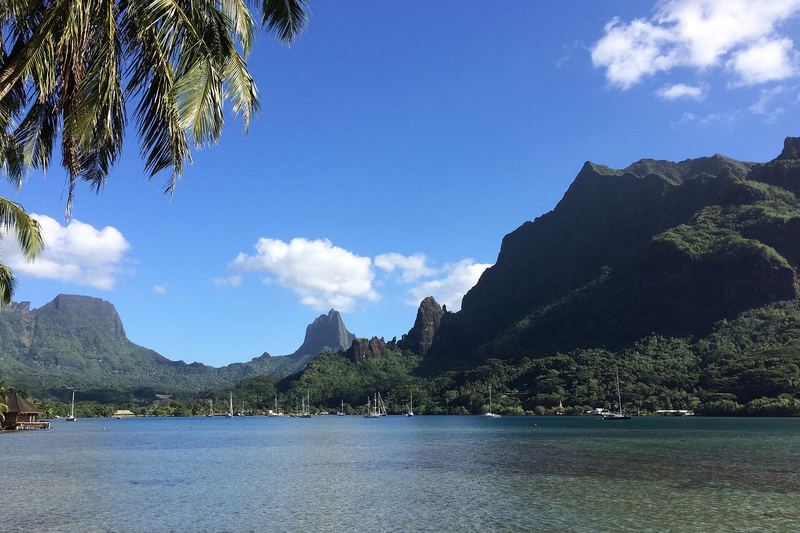
Moorea is smaller and gentler in pace, though not in looks. Its peaks are sharp spires and Mount Rotui stands between Cook's Bay and Opunohu Bay on the north coast. A single coastal road of about 60 kilometers circles the island. Life feels local: churches, roadside fruit stands, pineapple plantations and resorts spread out rather than stacked together.
If you like a bit of city energy and a sense of place, Tahiti delivers. If you want the island to slow you down, Moorea does it within an afternoon.
Beaches and the Lagoon
This is where Moorea pulls ahead for most honeymooners. A coral reef rings the whole island and encloses a lagoon of clear, shallow water. Stingrays glide over sandbanks, blacktip reef sharks patrol the edges and humpback whales pass offshore from roughly July to October. Kayaking or paddleboarding along the reef at sunset is one of the easiest pleasures here.
Tahiti's beaches are mostly black sand, made from the island's volcanic rock. They are striking, especially at Point Venus where a lighthouse stands above the shore. There are also a few lighter sand stretches near Punaauia on the west coast. The lagoon around Tahiti is less of a draw, though the InterContinental's lagoon looks straight across to Moorea.
Couples who picture white sand and water the color of a swimming pool should sleep on Moorea and treat Tahiti's beaches as scenery for a drive.
Where You Will Sleep
On Moorea, our pick is the Hilton Moorea Lagoon Resort & Spa on the north coast between the two bays. Its overwater bungalows sit over water clear enough to snorkel straight from the deck. There is a spa, a pool and a dive center, plus the Toatea overwater crêperie, where blacktip reef sharks glide under the pontoon at sunset. Moorea also has other overwater resorts, boutique hotels, family-run pensions and rentals with lagoon or mountain views.
Tahiti's stays fall into two groups. Larger resorts on the west coast near the airport, including the InterContinental Tahiti Resort and Spa with its overwater bungalows and Hilton Hotel Tahiti, are built for convenience and late flights. Quieter options include Tahiti Pearl Beach Resort on the black sand at Arue and small eco lodges on Tahiti Iti, such as Vanira Lodge with wooden bungalows above the lagoon near Teahupo'o.
What It Costs
Neither island is cheap, but both cost noticeably less than Bora Bora. On Tahiti, expect roughly US$250–600 a night at the larger hotels, with overwater bungalows costing more. On Moorea, overwater bungalows often run from several hundred dollars to around US$1,000 a night. Treat all of these as approximate ranges that move with the season and the room category.
The savings show up elsewhere too. Papeete's roulottes, the food trucks on Place Vai'ete, serve grilled fish, poisson cru, chow mein and crêpes at fairly low prices. Moorea has snack bars and family restaurants with generous plates and lagoon views. Eating out a few nights instead of at the resort makes a real difference to the bill in French Polynesia.
Budget for a rental car on both islands. Taxis are expensive and public buses are limited. Carry cash in French Pacific francs (XPF) for markets and fruit stands.
Days Out for Two
Tahiti's best days happen inland and along the coast. Take a 4x4 tour into the Papenoo Valley, past waterfalls, river crossings and old marae. Drive the east coast to the Arahoho blowhole, the Faarumai waterfalls and Point Venus. Spend a morning at the Papeete municipal market buying flowers, fruit and pareos, then visit the Museum of Tahiti and the Islands to learn about navigation and tattoo. On Tahiti Iti, a boat trip to watch surfers at Teahupo'o is a thrill even if neither of you surfs.
Moorea mixes active mornings with lazy afternoons. Drive up to the Belvedere lookout early for the clearest view of both bays and Mount Rotui. Stop at the Opunohu Valley marae on the way down. Join a lagoon tour to swim with rays, then picnic on a motu. Visit the juice factory and distillery to taste fruit wines and liqueurs. Guided hikes to ridgelines and waterfalls suit couples who packed proper shoes.
Weather and Timing
The two islands share a climate, so you can plan for both at once. The drier season runs roughly May to October, with sunshine, lower humidity and cooling trade winds. It is also the busiest stretch, especially June through August.
A few events can tip your dates. On Tahiti, the Heiva i Tahiti festival of dance, music and traditional sports fills Papeete in July, so book early if you want to see it. The Teahupo'o surf is generally biggest from about May to September. On Moorea, whale watching runs roughly July to October.
November to April is hotter and more humid, with heavier rain at times. On Tahiti, rivers can rise quickly and valley tours may be canceled after storms, so avoid interior roads after heavy rain. Cyclones are rare in the Society Islands but possible, mostly from about January to March. Shoulder months such as April, May, October and November often pair decent weather with better rates.
Linking Them With the Ferry
The easiest honeymoon plan in French Polynesia uses both islands. Nonstop flights reach Papeete from Los Angeles in about 8 hours, on Air Tahiti Nui and Air France. Others leave San Francisco on French bee and, seasonally, United. Hawaiian Airlines flies from Honolulu.
From the Papeete waterfront, ferries run several times a day to Vai'are on Moorea's east coast and take about 30 to 45 minutes. Short flights also connect Papeete with Moorea's airport at Temae. That means you can land in the morning and be over the Moorea lagoon by the afternoon.
A simple split works well: three or four nights on Moorea first to recover from the flight, then two nights on Tahiti before you fly home. Many flights back to the US leave late at night, so a hotel near the airport with a late checkout or a day room turns the wait into one more day of the trip.
Practical Comfort
Mosquitoes are present on both islands and dengue occurs in French Polynesia. Use repellent, cover up at dusk and pack extra for Moorea's valleys. If you're pregnant or hoping to be soon, check CDC travel health notices before you go.
In Papeete, take a taxi or drive yourself at night rather than walking far. Shops close early and on Sundays, so stock up on Saturday if you plan a picnic. On both islands, the coastal roads are narrow and dark after sunset, so plan drives to restaurants with care.
Pack for both moods. Swimwear and reef-safe sunscreen cover the lagoon days. Closed shoes, a light rain jacket and something that can get muddy cover valley tours and hikes. Resort dress codes are relaxed: a sundress or linen trousers, collared shirt or smart shorts is fine for dinner. Bring a cover-up for markets and churches.