The Wildlife Question
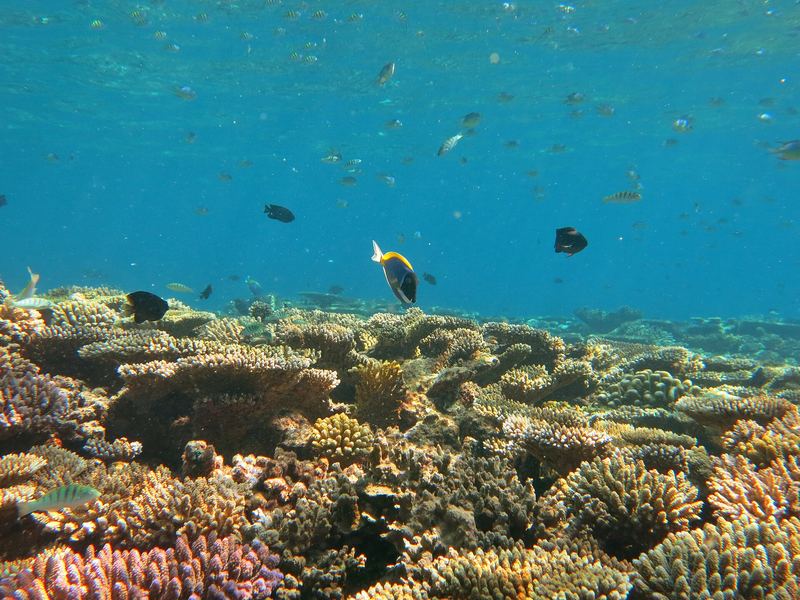
For many couples, this comparison is decided by one animal. Hanifaru Bay in Baa Atoll is a small inlet where tides and monsoon currents funnel plankton, drawing manta rays to feed. As many as a hundred have been recorded at once. The bay is snorkel-only with regulated visits, which suits honeymooners who don't dive, because the best encounters happen right at the surface. Beyond Hanifaru, Baa's reefs host turtles, dolphins and reef sharks. Several islands are protected nesting sites.
South Malé Atoll's wildlife is less about a single event and more about steady action in its channels. Long, deep passes cut through the reef and carry nutrient-rich water, which brings in eagle rays, turtles, reef sharks and schools of jacks. A guided drift snorkel, letting the current carry you along a channel wall, is the signature experience. Neighboring Vaavu Atoll, known for gentle nurse sharks, is within day-trip range.
If you want one jaw-dropping encounter, Baa wins. If you want variety on most days of your stay, South Malé holds its own.
Seaplane or Speedboat
There are no nonstop flights from the US to the Maldives, so both atolls start with a connection through a Gulf, European or Asian hub to Velana International Airport (MLE).
From there, Baa means a seaplane, typically 30 to 40 minutes over a chain of reefs that ranks among the prettiest short flights anywhere. The catch is logistics. Seaplanes fly only in daylight, so an evening landing usually means a night at an airport hotel. Transfers are priced per person and can add a significant amount to your budget. Baggage limits are stricter than on a boat.
South Malé is a 30 to 45 minute ride by speedboat, or by private yacht at Waldorf Astoria Ithaafushi. Boats run day and night, so late arrivals are rarely a problem, though rough water during the southwest monsoon can slow the crossing. Without seaplane weight limits, you can pack an extra outfit for the dressier restaurants.
After 20-plus hours of travel, that difference in arrival friction matters more than it looks on paper.
Resorts and Their Personalities
Baa has three honeymoon benchmarks, each with a clear character. Soneva Fushi, open since 1995 on lush Kunfunadhoo Island, is the original barefoot-luxury resort, with jungle villas on private beaches plus an open-air cinema and an observatory. Four Seasons Resort Maldives at Landaa Giraavaru pairs polish with marine science, including a Manta on Call service that rings your villa when mantas show up at Hanifaru. Anantara Kihavah Maldives Villas is the theatrical one, with an underwater restaurant, an overwater observatory bar and glass-bottom tubs in its water villas.
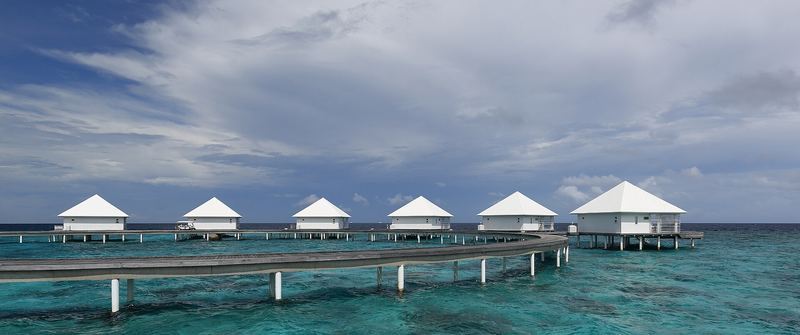
South Malé splits into two very different moods. COMO Cocoa Island has just 33 overwater villas, many shaped like traditional dhoni boats, with a long white sandbank, daily yoga and the COMO Shambhala Retreat. Waldorf Astoria Maldives Ithaafushi spreads around 120 private-pool villas across three islands, with around nine restaurants, treetop dining pods and a vast spa.
The atoll also has guesthouses on inhabited islands such as Maafushi, though those suit backpackers more than honeymooners.
Seasons and Timing
Both atolls follow the national monsoon pattern. December to April is the dry northeast monsoon, with sunny skies, calm seas, the best visibility and the highest rates. June to September is the wetter southwest monsoon, with more wind and showers that usually come in bursts rather than all-day rain. May, October and November sit in between.
Here is where the two diverge. Baa's manta season runs roughly May through November and often peaks from about July to October, which means the cheapest months are also the best for its headline attraction. Couples who don't mind a few showers can get lower rates and a real shot at Hanifaru.
South Malé's channel snorkeling is at its best in the dry season, when the sea is calmer and visibility clearer. Choppy southwest monsoon seas can cancel some boat excursions. So if you're stuck with a summer honeymoon, Baa makes better use of it. If you're traveling between January and April, South Malé's channels are in fine form.
What It Costs
Neither atoll is cheap. Prices below are approximate. At Baa's top three resorts, entry villas typically start somewhere around $1,500 to $2,500 a night before seaplane transfers, which are charged per person and can run high. Because each resort occupies its own island, every meal is in-house, so compare half-board, full-board and all-inclusive plans against à la carte before you book.
South Malé has a wider spread. COMO Cocoa Island's dhoni-shaped water villas often start around $1,300 a night with breakfast, while Waldorf Astoria Ithaafushi entry villas tend to begin around $2,500 before taxes. The big saving is the transfer: speedboat and yacht rides cost far less than a seaplane. You also avoid the extra airport hotel night that Baa can require.
For a couple watching the total, South Malé usually comes in lower. For a couple traveling in the wetter months, Baa's low-season rates narrow the gap and add manta season on top.
Days Together on the Water and Off It
In Baa, plan the days around wildlife and stars. Snorkel Hanifaru in season with trained guides and keep a few mornings open, since sightings depend on tides and plankton. Join a coral-planting session with a resort marine biologist and leave a living souvenir on the reef. Low light pollution makes for superb stargazing. Both Soneva Fushi and Anantara Kihavah have telescopes. A village visit to Thulhaadhoo, known for lacquerwork, gives a glimpse of everyday life. Cover shoulders and knees for both of you.
In South Malé, think current and sandbanks. Drift a channel wall with a guide, take a sunset dolphin cruise on a dhoni and book a day trip to Vaavu for nurse sharks. At COMO Cocoa Island, your butler can serve a three-course picnic on the sandbank. At Ithaafushi, dinner in a bamboo pod at Terra feels like eating in the treetops.
Wear reef-safe sunscreen and a rash guard in either place. The equatorial sun is fierce even under cloud.
Doing Both in One Trip
These two atolls pair unusually well. Many couples with eight or more nights book both. The logic is about the seaplane. Fly to Baa first, ideally on a morning arrival or after one night near the airport. Spend four or five nights with the mantas, the reef programs and the stars. Then transfer to South Malé for the final three nights.
Ending in South Malé means your last transfer is a short boat ride that runs at any hour, so a late-night flight home isn't a scramble. It also gives you a change of mood. You move from a conservation-minded atoll to either a calm wellness island or a resort with nine restaurants, depending on which you choose.
Book the inter-resort transfer through your resorts and leave a buffer on the seaplane day. Weather occasionally shuffles schedules. You want your Baa departure to have room to slip without touching your long-haul flight.