Two Kinds of Luxury
Dubai's luxury is social and showy. Few cities have so many large, well-run luxury hotels and competition keeps service sharp. Mention your honeymoon and upgrades, rose petals and cakes tend to follow. Evenings revolve around skyline terraces, celebrity chef restaurants and the weekend brunch, part lunch and part party.
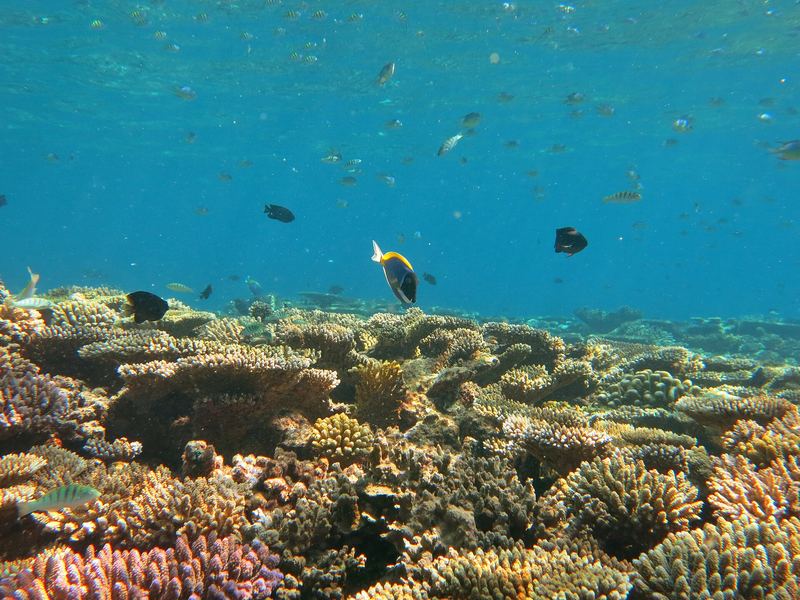
The Maldives' luxury is private. Because each resort occupies its own island, you never share a beach with a public promenade. Villas are spacious and screened, often with private pools and a personal butler handles reservations and surprises. The creativity is famous: dining beneath the sea, movies on a daybed over the water, observatory stargazing and slides from villa to lagoon.
If you want to be seen and to see things, Dubai. If you want to vanish together, the Maldives.
A Typical Day
In Dubai, a day might begin with a swim at your Palm or Jumeirah beach hotel, move on to the Al Fahidi wind-tower district and an abra ride across the Creek, then end at the Burj Khalifa's observation decks at sunset before dinner with a view. Another day could start with a balloon flight over the dunes at sunrise and finish at a desert resort.
In the Maldives, a day might be a snorkel on the house reef before breakfast, a nap, a lazy lunch over the water, a spa treatment and a sunset dhoni cruise, then dinner on a sandbank. Excursions are by boat, to look for mantas in Baa Atoll or whale sharks in South Ari.
Couples with one restless partner often find Dubai easier. Couples who are both exhausted after the wedding usually find the Maldives is exactly right.
Seasons Line Up Nicely
Both are winter destinations for Americans, which makes them easy to combine.
Dubai is best from November through March, with daytime highs in the mid-70s to low 80s Fahrenheit and cool evenings. December and January are busiest and priciest. From May to September it is extremely hot and humid, with highs around 104°F, though hotels discount heavily.
The Maldives is warm year-round. December to April is the dry northeast monsoon with calm seas and the highest rates, with January to April the most reliable. June to September is the wetter, windier southwest monsoon, with short heavy bursts of rain and the lowest prices. It also overlaps with manta season in Baa Atoll, roughly May to November.
A summer honeymoon favors the Maldives, which handles the off-season far better than a 104-degree city.
Where You Will Stay
Dubai's stays come in neighborhoods. Palm Jumeirah has resort hotels with private beaches and big pools. The Jumeirah coast, home to the sail-shaped Burj Al Arab and the canal-lined Madinat Jumeirah, mixes beach and city. Downtown puts you beside the Burj Khalifa with high-floor skyline rooms. Desert resorts in the Dubai Desert Conservation Reserve offer suites with private plunge pools facing the dunes.
The Maldives has the widest range of overwater villas in the world. In Baa Atoll, Soneva Fushi has jungle villas, Four Seasons Landaa Giraavaru polished service and Anantara Kihavah underwater dining. Gili Lankanfushi near Malé offers rustic overwater villas with rooftop star beds. Hurawalhi in Lhaviyani is kid-free. JOALI in Raa and Six Senses Laamu sit at the high end, while Ayada in the far south offers big pool villas for less.
What Each Costs
All figures are approximate and vary widely by season.
Dubai spans every budget, but the honeymoon version is expensive. A comfortable trip with good hotels, a couple of special dinners and a desert night might run about $500 to $900 per day for two. Luxury hotels peak in December and January and alcohol is costly year-round. Cheap pleasures like abra rides and Deira street food help balance the bill.
The Maldives is pricier. Luxury resorts often start above $1,500 a night in high season, before a service charge, tourism tax and daily green tax that can add roughly a quarter or more. Seaplane transfers are per person and can run from several hundred to over a thousand dollars round trip. With nowhere else to eat, a meal plan often makes sense.
Night for night, Dubai is usually the cheaper half of the honeymoon.
Flights and Safety
Dubai is one of the easiest long-haul trips from the US. Emirates has flown nonstop to Dubai International (DXB) from about a dozen US cities, with East Coast flights of about 12 to 13 hours. Downtown is 15 to 25 minutes from the airport.
The Maldives has no nonstops. Most couples connect through Doha, Dubai or Istanbul to Velana International (MLE), often 20 hours or more in total. Speedboats serve North and South Malé atolls, while seaplanes of 30 to 45 minutes fly only in daylight.
On safety, the State Department rates the UAE Level 3, Reconsider Travel, because of armed conflict in the region and flights have been disrupted at times. Check the advisory near your dates and book flexible fares with insurance that covers conflict-related disruption. If that uncertainty is unwelcome, a Doha or Istanbul connection to Malé avoids Dubai entirely.
Doing Both
This is the most popular answer. Because Emirates routes so many US flights through Dubai to Malé, three or four nights in Dubai can break up the journey, often for little extra airfare. Booking the stopover on the same ticket keeps the logistics simple.
Do Dubai first. Recover from jet lag on a beach day, ride an abra across the Creek, book sunset at an observation deck and spend a night in the desert. Then fly about four hours to Malé and give the Maldives at least seven nights, ideally split between a speedboat resort near the airport and a seaplane resort in a farther atoll.
In ten to twelve days, you get the energy of a city and the stillness of a lagoon. That combination is hard to beat for couples who want both.