
Why Honeymoon in Soufrière
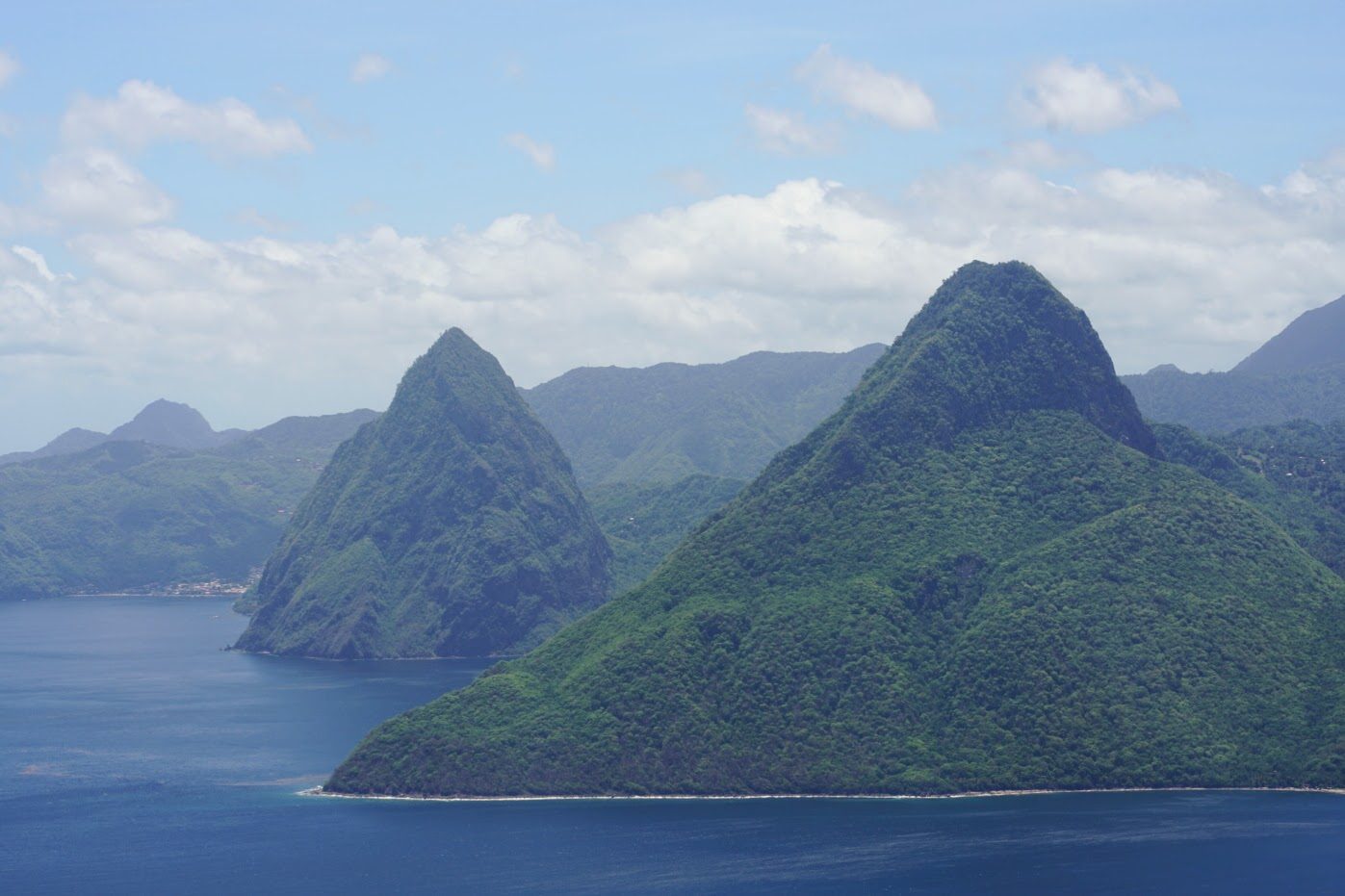
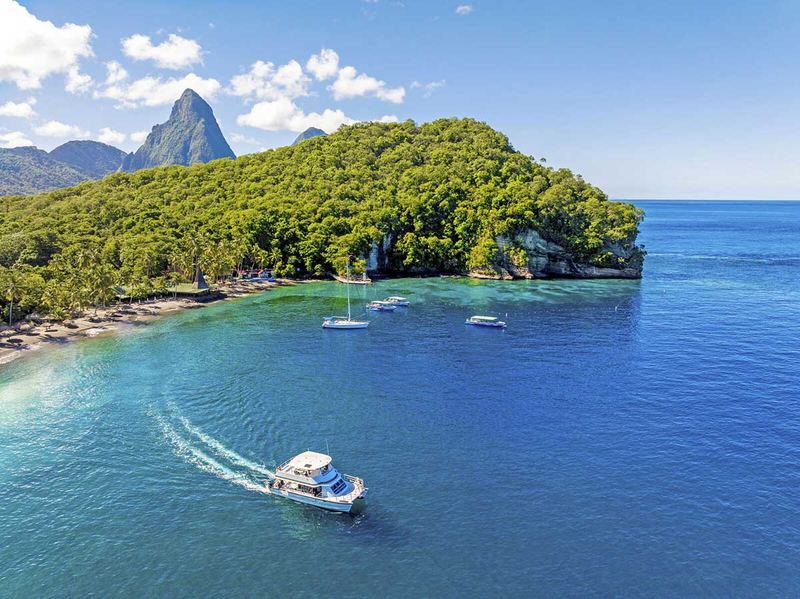
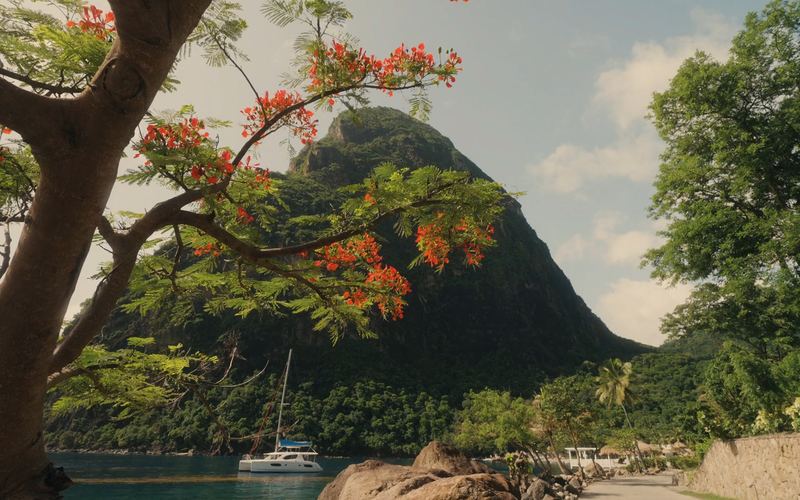
Soufrière is pure drama. Few Caribbean destinations combine such striking scenery with such a concentration of romantic hotels. Mornings begin with mist clinging to the Pitons and hummingbirds darting through the bougainvillea; evenings end with the sun dropping into the sea beside Petit Piton.
It is also a destination with depth. You can soak in volcanic mud, hike a peak, snorkel a protected reef, tour a 300-year-old cocoa plantation and eat Creole food in a local rum shop, all within a few miles. Most resorts here are small and intimate, many are kid-free and the pace is gentle. The trade-off for all that beauty is steep terrain and winding roads, but couples almost universally say it is worth every switchback.
When to Go
The dry season, roughly December through May, is peak time, with sunny days, lower humidity and the most reliable weather; it is also when rates are highest and the best suites sell out months ahead. Christmas, New Year and the weeks around Easter are especially busy.
June through November is the wetter season and overlaps with the Atlantic hurricane season, which typically peaks from August to October. Showers are often short and the rainforest is at its most lush. Shoulder months such as June and November can offer excellent value. Some smaller resorts close briefly in late summer or early fall for maintenance. Whatever the month, temperatures stay warm, generally in the 80s Fahrenheit by day. The hillside resorts benefit from cooling breezes.
Where to Stay
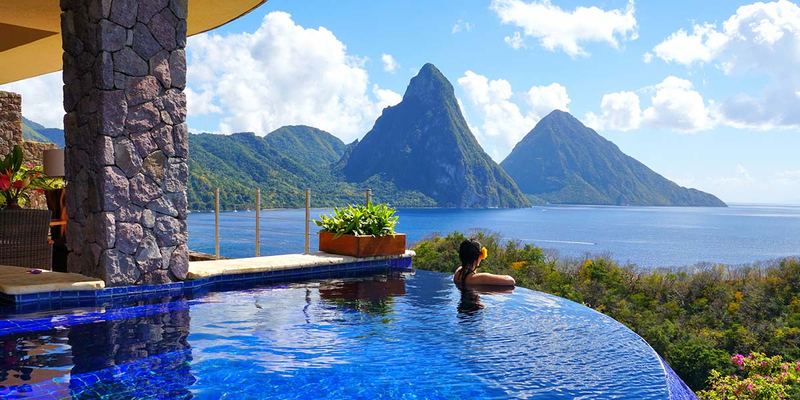
Soufrière's hotels are defined by their views. The four we feature each frame the Pitons in a different way.
Jade Mountain is the top-end splurge: a kid-free tower of open-wall sanctuaries with private infinity pools, high above Anse Chastanet bay. Its sister resort, Anse Chastanet, sits on the beach below, with open-air hillside rooms, a superb snorkeling reef and a relaxed, active vibe at a gentler price. Sugar Beach, A Viceroy Resort, is the only resort set directly in the valley between the two Pitons, with plunge-pool villas, butlers and a treehouse spa. Ladera Resort perches on the ridge about 1,000 feet above the sea, with kid-free open-wall suites, heated plunge pools and its lévé spa.
Beyond these, the area has a handful of smaller boutique hotels and villas, including restored plantation estates. Expect most properties to be on hillsides with stairs or shuttles. As a rough guide, open-wall suites at the top resorts often start in the low four figures a night in peak season, while Anse Chastanet and the smaller hotels can come in well below that.
Romantic Things to Do
Start with the Sulphur Springs, billed as the world's only drive-in volcano, where you can coat each other in mineral-rich mud and rinse off in warm pools. Nearby Diamond Falls Botanical Gardens has a mineral-tinted waterfall and historic baths among tropical flowers.
For active couples, a guided hike up Gros Piton is a rite of passage: a steep climb of several hours through forest to a summit with panoramic views. Tet Paul Nature Trail offers a far gentler walk with Piton views. Snorkeling and diving within the Soufrière Marine Management Area are excellent, especially off Anse Chastanet and the base of the Pitons. Visit a cocoa estate to learn how chocolate is made, then end the day on a sunset sail along the coast, with the peaks glowing gold behind you.
Getting There & Around
Most nonstop flights from the US land at Hewanorra International Airport (UVF) near Vieux Fort, at the southern tip of the island. From there, the drive to Soufrière takes about an hour on a scenic but winding road. Most resorts arrange private transfers. For a faster and more cinematic arrival, a helicopter transfer cuts the trip to around 10 minutes.
George F. L. Charles Airport (SLU) near Castries handles mainly regional flights and is about 1.5 hours away by road. Once in Soufrière, taxis and resort drivers are the easiest way to get around; roads are narrow, steep and drive on the left, so renting a car is best left to confident drivers. Water taxis also connect beaches and some resorts. They're a lovely way to travel.
Food & Drink
Saint Lucian cooking is Creole at heart, blending African, French, British and East Indian influences. Look for green fig and saltfish (the national dish of salted cod with green bananas), bouyon (a hearty stew) and freshly grilled fish with a spicy local pepper sauce. Soufrière's cocoa heritage means chocolate appears everywhere, from estate-made bars to cocoa tea, a spiced hot chocolate traditionally served at breakfast.
Resort dining is excellent, from the Jade Mountain Club to Dasheene at Ladera and the restaurants at Sugar Beach, but do venture out at least once. The cocoa estates around town serve memorable lunches with Piton views. Wash it all down with Piton beer, the local lager, or a rum punch made with Saint Lucian rum.
Honeymoon Tips
- Book early for December through April; the most coveted open-wall suites at Jade Mountain and Ladera fill well in advance.
- Pack light layers and insect repellent; open-air rooms are a joy, but you will share them with the breeze and the occasional bug.
- Expect stairs and slopes everywhere. If mobility is a concern, choose beach-level rooms.
- Book licensed guides through your hotel and carry small US bills for tips. Unofficial guides in town can be persistent; a polite, firm no works.
- Consider splitting your stay: a few nights in an open-wall suite, then a few at a beachfront resort or in the north of the island.
- Mosquitoes can carry dengue here; if you're pregnant or hoping to be soon, check CDC travel health notices for Saint Lucia.