The Water in Front of You
Mauritius' great advantage is its reef. In front of most resorts the lagoon is waist to chest deep for a long way out, warm all year and good for kayaks, paddleboards and lazy snorkeling, even on days when white water is breaking on the reef line. The wild south coast around Gris Gris lacks that reef and is for looking at, not swimming.
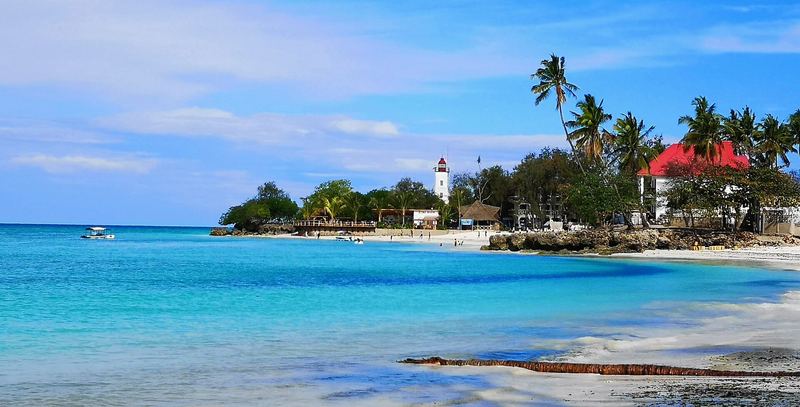
Zanzibar's water is warm and turquoise too, but tides shape the day. On the east coast, a wide lagoon drains dramatically at low tide, leaving the sea far out. The north, around Nungwi and Kendwa, is swimmable at most tides and gets sunsets over the water. Snorkeling and diving around Mnemba's protected reef are excellent, with turtles common.
If easy swimming straight from your room matters most, Mauritius is more reliable. Zanzibar works well if you pick the north.
Life Beyond the Sunbed
Both islands are more than beaches, which is why couples who get restless tend to like them.
On Zanzibar, Stone Town is the draw: coral-stone houses, carved doors, the Old Fort and the Forodhani night food market. Spice farm tours, red colobus monkeys at Jozani Forest and dinner at The Rock, a restaurant on an outcrop in the sea, fill the days.
Mauritius is roughly 40 miles long and packs variety into short drives. Hike a trail in Black River Gorges, see the Seven Coloured Earths and the waterfall at Chamarel, taste rum at a distillery, bargain for spices at the Port Louis Central Market and visit the Aapravasi Ghat immigration depot. The island's Indian, African, Chinese and French roots make its food unusually good for a resort destination.
Zanzibar's culture is concentrated in one old town. Mauritius spreads its interest across the whole island.
Seasons and Storms
Zanzibar is driest from roughly June to October, with July the driest month, which lines up neatly with peak safari season. December to February is hot and humid but mostly sunny. The long rains from about March to May close some resorts, with shorter rains around November and December.
Mauritius has a summer from about November to April that is hot, humid and the warmest for swimming, with short downpours and cyclone risk, highest from late December to March. Dengue flares in some years in the wet months, so pack repellent. Winter, from May to October, is drier and cooler, with trade winds making the east and south coasts breezy from June to August. The sweet spots are April to early June and September to early December.
If you're pregnant or hoping to be soon, check CDC travel health notices for both.
Where to Stay
On Zanzibar, the choice of coast shapes the trip. &Beyond Mnemba Island, a private island off the northeast coast, is the barefoot splurge, with beachfront bandas and a protected reef. Elsewhere, boutique beach hotels and larger resorts cover a wide range of prices. A night or two in a restored Stone Town merchant house adds culture.
Mauritius lets you split your stay between coasts. Le Morne, under a UNESCO-listed basalt mountain, has The St. Regis Le Morne Resort with butler service, LUX* Le Morne with sunsets over the lagoon and the good-value Paradis Beachcomber. Belle Mare on the east coast has Constance Prince Maurice, with thatched suites on stilts and a private peninsula. Heritage Le Telfair in the south pairs golf with wellness. Grand Baie in the north is the social side, with restaurants and catamaran trips.
Costs on the Ground
All figures here are approximate and swing with season.
In Mauritius, comfortable four-star beach hotels often run around $250 to $450 a night for two with breakfast or half board. The best-known five-star resorts typically start around $600 and can pass $1,500 in peak weeks. Eating out is cheap: street snacks like dholl puri cost a dollar or two and a good dinner for two locally might be $40 to $80. Catamaran day trips run around $60 to $120 per person.
On Zanzibar, boutique beach hotels start at a few hundred dollars a night, with Mnemba Island considerably higher. Stone Town street food, including Zanzibar pizza and grilled seafood, is inexpensive. Dhow cruises and spice tours are modest.
Both are good value next to the Maldives or the Seychelles. Mauritius has more four-star choice; Zanzibar is cheaper day to day.
Flights and Transfers
Zanzibar (ZNZ) is served by Qatar Airways, Turkish Airlines, Ethiopian Airlines and Kenya Airways, so connecting from the US through the Middle East or Europe is simple. Light aircraft fly directly from safari airstrips and Arusha. Beaches in the north are an hour to an hour and a half by road from the airport.
Mauritius has no nonstops from the US. Emirates through Dubai is the most popular routing, with a shorter hop of about six and a half hours from Dubai to the island. Air France and Air Mauritius fly from Paris, British Airways from London and several carriers from Johannesburg. Door to door, plan on roughly 20 to 26 hours. Resort transfers from Sir Seewoosagur Ramgoolam Airport (MRU) take 30 to 90 minutes.
Zanzibar is the shorter detour if you are already in East Africa.
How Long to Stay
Zanzibar shines as a four or five night finale. That is enough to decompress after early safari mornings, spend a day in Stone Town and take a sunset dhow. Longer stays work too, though couples coming for the beach alone often add a second chapter elsewhere.
Mauritius rewards a longer stay. Given the travel time from the US, ten days on the ground is a sensible minimum, allowing two resort stays on different coasts plus a few day trips. Twelve to fourteen days lets you add Rodrigues, a rustic island 90 minutes away by plane, or a stopover in Dubai or South Africa.
If you have two weeks and want safari plus beach, Tanzania with Zanzibar is the easier shape. If you have ten days for the beach alone, Mauritius gives you more to do.