Sea or Land
Greece's honeymoon geography is the Aegean. Whitewashed villages tumble down volcanic cliffs on Santorini, golden coves line the south coast of Mykonos and Milos has some of the best swimming in the Cyclades, with sea caves you reach by boat. Afternoons are spent on boats. Evenings end with a sunset somewhere over the water.
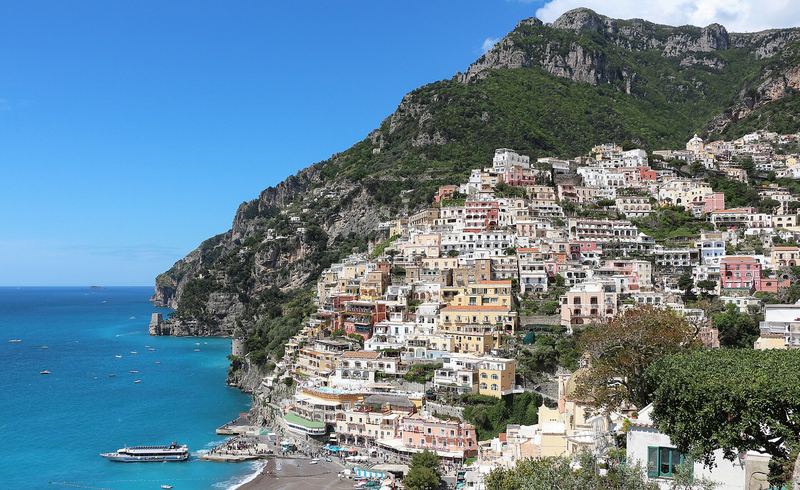
Italy's honeymoon geography is far more varied. The Amalfi Coast gives you pastel towns stacked above the sea. Lake Como frames villas and wooden motorboats against the Alps. Tuscany is rolling vineyards and medieval hill towns. Venice is canals, palaces and gondolas at dusk. Each stop feels like a different trip.
If your happiest moments are in or beside the sea, Greece is the more focused choice. If you would like a honeymoon where every few days the scenery changes completely, Italy is hard to beat. Both have more than enough beauty for a lifetime of anniversary trips.
The Hotels
Greece's strength is the small, romantic suite hotel. Santorini and Mykonos have some of Europe's most romantic small hotels, many with private pools or hot tubs on the terrace. Our favorites on Santorini include Katikies Santorini, Canaves Oia Epitome and Grace Hotel in Imerovigli. On Mykonos, Cavo Tagoo is known for its infinity pool above the Old Port, while Santa Marina has its own sandy cove on Ornos Bay.
Italy's strength is the grand, storied hotel, often family-run for generations. On the Amalfi Coast we love Le Sirenuse, Hotel Santa Caterina, Caruso and Monastero Santa Rosa. On Lake Como there is the historic Villa d'Este and the intimate Passalacqua. In Tuscany, restored estates such as Borgo Santo Pietro combine countryside and serious kitchens.
Greek hotels excel at privacy and views. Italian hotels excel at history, gardens and a sense of occasion. Both reward booking months ahead for summer.
Eating and Drinking
Italy has the edge for couples who travel to eat. Every region has its own specialties, from Amalfi seafood and lemons to Tuscan steak and Lake Como perch. Evenings begin with aperitivo on a terrace, lunch runs from about 1 to 3 p.m. and dinner rarely starts before 8. Wine country is a destination in itself, from Brunello among the cypresses to Campanian whites on the coast.
Greek food is simpler and very good. Think grilled fish by the water, tomato fritters and fava on Santorini, island cheeses and long lunches under grapevines. Greek wine has a growing reputation, led by Santorini's dry, mineral Assyrtiko. Dinner is social and late, often from around 9 p.m., with plates shared and lingered over. Yamas is the toast you will hear over every glass.
If restaurant reservations are the backbone of your plans, choose Italy. If you would rather find a waterside taverna and stay for three hours, Greece is ideal.
Getting There and Moving Around
Both are among the easier long-haul honeymoons from the US. In summer there are nonstop flights from New York and several other US hubs to Athens (ATH). Italy has nonstops to Rome, Milan and, seasonally, Venice from major American hubs, typically around eight to ten hours from the East Coast.
Once there, the systems differ. In Greece you move by ferry and short domestic flight. Summer winds can delay or cancel ferries, so plan your last night in Athens rather than on an island. Taxis are scarce on the islands in high season, so book hotel transfers.
Italy runs on high-speed trains linking Venice, Milan, Florence, Rome and Naples, with drivers, boats and ferries for the last stretch to the coast or lakes. Driving is best avoided in cities and on the Amalfi Coast. An open-jaw ticket, such as into Venice and out of Naples or Rome, saves backtracking.
When to Travel
The seasons are almost identical. In both countries late May, June, September and early October are the sweet spots, with warm days, swimmable seas and fewer crowds than midsummer. July and August are the hottest and busiest months, with peak prices.
Greece's island season runs roughly April or May to October. Many hotels on Santorini and Mykonos close from about November to March. In the Cyclades, the strong meltemi winds of July and August can make crossings choppy.
Italy is more flexible outside summer. Many Amalfi Coast and Lake Como hotels also close from about November to March, but a winter trip to Venice, Florence and Rome works well, with cozy dinners and fewer crowds. Tuscany's harvest and truffle season make September through November special for food-focused couples. April is lovely for cities and gardens.
If your wedding is in winter, Italy's cities are the better honeymoon. For summer, both shine.
What It Costs
Neither is a budget honeymoon at the top end. The ranges overlap. In Greece, boutique mid-range hotels run roughly $300 to $700 a night, while luxury caldera or beach suites with private pools are often well over $1,000 a night in peak summer. A high-end dinner for two with wine often costs $200 to $400 or more. A private catamaran or yacht charter runs from several hundred to a few thousand dollars a day.
In Italy, luxury hotels in the top honeymoon regions range from several hundred dollars a night at boutique properties to well over $1,500 at the most famous addresses in peak season, with suites far higher. Drivers, private boats and guided tours add up quickly, though high-speed trains are reasonably priced. Most towns charge a nightly tourist tax.
All figures are approximate. In both countries, June and September usually offer better value than July and August.
Two Sample Routes
A classic 13-night Greek honeymoon: two nights in Athens to recover and see the Acropolis, five on Santorini for a caldera cruise, a winery and Akrotiri, five on Mykonos for beaches, a boat day and Delos, then a final night in Athens. With a week, choose one island or split three nights each between Santorini and Mykonos.
A classic 13-night Italian honeymoon: three nights in Venice, three on Lake Como, three at a Tuscan estate and four on the Amalfi Coast, moving by train and driver, then flying home from Naples or Rome. With a week, choose two regions, such as Venice and Lake Como or Tuscany and the Amalfi Coast.
In both, allow at least three nights per base. Some couples combine the two countries with a flight between Athens and Rome or Naples. That works on a trip of two weeks or more, but most honeymoons feel better focused on one.