A Long View or a Close-Up
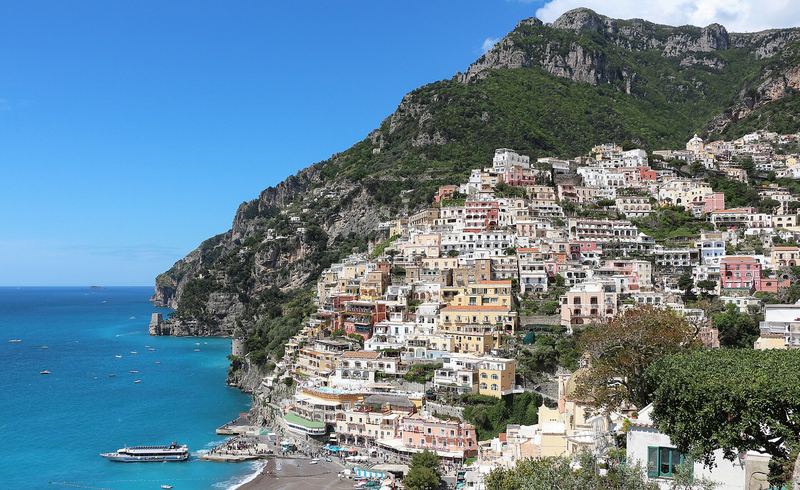
The Amalfi Coast is a long view. Towns climb the cliffs in pastel layers, lemon terraces drop toward the water and the road keeps rounding bends to reveal another village below. Positano is the stylish one. Amalfi has its cathedral and busy harbor. Ravello sits high above the sea among gardens, while small places like Atrani, Cetara and Conca dei Marini fill the gaps between them.
Capri is a close-up. Sheer limestone falls into clear water, the Faraglioni sea stacks stand off the southeast shore and bougainvillea spills over white walls in Capri town and Anacapri. The island feels self-contained in a way the coast cannot, since you can see most of it in a day and still want to repeat the best parts.
Couples who like discovering somewhere new each day lean toward the coast. Couples who like settling into one place and knowing it well tend to fall for Capri.
Getting There and Getting Around
Both trips start at Naples International Airport (NAP), usually reached from the US with a connection through Rome or another European hub. Some summers bring seasonal nonstops to Naples, so check what is running for your dates. You can also fly into Rome and take the high-speed train to Naples in about 70 minutes.
From Naples, a private car reaches Positano or Amalfi in about an hour and a half, depending on traffic. Capri is a 50-minute hydrofoil from the Molo Beverello port, itself about 20 minutes from the airport. On the island a funicular climbs from Marina Grande to Capri town in five minutes, while small buses and open-top taxis cover the rest.
The coast takes more planning. Its road is narrow and congested in summer, with limits on non-resident cars on busy days, so a private driver or the ferries between Positano, Amalfi and Salerno beat driving yourselves. Capri wins on ease, with one catch: strong wind can cancel boats.
Crowds and the Daily Rhythm
Both places get busy at midday in summer, though they handle it differently. Capri's crowds arrive by ferry around ten in the morning and leave in the early evening. Stay overnight and you get the island at its best, with lanterns lit in the Piazzetta and the cliffs turning pink over the sea. The Capri you see at 8 p.m. is far calmer than the one you see at noon.
On the Amalfi Coast the pressure shows up on the road and in Positano's lanes, where July and August bring the heaviest traffic and the highest rates. Ravello stays hushed even in peak season, which is one reason couples pair it with Positano.
Wherever you stay, the fix is the same. Do the busy sights early, keep the afternoon for a long lunch or the hotel pool and go out again once the light softens. August is the month to avoid in both places if your dates are flexible, while May, June and September give you warm water with fewer people.
Where You Will Sleep
The coast has the wider range. Le Sirenuse in Positano is the family-run classic, with candlelit dinners and the town spread below your balcony. Hotel Santa Caterina, just outside Amalfi, has cliff elevators down to its own beach club. Caruso, A Belmond Hotel crowns Ravello with its famous infinity pool. Monastero Santa Rosa in Conca dei Marini is a 20-room former convent for couples who want privacy. Plenty of small guesthouses sit between these names.
Capri's hotels are fewer and more intimate. Hotel Punta Tragara stands on a quiet bluff facing the Faraglioni, a short walk from the Piazzetta. Hotel Caesar Augustus sits on the high cliffs of Anacapri, looking across the bay to Vesuvius. J.K. Place Capri is a white villa above Marina Grande with a beach-house feel. Choose Capri town for evenings out or Anacapri for quiet. On either side, ask whether your hotel sends a porter to meet the ferry, because the stepped lanes are hard work with luggage.
What It Costs
Neither is a budget honeymoon at the top end. The famous hotels on both are among the most expensive in Italy in July and August. Rates drop noticeably in May and late September. Treat any nightly figure you see as an approximate starting point that climbs fast in peak weeks.
The coast gives you more ways to save. Mix two splurge nights at a famous hotel with a smaller guesthouse in Amalfi or Ravello, use ferries and buses for some hops and keep the private driver for airport transfers. Capri has family-run guesthouses in both towns that offer good value, yet everyday costs add up, from open-top taxis to Piazzetta drinks priced for the view.
Budget extra in both places for a private boat day, the best splurge either one offers. Set aside more for beach clubs, where loungers rent by the day. A sensible plan is to let Capri be the short, expensive chapter while the coast carries the longer stretch at mixed prices.
Days Together
The coast has more to fill a week. Hike the Path of the Gods above Positano in the cool of the morning, wander the gardens of Villa Cimbrone to the Terrace of Infinity, take a cooking class with a local family or visit a lemon grove for a limoncello tasting. Pompeii and Herculaneum are within day-trip range if one of you loves history. In summer the Ravello Festival holds concerts in the gardens of Villa Rufolo.
Capri's list is shorter but very good. Charter a skippered boat around the island to swim in coves you cannot reach on foot and float through the arch beneath the Faraglioni. Ride the single-seat chairlift from Anacapri to Monte Solaro, walk the Pizzolungo path from the Arco Naturale to Punta Tragara late in the afternoon and book lunch at La Fontelina below the rocks. The Blue Grotto is lovely but brief and often closed in rough seas, so count it as a bonus. Two or three days covers Capri well, while the coast keeps giving after five.
How to Split the Trip
Combining them is easy and it is what we suggest for most couples. In season, ferries link Capri with Positano, Amalfi and Sorrento, so the transfer becomes part of the fun. A common plan is three or four nights on the coast followed by two or three on Capri, then a hydrofoil back to Naples for the flight home.
If you would rather not change hotels, a private boat day from the coast lets you see Capri's coves and have lunch on the island. You miss the quiet evening that makes it special, though, so we would only do this on a short trip.
Order matters a little. Ending on Capri gives you a calm finale and puts you one boat ride from Naples airport. Starting there works if your flight lands early, although you then face the coast road with luggage. Leave a buffer day before flying home either way, since wind can cancel ferries. For a longer honeymoon, add Rome at the start; the train to Naples makes it a simple first leg.