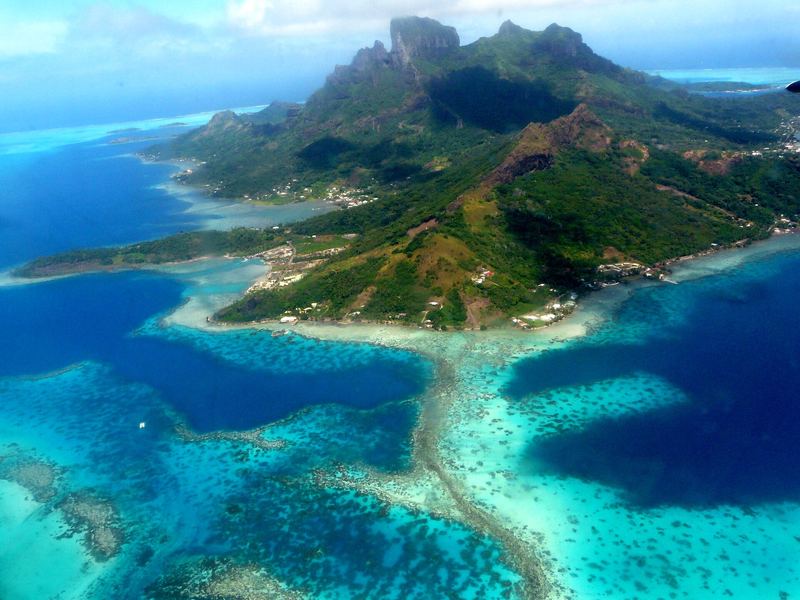
High Island Versus Coral Atoll
Bora Bora's beauty is vertical. Mount Otemanu, about 727 meters high, gives every view drama. The lagoon around it is protected by an outer reef, calm and warm for swimming straight from your deck. Blacktip reef sharks, stingrays and reef fish are everyday sights. Everything feels composed, as if the island were designed around a single viewpoint.
Rangiroa's beauty is horizontal. There are no peaks, only flat islets, coconut palms and a lagoon that feels like an inland sea, turquoise on one side and deep ocean blue on the other. The light is enormous. Sunsets over the open Pacific and the lagoon are a daily event. Its name means something close to vast sky, which is exactly how it feels.
Couples who fall for Bora Bora tend to love being looked after in a beautiful setting. Couples who fall for Rangiroa tend to love the sea for its own sake. Neither is the lesser choice. They simply answer different wishes.
What Lives in the Water
Bora Bora's lagoon tours are gentle and reliable. You'll swim with blacktip reef sharks and stingrays in shallow, sandy water and explore coral gardens bursting with fish. Choose an operator that doesn't feed the animals. Divers can explore the outer reef, where rays and sharks are common.
Rangiroa raises the stakes. The Tiputa Pass is one of the most famous drift-diving sites in the South Pacific, with reef sharks, eagle rays and big schools of fish. Bottlenose dolphins regularly ride the standing waves at its mouth on an incoming tide. You can often watch them from a lookout at the point without getting wet. Snorkelers can drift through the Aquarium, a sheltered coral area near the pass. Experienced divers come for great hammerheads, most often seen from roughly December to March.
Non-divers will be happy on both, though Rangiroa needs only two or three days of snorkeling and boat trips for most. Divers often stay a week. Bring your certification card and logbook, since some sites require advanced certification.
Where You'll Sleep
Bora Bora has one of the world's highest concentrations of luxury overwater bungalows. Four Seasons Resort Bora Bora on Motu Tehotu has plunge-pool bungalows and Otemanu views. The St. Regis Bora Bora Resort on Motu Ome'e has some of the largest overwater villas in the South Pacific, a private Lagoonarium and a kid-free pool. Conrad Bora Bora Nui wraps around a sheltered cove. The InterContinental Thalasso has been closed for a full renovation, so check whether it has reopened. Family-run pensions on the main island suit tighter budgets.
Rangiroa's stays are fewer and simpler. Most sit on the main motu between the village of Avatoru and the Tiputa Pass, so you can cycle to the dolphin lookout and dive shops. The atoll has one main resort with beach bungalows, overwater villas and its own dive center, along with a smaller lagoon-side hotel. Family-run pensions are common and good value, many with breakfast and dinner included and bicycles to borrow. Across the pass, Tiputa village has a few guesthouses for couples who want real quiet.
Rooms are limited on Rangiroa, so book early for the dry season.
The Budget Gap
This is one of the clearest differences. All figures are approximate. On Bora Bora, overwater bungalows at the top resorts run from around $1,000 to several thousand dollars a night. Dining is expensive because nearly everything is imported, so breakfast or half-board packages make sense. Some resorts charge per person for boat transfers.
On Rangiroa, pensions often cost about $200 to $350 a night for two with breakfast and dinner. The main resort's overwater villas cost several times that, but still usually less than Bora Bora's leaders. Snack bars and small restaurants around Avatoru offer simpler meals. Hotels and pensions arrange short airport transfers.
The extra cost on Rangiroa is in activities. Dives, Blue Lagoon trips and the pink sand excursion add up, especially if you dive daily. Carry cash, since some pensions, tours and shops prefer it and ATMs are limited.
For couples on a tighter budget who still want French Polynesia, Rangiroa offers a lot of ocean for the money.
Getting There From the US
Both start with a nonstop flight to Papeete (PPT) on Tahiti. Air Tahiti Nui and Air France fly from Los Angeles, United and French bee from San Francisco. The flight takes about eight hours. Tahiti shares Hawaii's time zone.
For Bora Bora, Air Tahiti flies about 50 minutes from Papeete to Bora Bora Airport (BOB) on Motu Mute, with several flights daily. Your resort's boat meets you for a 10 to 20 minute ride.
For Rangiroa, Air Tahiti flies about an hour from Papeete to Rangiroa (RGI). Most hotels are 5 to 15 minutes from the airport by road. Air Tahiti also links Rangiroa with Bora Bora and nearby Tuamotu atolls such as Tikehau and Fakarava, though some routes don't run daily.
On Bora Bora, you'll mostly move by boat. On Rangiroa, the main motu has one road of about six miles, so bicycles and scooters are the easiest way around. The Blue Lagoon, the pink sands and Tiputa village all need a boat.
Seasons and Sea Conditions
Both islands are warm year-round. The drier, cooler season runs roughly May to October, with sunny skies, trade winds and lower humidity. It's peak season on both. November to April is warmer and wetter, with short tropical bursts of rain and lower rates. It overlaps the South Pacific cyclone season, though direct hits are uncommon.
The Tuamotus tend to be drier than the Society Islands, so Rangiroa can fare a little better in the wet season. That season also brings great hammerheads to Tiputa Pass, roughly December to March, for experienced divers. Manta rays and dolphins appear year-round, though sightings are never guaranteed.
Wind matters more on Rangiroa. Its lagoon is big enough for strong winds to raise real waves, which can cancel crossings to the Blue Lagoon or pink sands. Keep a spare day. Bora Bora's sheltered lagoon is calmer for daily tours.
Pack reef shoes, reef-safe sunscreen and a rash guard for both. Rangiroa's motu trips have very little shade.
Making It a Two-Island Trip
These islands pair beautifully because they're so different. Air Tahiti links them directly on some days, so you don't always need to route through Papeete.
A popular plan is Rangiroa first, while you have energy for dives, dolphins and boat days. Spend three or four nights there, then fly to Bora Bora for four or five nights of resort life and Otemanu sunsets. Ending in Bora Bora means your trip finishes on its most polished note. Add a night on Tahiti if your flight times are awkward.
Couples who aren't divers might do the reverse: unwind on Bora Bora first, then finish with a few nights of pension life and big skies on Rangiroa.
Check schedules early, since some routes don't run daily and flights fill in high season. Leave buffer time between interisland flights and your international departure. If you're diving, avoid flying within the recommended no-fly window after your last dive.