Two Very Different Islandscapes
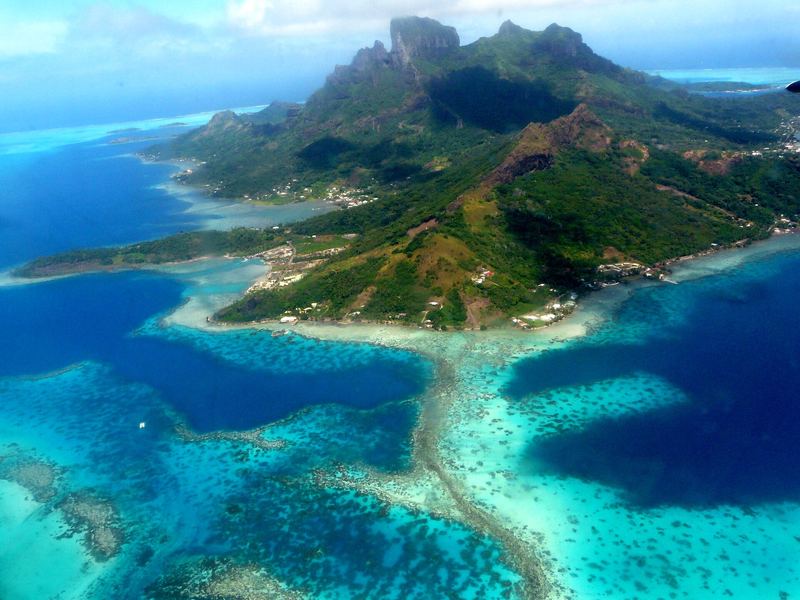
Bora Bora is one composition. Mount Otemanu, about 727 meters high, rises from the center of the island and appears in almost every view. Around it, an outer reef encloses a lagoon that shades from pale aquamarine to deep sapphire. A necklace of motus separates it from the open Pacific. The setting is compact and complete.
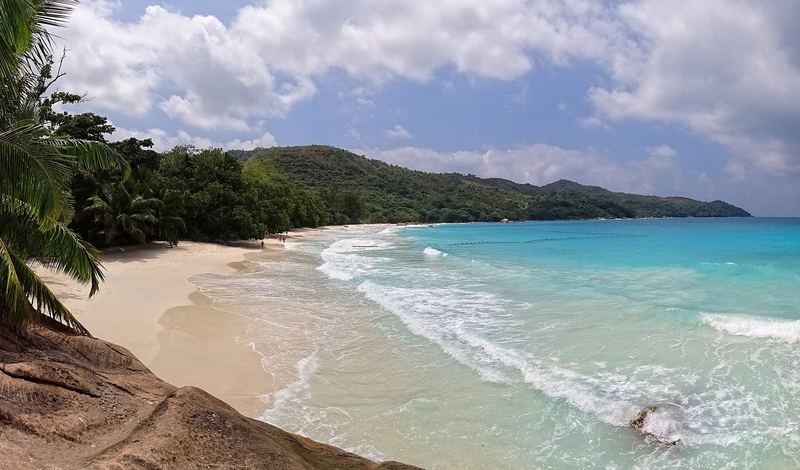
The Seychelles is many compositions. Praslin has Anse Lazio and the Vallée de Mai, a UNESCO-listed palm forest where the coco de mer grows. La Digue has bicycles instead of traffic and Anse Source d'Argent, with its boulders and shallow water. Mahé has mountain trails above the capital, Victoria. Private islands such as North Island and Félicité add total seclusion.
Couples who like a single perfect place to unwind lean Bora Bora. Couples who like a sense of discovery lean Seychelles.
Overwater or Over the Sand
Bora Bora's resorts are built for the lagoon. Four Seasons Resort Bora Bora on Motu Tehotu has around 100 overwater bungalows, many with plunge pools and Otemanu views, plus a marine sanctuary with resident biologists. The St. Regis Bora Bora Resort has some of the largest overwater villas in the South Pacific, a private Lagoonarium and a kid-free pool. Conrad Bora Bora Nui wraps around a sheltered cove on hilly Motu To'opua, with a hilltop spa.
The Seychelles favors villas on land, usually with private pools. Raffles Seychelles on Praslin is all villas with plunge pools above Anse Takamaka. North Island has just 11 very large villas. Six Senses Zil Pasyon on Félicité has infinity-pool villas and a spa among the granite boulders. Four Seasons Resort Seychelles on Mahé climbs a hillside above Petite Anse. Four Seasons at Desroches Island and Denis Private Island take you to the outer and northern islands.
If sleeping over water is essential, Bora Bora is the answer.
Snorkeling, Hiking and Wildlife
In Bora Bora, the lagoon is the activity. Snorkel straight from your deck, join a tour to swim with blacktip reef sharks and stingrays over sand, or explore coral gardens and picnic on a motu. Choose operators that do not feed wildlife. Divers head to the outer reef for rays and sharks. On land, a 4x4 tour visits WWII cannons and lagoon viewpoints. A helicopter flight shows the lagoon from above. Humpbacks pass from roughly July to October.
In the Seychelles, the land matters as much as the sea. Walk the Vallée de Mai, cycle La Digue, hike the Morne Seychellois trails on Mahé and visit Curieuse Island for giant tortoises. Snorkel with turtles. On the private islands, join conservation teams monitoring nesting turtles and restored forests.
Bora Bora suits couples who want to stay wet all day. The Seychelles suits couples who also want to hike and see wildlife on land.
Getting There From the US
This is where Bora Bora wins for many couples. Fly nonstop from Los Angeles or San Francisco to Papeete (PPT) on Tahiti in about 8 to 9 hours, then take Air Tahiti's roughly 50-minute flight to Bora Bora Airport (BOB) on Motu Mute. Your resort's boat meets you for a 10 to 20 minute transfer. Time zones are close to Hawaii's, so jet lag is mild from the West Coast.
The Seychelles has no nonstop flights from the US. Most couples connect through Dubai, Doha or Addis Ababa to Seychelles International Airport (SEZ) on Mahé, with total travel times of 20 hours or more from the East Coast. Then come ferries to Praslin and La Digue, short flights or helicopter transfers to private islands.
For East Coast couples the gap narrows, since Bora Bora also means crossing the country first. Even so, the Seychelles needs at least 8 to 10 nights to justify the journey. Bora Bora works in five to seven.
Weather and Timing
Bora Bora's drier season runs roughly May to October, with lower humidity, sunny skies and trade winds. It is peak season, especially June through August. November to April is warmer and wetter, with rain often in short bursts. It also falls within the South Pacific cyclone season, though direct hits on Bora Bora are uncommon. April, May, October and November often balance weather and value.
The Seychelles is warm all year, usually in the 80s Fahrenheit. It sits outside the main cyclone belt. From roughly May to September, southeast trade winds bring drier, breezier weather and choppier seas on southeast coasts. From roughly December to March, the northwest monsoon brings heat, humidity and heavier showers. April to May and October to November are the calmest months, with the best visibility for snorkeling.
That makes April, May, October and November strong months for both. Because Seychelles beaches face every direction, you can usually find calm water somewhere in any season.
What It Costs
Both sit at the top of the honeymoon price range. All figures here are approximate.
In Bora Bora, overwater bungalows at the top resorts run from around $1,000 to several thousand dollars a night. Small family-run pensions on the main island often cost a few hundred. Almost everything is imported, so resort dining is expensive and breakfast or half-board packages help. Some resorts include airport boat transfers and others charge per person.
In the Seychelles, luxury resorts on Praslin and Mahé often range from several hundred to well over a thousand dollars a night. Private island resorts usually start well into four figures and can reach several thousand. Helicopter transfers add a significant sum each way. You can save by mixing in a guesthouse, using ferries between Mahé and Praslin and eating at Creole takeaways.
Flights to the Seychelles usually cost more from the US, but the mix of islands makes it easier to balance splurge and value.
Planning the Perfect Split
In Bora Bora, plan at least five nights. Ask for an Otemanu-view bungalow, book a lagoon tour early in the stay and keep one day for doing nothing at all. With ten days, add Moorea for hiking and rays on the sandbank, or Tetiaroa for a private-island finale. A night or two on Tahiti helps with late flights home.
In the Seychelles, a classic 10-night plan runs two nights on Mahé, four on Praslin at Raffles Seychelles with a day trip to La Digue, then four on a private island such as North Island or Six Senses Zil Pasyon. With less time, skip Mahé and connect straight to Praslin. With more, add nights on La Digue to enjoy its quiet evenings.
The two do not combine sensibly on one trip. They sit in different oceans, roughly half a world apart. Pick the one that fits your flight, your calendar and whether you want to wake up over water or under granite peaks.