Sand Versus Cliffs
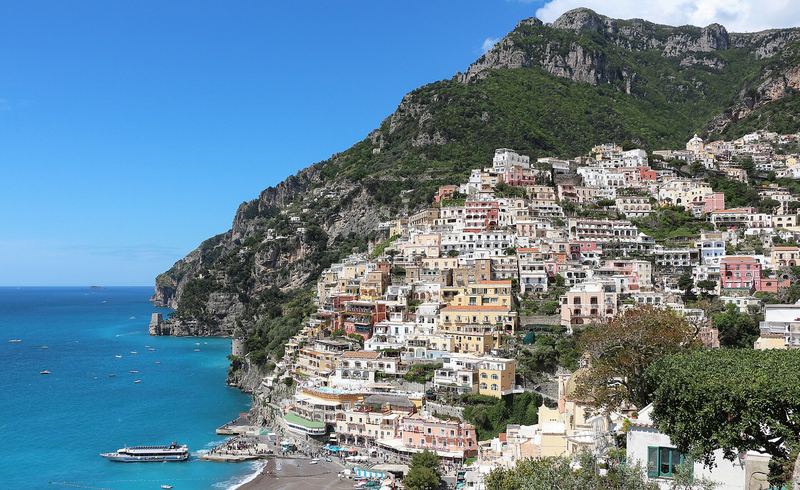
The most practical difference is the shoreline. The Amalfi Coast is vertical. Towns cling to the rock and beaches are small, pebbly coves or rocky platforms with ladders into the sea. Beach clubs rent loungers by the day. Many of the best swims happen from a boat. The drama is the point: houses stacked on the cliffs, church domes and lemon terraces dropping to the water.
Tropea has real sand. The old town sits on its cliff, but stairways lead down to long pale beaches with lidos, umbrellas and turquoise water that looks more Caribbean than Mediterranean. South toward Capo Vaticano, coves such as Grotticelle have some of the clearest water in Italy, reached by steps or by boat. September often brings the warmest sea of the year.
If the two of you picture yourselves lying on sand with a book for hours, Tropea suits that better. If you picture a boat, a swim off the side and lunch on a terrace, Amalfi does it better.
Where You Will Sleep
Hotels are where the Amalfi Coast pulls ahead. Le Sirenuse, a family-run villa in the middle of Positano, is the classic. Hotel Santa Caterina near Amalfi has cliff elevators to its own beach club. Caruso, A Belmond Hotel, crowns Ravello with its famous infinity pool. Monastero Santa Rosa in Conca dei Marini is a 20-room former convent with terraced gardens. These are among Italy's most expensive hotels in summer, so many couples book a couple of splurge nights there and the rest at a smaller guesthouse.
Tropea's stays are simpler and gentler on the budget. In the historic center, boutique hotels and guesthouses fill restored palazzi, some with terraces looking straight over the sea. Toward Capo Vaticano and Ricadi, resort hotels sit above coves with pools and private beach access, which suits lazy days though you will want a car or taxi into town at night. Beachfront hotels at the foot of the cliffs offer the quickest swims.
Getting There From the US
The Amalfi Coast is easier to reach. Most couples fly into Naples International Airport (NAP), often connecting through Rome or another European hub, or take the high-speed train from Rome to Naples or Salerno. A private car from Naples to Positano or Amalfi takes about an hour and a half. Once there, ferries in season link Positano, Amalfi, Salerno and Capri. Driving yourselves on the narrow coast road is more stress than romance.
Tropea takes one more step. Fly to Lamezia Terme International Airport (SUF), connecting through Rome, Milan or another hub, then drive about an hour. Regional trains also stop at Tropea station on the coastal line, though connections can be slow. The old town and main beaches are walkable. A car helps for Capo Vaticano, Pizzo and the hinterland, although summer parking is limited and the historic center restricts traffic. Night taxis are scarce, so arrange a return ride through your hotel if you dine outside town.
Food on the Table
Both coasts eat from the sea, but the flavors differ. Amalfi cooking is built on seafood and the lemon. Look for scialatielli with seafood, spaghetti alle vongole and spaghetti with fried zucchini near Nerano. Cetara makes colatura di alici, an amber anchovy sauce. Lemons from the terraced groves go into limoncello and the delizia al limone. The sfogliatella Santa Rosa was created by nuns in Conca dei Marini. Falanghina and Fiano are the local whites.
Calabrian food is bolder and spicier. The sweet red onion of Tropea turns up raw in salads, in marmalade and on pizza. 'Nduja, the soft spreadable salami from nearby Spilinga, adds heat to pasta and bruschetta. Swordfish, tuna from Pizzo and fried anchovies dominate menus, along with fileja pasta in spicy sauces. Dessert is tartufo di Pizzo, a chocolate and hazelnut ice cream ball. Ask about Cirò wines. If one of you dislikes heat, ask for milder versions; kitchens are used to the request.
Days Out and Romantic Moments
The Amalfi Coast has the deeper list. Its single best day is a private boat to grottoes and coves, crossing to Capri for lunch by the Faraglioni. On land, hike the Path of the Gods above Positano early in the morning, walk to the Terrace of Infinity at Villa Cimbrone in Ravello and catch a summer concert during the Ravello Festival. Pompeii and Herculaneum are within day-trip range for history lovers.
Tropea's highlights are fewer but memorable. Climb to Santa Maria dell'Isola at sunset, then join the evening stroll through the old town's alleys with a gelato. Spend a day in the coves of Capo Vaticano. Book a summer evening boat to Stromboli to watch the volcano glow after dark, conditions permitting, or go farther to the Aeolian Islands. Drive to Pizzo to see the small Piedigrotta church carved into seaside rock. Cover shoulders and knees at the sanctuary and churches; a light shirt or scarf works for both of you.
Budget and Crowds
The Amalfi Coast is one of Italy's most expensive honeymoon regions. Famous hotels often sell out for May through September six to nine months ahead, beach club loungers peak in August and private boats need booking well in advance. Expect the highest room rates in July and August, along with congested roads that can double transfer times.
Tropea offers far more for the money. Boutique hotels, restored palazzi and seaside resorts cost noticeably less than comparable stays on the Amalfi Coast or Capri. Simple seafood restaurants charge fair prices. The catch is mid-August, when Italian holidays peak, lidos fill, rates rise and some hotels require minimum stays. Outside that window Tropea keeps a relaxed, local feel. All prices vary by season, so treat any figure you see as an approximate range.
In both places, late May, June and September give the best balance of warm water and manageable crowds. Many hotels close from November to March.
Putting Them Together
Combining the two is possible, but they are far apart, roughly four to five hours by car or a few hours by fast train between Salerno and the Calabrian coast followed by a regional connection. It works best on a honeymoon of ten nights or more.
One natural plan is to start on the Amalfi Coast for four nights of cliff hotels and boat days, then travel south to Tropea for five or six nights of beach time at a slower pace. Ending on sand after the stairs of Positano feels like a well-earned rest. Fly home from Lamezia Terme or return to Naples.
If you only have a week, pick one. A first trip to Italy usually points to Amalfi for its famous scenery and easy day trips. Couples who have done the Amalfi Coast before, or who want a beach week, often find Tropea the more relaxing choice. Tropea also pairs well with Sicily or the Aeolian Islands.