Size Changes Everything
On Maui, distances are manageable. Wailea is 30 to 40 minutes from Kahului Airport (OGG) and Kapalua about an hour. Upcountry, Haleakalā and Paʻia are all easy day trips. Even the Road to Hana, which takes a full day, is about the curves and the stops rather than the mileage. You can base yourselves in one place for a week without feeling stuck.
On the Big Island, the map is the first thing to plan around. Kona to Hilo is about two hours across the Saddle Road. The Kohala Coast to the volcano is close to three. Our guide strongly suggests splitting the stay: four or five nights on the Kohala Coast, then one or two near Hawaiʻi Volcanoes National Park, which spares you a five-hour round trip and puts the night glow minutes away. That makes the Big Island a road-trip honeymoon. Some couples love that rhythm. Others would rather the scenery come to them. They are happier on Maui.
Volcanoes Old and Active
Both islands put you on top of a volcano, in different ways. Maui's Haleakalā is dormant. Its 10,000-foot summit is where couples go for sunrise, wrapped in blankets above a sea of clouds. Advance reservations for sunrise entry are required and sell out, so book as soon as your dates are set. You can also hike among the red cinder cones inside the crater.
The Big Island has the live one. Kīlauea's eruptive episodes come and go on the volcano's own schedule, so check the USGS Hawaiian Volcano Observatory and the national park website the week before you travel. When it is active, the glow over Halemaʻumaʻu is best after dark from the rim. By day, walk part of the Crater Rim Trail and drive Chain of Craters Road down to the sea arch. Respect closures, since volcanic gases are dangerous. Leave lava rocks where they are. Volcanic haze, called vog, sometimes drifts toward Kona on still days, which matters if either of you has asthma.
In the Water
Maui's signature swim is Molokini Crater, a partly submerged volcanic cone reached by morning boat, with clear water and reef fish. Turtles turn up at quiet coves along the south shore, which is generally calm in summer. In winter, from about December to April, humpback whales breed and calve offshore. You can often see spouts from the beach.
The Big Island's signature swim happens at night. Boats leave Kona and Keauhou in the evening and guides shine lights to attract plankton, then manta rays with wingspans that can exceed 10 feet glide and somersault beneath you. Even nervous swimmers usually love it. Book it early in your trip so you have backup nights if conditions cancel. By day, the Kohala Coast has sheltered white sand beaches such as Hāpuna and Kaunaʻoa. Snorkeling at Kahaluʻu is very good. There are also black sand beaches like Punaluʻu, where green sea turtles rest on the sand. Give them plenty of space.
Resorts and Where to Base Yourselves
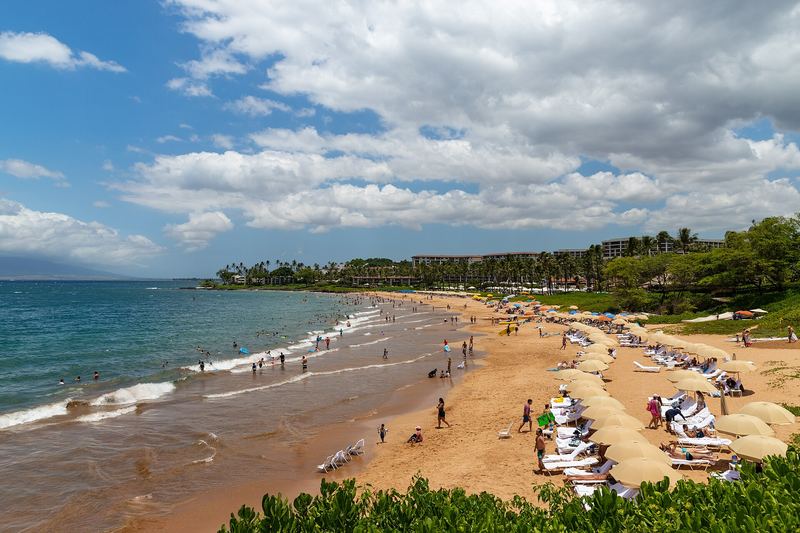
Maui's honeymoon hotels cluster in two places. In Wailea, Hotel Wailea is the kid-free, 72-suite Relais & Châteaux retreat with its private Treehouse dinner. Four Seasons Resort Maui at Wailea sits on the beach with a kid-free infinity pool. In Kapalua, Montage Kapalua Bay offers residence-style homes on the bluff. All typically run well into four figures a night in winter, approximately.
On the Big Island, the Kohala Coast resorts are spread out along a long coast, so they rarely feel crowded. Four Seasons Resort Hualalai is the most polished, with low-rise bungalows and a natural saltwater pool stocked with reef fish. Mauna Kea Beach Hotel, built by Laurance Rockefeller in 1965, sits on a crescent beach and is known for manta viewing from the point. Mauna Lani, an Auberge Resorts property, has ancient fishponds on its grounds. Top resorts often run about $1,000 to well over $2,000 a night in winter (approximate). Near the volcano, Volcano House on the caldera rim and cottages in Volcano village cost far less.
Food, Coffee and Evenings
Maui has more choice close to the resorts. Wailea's restaurants, including Spago at the Four Seasons, are some of the island's best. Paʻia has fish tacos and Upcountry towns like Makawao and Kula have farm-to-table cafés and bakeries. Look for ʻahi, ono and opah on menus and Kula strawberries at farm stands.
The Big Island's food is more of a road trip. Coffee is the headline. Small family farms along the slopes above Kealakekua and Hōlualoa offer tours and tastings. It is worth asking whether a bag is 100 percent Kona, since blends can contain as little as 10 percent. Each Kohala resort has a showpiece restaurant. Kona has casual fish shacks. Hilo's farmers market sells lilikoʻi and rambutan. Loco moco was invented in Hilo. Waimea's ranch country is known for grass-fed beef. Evenings on the Big Island tend to be early, because so many of its best moments happen at dawn or after dark.
Seasons and Packing
Both islands are warm year-round on their resort coasts, with highs in the upper 70s to mid 80s. On Maui, April to May and September to October are the sweet spots. On the Big Island, the window stretches a little wider, from April through June and again in September and October. Winter on both brings humpback whales and the highest holiday prices. Summer brings families.
Packing is where the Big Island asks more. It can be 85 degrees at your pool and 45 at the volcano or on Mauna Kea after dark, so bring real layers. Book a guided sunset and stargazing tour rather than driving the Mauna Kea summit road yourself, since it needs four-wheel drive and the altitude is serious. Maui's Haleakalā summit is cold at sunrise too, so pack a warm jacket for that morning at least. On both, use reef-safe sunscreen. Hawaii bans oxybenzone and octinoxate.
One Island or Two
With seven nights, choose one island. Maui gives you more beach time per day. The Big Island gives you more variety per day, at the cost of hours in the car. Our Big Island guide calls seven nights a comfortable minimum for that island alone.
With ten nights or more, the two pair well. Interisland flights in Hawaii are short. Start on the Big Island while you have energy for the drives, the manta snorkel and a night or two at the volcano, then fly from Kona (KOA) to Maui for four or five nights of resort time in Wailea or Kapalua. Kona has nonstops from several West Coast cities, including Los Angeles, San Francisco and Seattle, so an open-jaw ticket into Kona and out of Kahului can save backtracking. On Maui, remember that West Maui is still recovering from the 2023 Lahaina wildfire. Support local businesses and follow guidance on which areas are open.