Landscapes Side by Side
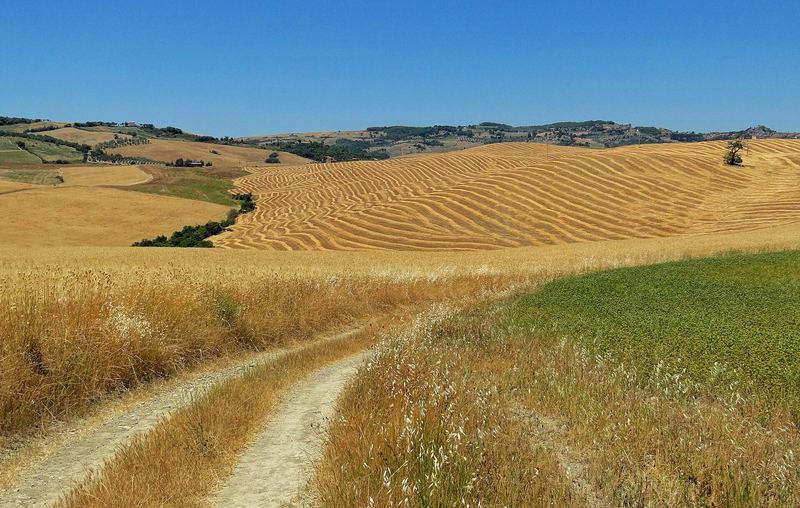
Tuscany's landscape is famous for good reason. The Val d'Orcia, a UNESCO World Heritage site, is all rolling hills, lone cypress groves and towns like Pienza and Montepulciano on the ridges. Chianti, between Florence and Siena, is greener and more wooded, with vineyards and castles. The scenery changes with every hour of light and invites slow drives with frequent stops.
Istria has a smaller, more intimate version of that countryside. The land rises from the coast into green hills topped with medieval villages, oak forests and vineyards. Motovun sits on a hill above the Mirna Valley, where truffles grow in the forests along the river. Grožnjan is an artists' town with galleries in stone houses. Then, a half-hour drive away, you are on the Adriatic, swimming off the rocks in Rovinj or in the wild coves of Kamenjak at the southern tip.
Tuscany offers grandeur. Istria offers the same flavors in a compact package with a coastline attached.
Wine and Truffles
Tuscany has the bigger names. Chianti Classico is lively and food-friendly. Brunello di Montalcino is powerful and age-worthy, with tastings in family cellars around the hill town. Vino Nobile di Montepulciano sits between the two. Vernaccia di San Gimignano is the white. Book tastings at well-known estates ahead and hire a driver so you can both enjoy them.
Istria's wines are less famous but very rewarding. Malvazija Istarska is the main white, light and aromatic. Teran is the native red, deep and acidic, made for meat. Small producers around Momjan, Buje and Poreč often sell directly from their cellars, with olive oil and ham on the side.
Truffles are a shared passion. In Istria, book a hunt with a local family and dog near Motovun or Buzet, ending with a truffle lunch. In Tuscany, white truffle season centers on San Miniato. In both regions, October and November bring truffle fairs and special menus, which makes fall the food lover's season.
Sea, Art or Both
Istria's biggest advantage is the water. The sea is warm enough for swimming from June. Rovinj lets you swim in the morning and drive to a hilltop winery after lunch. Take a boat into Lim Bay, a long fjord-like inlet with oyster farms. Pula's first-century Roman arena still hosts concerts and a summer film festival.
Tuscany's advantage is culture. Florence holds some of the most important art and architecture in the world. Siena's Piazza del Campo is one of the most beautiful squares in Europe and San Gimignano's towers glow at golden hour. Tuscany is not really a beach honeymoon, though countryside hotels have pools and natural thermal springs at Bagno Vignoni and Saturnia make lovely soaks.
If you want swimming on the same day as wine tasting, Istria wins easily. If you want museums, cathedrals and Renaissance piazzas, Tuscany is unmatched. Couples who want both can split a trip across the two.
Villas, Farmhouses and Prices
In Tuscany, where you sleep shapes the trip. Most couples choose a countryside base: a restored villa, a wine estate, a hilltop castle or a family-run agriturismo among olive groves. Borgo Santo Pietro, a medieval villa near Chiusdino on a roughly 300-acre organic farm, is a top-tier splurge with 22 rooms and suites, some with private pools, plus a Michelin-starred restaurant. Florence has excellent luxury hotels for a city interlude. Prices at the top end are high, especially in peak months.
Istria is generally cheaper for a comparable experience. In Rovinj, Grand Park Hotel Rovinj and Hotel Monte Mulini are polished choices with views and spas. Grand Park often starts around $600 a night, as an approximate guide. Inland, restored stone farmhouses with pools and agritourism stays are scattered across central Istria, often at much lower prices. San Rocco in Brtonigla is a family-run hotel with a strong restaurant.
In both regions, many couples split the stay between two bases.
Flights and Driving
Tuscany is easier to reach. Many US travelers fly nonstop into Rome and take the high-speed train to Florence in roughly an hour and a half. Florence (FLR) and Pisa (PSA) airports work if you connect through a European hub. From either, the countryside is typically an hour to an hour and a half by car.
Istria has no US nonstops. Most couples fly into Venice, Zagreb or Pula (PUY), connecting through a European hub. Pula is about 45 minutes from Rovinj, though many of its flights are seasonal. Trieste in Italy is about 90 minutes from northern Istria and Ljubljana is manageable too.
A car is essential in both. In Istria, roads are good and distances short, but hill town lanes are narrow, so rent something small and park outside the walls. In Tuscany, watch for ZTLs, camera-enforced limited-traffic zones in historic centers, which can lead to fines arriving months later. Park outside and walk in.
Crowds and Seasons
Both regions are best in late spring and early fall. In May and June, Tuscany is green and dotted with poppies. Istria has the sea warming up and wineries open with less traffic. September and October bring the harvest to both, with golden light and festivals.
July and August differ. Tuscany is hot, sometimes very hot. Florence and Siena are crowded, though countryside hotels with pools stay pleasant. Visit San Gimignano and Siena early or late to dodge tour buses. In Istria, summer crowds gather on the coast, where Rovinj and Poreč fill with European families and hotel prices peak, while inland hill towns stay cooler and quieter.
October and November are truffle season in both places. The weather cools, so the trip becomes about food, wine and walks rather than swimming.
Winter is quiet in both. Some coastal hotels in Istria close and many Tuscan country hotels shut for part of the season, but cozy dinners and olive oil pressing reward off-season travelers.
Combining Them in One Trip
Istria and Tuscany are roughly six hours apart by car, linked through Trieste and Venice, so combining them works best as a longer honeymoon with Venice as the bridge.
A two-week route might start in Istria with four nights split between Rovinj and Motovun, then cross to Venice for two nights. Seasonal passenger catamarans have linked Rovinj and Poreč with Venice in summer, which makes a romantic crossing when they run. From Venice, the high-speed train reaches Florence in about two hours. Finish with two nights in Florence and four or five at a countryside estate in Chianti or the Val d'Orcia, flying home from Florence or Rome.
With a week, choose one. Istria pairs naturally with Slovenia, Lake Bled and Ljubljana. Tuscany pairs with Rome, Venice, Lake Como or the Amalfi Coast.
In either region, plan one long lunch a day rather than two big meals. Portions are generous and the best tables are often in the countryside.