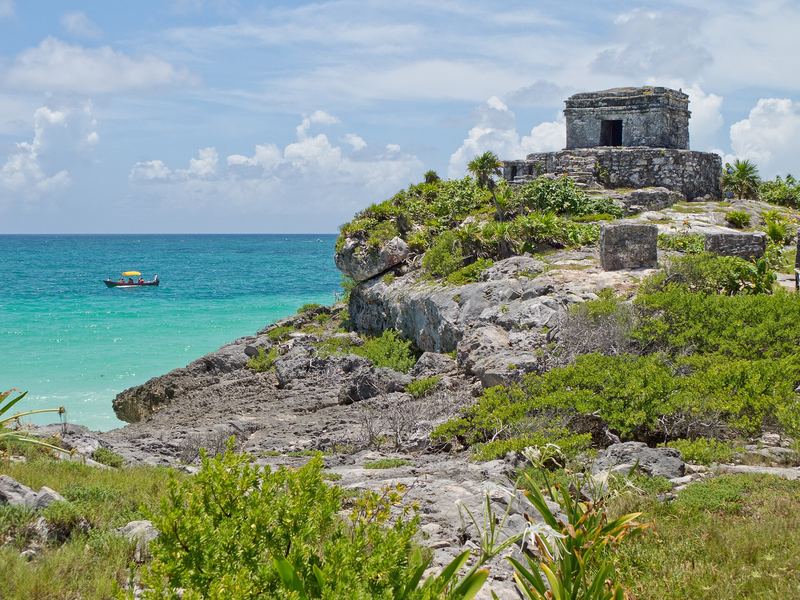
The Vibe
Tulum feels creative and sensual. Mornings start with yoga or a cycle to the beach, afternoons drift between cenote swims and beach clubs and evenings revolve around candlelit dinners at wood-fired kitchens. The town has grown fast and is busier than its hippie past suggests, but the beach road keeps its small-scale, intimate feel. It suits couples who want a honeymoon that looks and tastes interesting.
Isla Mujeres feels gentle and unhurried. Day-trippers arrive from Cancún mid-morning and leave by late afternoon, so evenings belong to the people who stay. You can cross the whole island in under half an hour, which means no long transfers and no feeling of being stuck inside a resort. Hidalgo Avenue fills with tables under string lights after dark. It suits couples who want an easy, walkable beach week with plenty of options but no pressure. Neither has a big club scene, though Tulum has more late-night energy if you go looking for it.
Swimming and Sunsets
Isla Mujeres has one of the most swimmable beaches on the coast. Playa Norte faces northwest, so it is usually sheltered from open-sea swell, with water flat enough to float in holding a drink. It also catches the sunset, which most Mexican Caribbean beaches don't. Playa Sol on the northwest tip is quieter. Don't swim on the windward east coast, where currents are strong.
Tulum's beach is classic Caribbean, with soft sand and blue water below the ruins and along the hotel zone. The waves are usually gentle, though the sea is more open than at Playa Norte. Tulum faces east, so you get sunrises over the water instead.
The bigger swimming story in Tulum is fresh water. Gran Cenote's clear pools and turtles and the caverns of Dos Ojos are some of the most beautiful swims in Mexico. Both destinations can see sargassum in warmer months. Playa Norte is often less affected than east-facing beaches, while Tulum's cenotes are never affected.
Getting There From the US
Isla Mujeres wins on simplicity. Fly into Cancún (CUN), which has nonstops from dozens of US cities. A taxi or transfer takes about 25 to 30 minutes to Puerto Juárez, where passenger ferries cross roughly every half hour during the day in about 20 minutes. Some upscale hotels arrange their own boat pickups. You can land in the morning and be on Playa Norte by lunch. Bring your passports even for the short trip.
Tulum takes longer by road. From Cancún it is about 1.5 to 2 hours by car, but Tulum International Airport (TQO) now has flights from a growing number of US cities and can cut the transfer. The Tren Maya rail line also stops in Tulum. Pre-book a private transfer from either airport.
On arrival, Isla Mujeres is easy on foot, with a golf cart for a day or two, about $50 for 24 hours. In Tulum, bikes are the romantic choice in the hotel zone, while a rental car helps for cenote and ruins day trips.
Where You Will Stay
Tulum's hotels are design statements. Azulik is a kid-free collection of treehouse-style villas built by hand from local wood and vine above the sea, with outdoor Maya tubs and the Kin Toh restaurant set in woven nests above the jungle canopy. Be Tulum, on the quieter southern stretch, is a polished boutique hotel with plunge-pool suites, a beach club and a Maya spa, recognized with a Michelin Key. Neither is all-inclusive, which suits Tulum's eat-out culture.
Isla Mujeres offers the all-inclusive option Tulum largely lacks. Almare, a Luxury Collection Resort, is the island's most polished kid-free all-inclusive, with 109 rooms and suites, six places to eat and drink and the Alma Spa. Impression Isla Mujeres by Secrets, also kid-free, sits at the north tip. Zoëtry Villa Rolandi is a small kid-free luxury hotel on the lagoon side with its own little beach. Small hotels such as Ixchel Beach Hotel sit right on the sand at Playa Norte.
Days Out
In Tulum, start at the ruins at opening time, before the heat and the tour buses. Bring swimsuits for the cove below if it's open. Spend a morning hopping between cenotes. Take a boat through the lagoons and mangrove canals of Sian Ka'an, a UNESCO World Heritage Site where dolphins and turtles are common, or float the ancient Maya channels near Muyil. Book a temazcal, a traditional sweat-lodge ceremony led by a local practitioner.
On Isla Mujeres, rent a golf cart and loop the island, stopping at the overgrown Hacienda Mundaca on the way to Punta Sur. There, a cliff path passes sculptures and the ruins of a small temple to Ixchel, the Maya goddess linked with the moon. Snorkel or dive among the sculptures of MUSA, the underwater museum. Take a day trip to Isla Contoy, a protected bird island with a daily cap on visitors. From mid-May to September, whale shark tours leave at dawn, with the best odds in July and August.
Food and Money
Tulum is a food destination. Candlelit restaurants on the beach road turn local fish, Yucatecan produce and heirloom corn into sophisticated menus; book the best-known tables weeks ahead in high season. In town, taquerías and markets are casual and affordable. Beach-road boutique hotels commonly run from several hundred to well over $1,000 a night in peak season.
Isla Mujeres is simpler and cheaper. Order tikin xic, fish rubbed with achiote and bitter orange then grilled in banana leaves, near the fishing docks, plus ceviche and fish tacos for a few dollars at lunch. Hidalgo Avenue prices are lower than in Cancún's Hotel Zone. Boutique hotels near Playa Norte often cost about $150 to $400 a night, while kid-free all-inclusives can run $500 to $1,000 or more for two.
All figures are approximate and change with the season. Carry pesos in both for small restaurants, cenotes and beach vendors. Don't drink tap water.
Timing, Safety and Doing Both
The seasons match. December through April is the best stretch for both, dry and less humid, with peak rates around Christmas and Easter week. Summer brings heat, afternoon showers and possible sargassum, but also whale shark season off Isla Mujeres. September and October carry the highest hurricane risk, so buy insurance that covers storms. November is a lovely shoulder month.
Both are in Quintana Roo, where the State Department advises increased caution. Use taxis your hotel or restaurant calls at night and keep valuables in your room safe. Tulum town has had nightlife-related crime, so stay with the dinner crowd. On Isla Mujeres, drive carts slowly after dark. Mosquitoes come out at dusk in both; if you're pregnant or hoping to be soon, check CDC travel health notices for Zika and dengue.
Combining them is easy. Spend three or four nights in Tulum, transfer north and finish with three nights on Isla Mujeres, just a short ferry and drive from Cancún's airport for the flight home.