Two Kinds of Barefoot
Tulum's barefoot is curated. The hotels along the beach road are built from palapa thatch, raw wood and vine, many by designers whose work is famous in its own right. Dinner is under the stars at wood-fired kitchens, mornings start with yoga and evenings might end in a Maya sweat lodge. The town has grown fast and isn't the sleepy hippie retreat it once was, but its romance is intact.
Holbox's barefoot is literal. The town is a grid of sand lanes painted with murals, small guesthouses and open-air restaurants. You can cross it on foot in about fifteen minutes. Evenings are mostly the sound of music drifting from beach bars and the occasional golf cart rattling by. The island is a bit scruffy around the edges, which is part of its charm. If you want style, buzz and a beautiful room, Tulum is the answer. If you want to feel like the clock has stopped, choose Holbox.
Water and Beaches
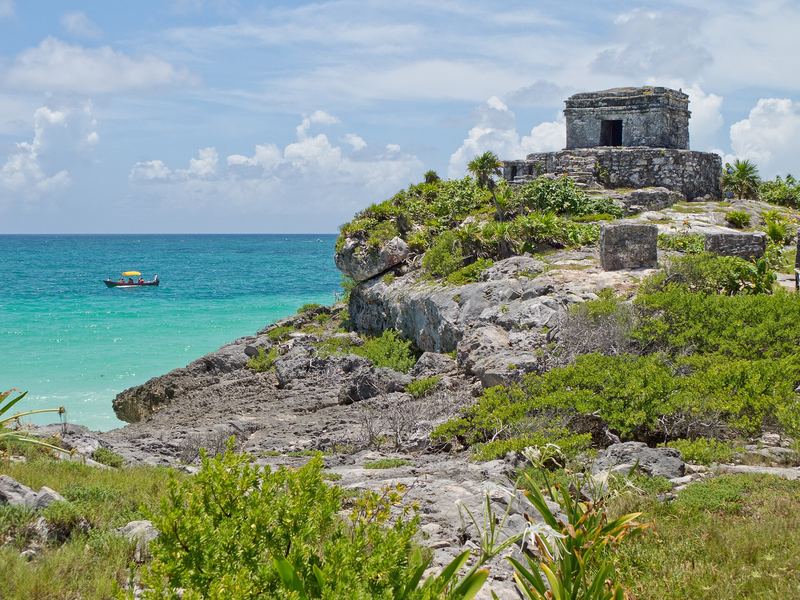
Tulum's sea is classic Caribbean, electric blue over white sand, with a Maya walled city perched about 40 feet above a turquoise cove at the north end of the beach. The waves are gentle on most days. South of the hotels, the Sian Ka'an Biosphere Reserve protects lagoons, mangroves and reef where dolphins and sea turtles are common.
Holbox's water is different. Because the island sits where the Caribbean blends into the Gulf of Mexico, it is shallow, warm and often a milky green. The north shore sandbars stay knee-deep far from land, so you can walk into the sea for what feels like half a mile. Toward Punta Mosquito, flamingos sometimes feed in the distance. The western beaches catch sunsets over the Gulf.
Both can see sargassum from late spring into summer, though Holbox's north shore often gets less than beaches south of Cancún. If clear blue water matters most, pick Tulum. For shallow, calm wading, Holbox is hard to beat.
Wildlife and Adventure
Tulum's adventures are mostly underground and historical. Cenote hopping is a rite of passage: Gran Cenote's clear water and turtles, then snorkeling through the caverns of Dos Ojos. Visit the ruins at opening time before the heat and tour buses, take a boat through Sian Ka'an's lagoons or float the ancient Maya channels near Muyil. A temazcal ceremony led by a local practitioner is a meaningful thing to share.
Holbox is about animals. From late May or June through September, with the best odds in July and August, whale sharks gather offshore to feed and you can slip into the water beside them. Choose an operator that limits swimmers and forbids touching. A three islands boat trip stops at Isla Pájaros for birds, Isla Pasión for a swim and the Yalahau freshwater spring. On dark nights near the new moon, a guided kayak trip near Punta Cocos lights up the water with bioluminescent plankton. Holbox belongs to the Yum Balam protected area, so nature is everywhere.
Where You Will Stay
Tulum's hotels are the destination's calling card. Azulik is the town's best-known design statement, a kid-free collection of treehouse-style villas built by hand from local wood and vine above the sea, with outdoor Maya tubs. Its Kin Toh restaurant serves dinner in woven nests above the jungle canopy. Be Tulum, on the quieter southern stretch of the beach road, is a polished boutique hotel with plunge-pool suites, a beach club and a Maya spa, recognized with a Michelin Key. Tulum town and the neighborhoods of Aldea Zamá and La Veleta are cheaper but require a ride to the beach.
Holbox has no giant all-inclusives. Casa Las Tortugas Petit Beach Hotel & Spa is one of the island's longest-running small hotels, with 30 boho-chic rooms on the beach just east of town, three places to eat, a spa and daily yoga. Ask any Holbox hotel about air conditioning, hot water and generator backup, since standards vary even at higher price points.
Getting There
Tulum is the easier trip. Tulum International Airport (TQO) has flights from a growing number of US cities, while Cancún (CUN), with far more nonstops, is about 1.5 to 2 hours north by car. The Tren Maya rail line also stops in Tulum. Book a private transfer either way. Once there, bikes are the most romantic way to get around the hotel zone and a rental car makes sense for cenote and ruins day trips.
Holbox takes most of a day. From Cancún, it is about two to two and a half hours by road to the port of Chiquilá, then a passenger ferry of about 25 to 30 minutes. Most couples book a transfer timed to meet a ferry. ADO buses cost far less. Small charter planes fly to the island's airstrip from Cancún and Playa del Carmen if you would rather pay for speed. Pack light, soft bags; rolling suitcases and sand streets don't mix. On the island, walk, cycle or rent a golf cart.
Food, Costs and Cash
Tulum's dining scene punches far above its size. Candlelit restaurants on the beach road turn local fish, Yucatecan produce and heirloom corn into sophisticated menus. The best tables book up weeks ahead in high season. In town, taquerías serve cochinita pibil tacos for much less. Boutique hotels on the beach road commonly run from several hundred to well over $1,000 a night, approximately, in peak season.
Holbox eats simply and well. Ceviche, grilled fish and shrimp tacos are on every menu, along with the island's famous lobster pizza, rich and a little over the top. Locals sell marquesitas and salbutes around the plaza. Our featured Holbox hotel starts at roughly $300 a night, with smaller cabañas for less, so Holbox is generally the cheaper stay.
Bring pesos to both. Some smaller places in Tulum don't take cards, while Holbox has few ATMs that can run dry on busy weekends. Carry more cash than you think you will need.
Timing and Combining Them
Tulum's best months run December through April, with dry days, cooler nights and the calmest seas; November is a lovely shoulder month. Holbox's dry season runs roughly November through April, with February through April most reliable for beach days, though winter can bring the occasional norte, a cold front with a day or two of wind. Summer is Holbox's whale shark season, hot and humid but worth it for wildlife lovers. September and October are the riskiest hurricane months for both, especially low-lying Holbox.
The two pair well on a ten-day trip. Spend three to five nights in Tulum for ruins, cenotes and dinners, then make the long road transfer north to Chiquilá and the ferry for three or four nights on Holbox. Put Holbox last; it is easier to slow down at the end. In both, use taxis your hotel calls at night, carry repellent and, if you're pregnant or hoping to be soon, check CDC travel health notices for Mexico.