Range Versus Rarity
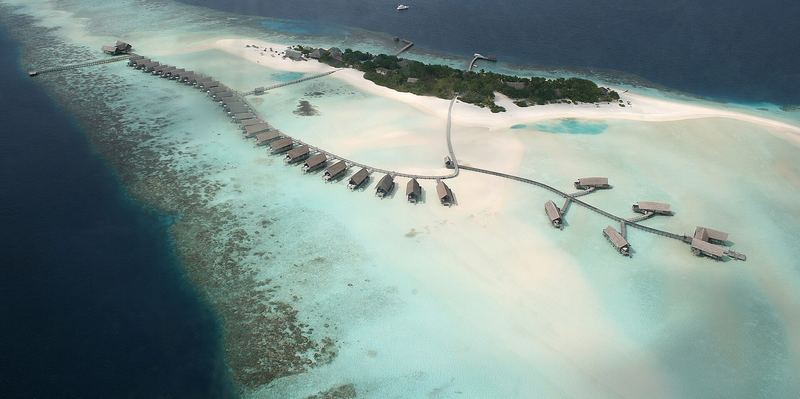
Lhaviyani's strength is that it offers something for almost every couple. Hurawalhi Island Resort is the honeymoon headliner: kid-free, with 90 villas, most with private infinity pools and two-thirds of them overwater. Its sister, Kudadoo Maldives Private Island, is an all-inclusive overwater retreat. Six Senses Kanuhura adds a wellness focus. Komandoo is small, kid-free and relaxed. Kuredu is large and sociable, Atmosphere Kanifushi is a long all-inclusive island and Le Méridien brings modern design.
Noonu is narrower and higher-end. Soneva Jani, on Medhufaru within a vast protected lagoon, is the resort that put the atoll on honeymoon lists. Its overwater Water Reserves have private pools, slides that curl into the lagoon and retractable roofs over the bed. The atoll's other resorts include some of the most exclusive private-island retreats in the country, alongside a few larger, more relaxed properties.
If you want to shop around, Lhaviyani makes it easy. If you've already fallen for Soneva Jani, Noonu's choice is made.
Underwater Highlights
Lhaviyani is the stronger atoll for diving. Kuredu Express is a fast channel where experienced divers ride the current with schools of grey reef sharks. Fushivaru Thila is a manta cleaning station where hundreds of individuals have been identified, busiest from about May to November. The Shipyard, off Felivaru, has two wrecks, one breaking the surface, with nurse sharks and soft corals. Snorkelers find healthy house reefs at most resorts.
Noonu's waters are known for dense schools of fusiliers and snappers, turtles, rays and reef sharks. Orimas Thila is a shark site and Christmas Tree Rock is celebrated for soft corals. The bigger draw for non-divers is the large spinner dolphin population. A sunset dhoni cruise often brings pods leaping alongside. Snorkel safaris combine dolphins with turtle reefs.
If one of you dives seriously, Lhaviyani gives more variety within a short boat ride. If you mostly snorkel and want dolphins, Noonu delivers that reliably.
Dinner Settings to Remember
Both atolls have a signature dinner. They could hardly be more different.
In Lhaviyani, it's the 5.8 Undersea Restaurant at Hurawalhi, an all-glass room sitting 5.8 meters below the lagoon. You eat a seafood tasting menu while reef fish, rays and sharks drift past. Tables are limited, so book when you reserve your villa. Some Lhaviyani resorts host Maldivian evenings with bodu beru drumming, a lively change of pace.
In Noonu, it's So Starstruck at Soneva Jani, an overwater restaurant with an observatory. A resident astronomer points out planets and star clusters between courses. Soneva Jani also has a beachside crab shack, plant-based menus, a complimentary ice cream parlor and chocolate and cheese rooms. The overwater Cinema Paradiso shows films on daybeds with wireless headphones.
In both atolls, all food and drink is resort-priced. Compare meal plans before booking. Hurawalhi offers an All Inclusive Plus plan; Atmosphere Kanifushi and Kudadoo are all-inclusive by design.
When to Go North
The two atolls share the central Maldives pattern. December to April is the dry season, with calm water, sunshine and the clearest visibility. Prices peak, especially over the holidays. May and October to November are shoulder months. June to September brings the southwest monsoon, with wind, waves and short bursts of rain between sunny spells.
Lhaviyani's calendar splits by activity. Mantas visit Fushivaru Thila mostly from about May to November, so the wetter months tempt snorkelers and divers who care about marine life more than a flawless tan. Channel dives with sharks are usually best in the drier months.
Noonu's calendar favors the dry season. Clear nights make the best stargazing. Calmer weather brings the most reliable seaplane conditions, since seaplanes are the only practical link. Check the moon calendar too: nights around the new moon are when the dark skies really perform.
For a summer honeymoon, Lhaviyani makes better use of the season. For a winter one, both shine.
Seaplane Times and Costs
With no nonstop flights from the US, both atolls start with a connection through a hub such as Dubai, Doha, Abu Dhabi, Istanbul or a European city to Velana International Airport (MLE).
Lhaviyani resorts are about 35 to 40 minutes away by seaplane. Noonu is about 45 minutes. Both fly in daylight only. If your international flight lands in the evening, book a night near the airport and do the same on the way home if needed.
Seaplane transfers are charged per person on top of the room rate and can be a sizable line item. Baggage limits are strict. Extra weight may be charged, so pack light.
On price, all figures are approximate. Villas at top Lhaviyani resorts often run from about $800 to $2,500 or more a night in peak season, with Hurawalhi from around $1,300. Soneva Jani's entry Water Retreats often start around $2,300 a night with breakfast. Lhaviyani's all-inclusive options can make the total more predictable. Noonu is generally the bigger splurge.
Off the Resort Island
Lhaviyani has more for curious couples to do beyond the reef. A guided visit to Naifaru, the atoll's capital, shows daily island life. Private dhoni trips look for dolphins. Sandbank picnics are easy to arrange from most resorts. Six Senses Kanuhura has a small private island for picnics.
Noonu keeps you closer to home, by design. Days here slide between villa, lagoon and spa. Paddleboarding across the shallow lagoon at sunrise is a quiet pleasure. A barefoot dinner on a deserted sandbank, lit only by lanterns, is the classic splurge.
On any local island visit, both of you should cover shoulders and knees. Alcohol stays at the resort. Pack reef-safe sunscreen and a rash guard for long snorkels. Bring a waterproof phone case. Between undersea dinners, dolphins and lagoon slides, you'll want photos from below the waterline in either atoll.
Pairing Them or Pairing Elsewhere
Lhaviyani and Noonu are neighbors, but moving between resorts in different atolls still requires a pre-arranged seaplane or boat transfer and adds cost. A two-resort trip is possible, for example four nights at Hurawalhi for the undersea dinner and diving, then four at Soneva Jani for stargazing. That combination works best in the drier months, when both seaplane legs are more reliable.
Most couples get more from pairing one of these with a final stop near Malé. Two or three nights in North or South Malé Atoll means your last transfer is a short speedboat that runs at any hour, which takes the pressure off a late flight home.
Whatever you choose, book the headline experiences early. The 5.8 Undersea Restaurant, observatory sessions and sandbank dinners are limited and weather-dependent. Mention your honeymoon when booking, since resorts often add small extras.