Getting Between Stops
Trains do the heavy lifting on this route. Roma Termini to Florence takes about an hour and a half on high-speed services. Florence to Salerno takes about three and a half hours and Florence to Naples about three. Book those tickets once you have dates, since the cheapest fares go early. Seats are assigned. There is space for a suitcase each at the end of the carriage.
Rent a car only for Tuscany. Pick it up in Florence and return it there, which avoids one-way fees. Watch for ZTL limited-traffic zones in every historic center; cameras fine you automatically if you drive in, so park outside the walls and walk.
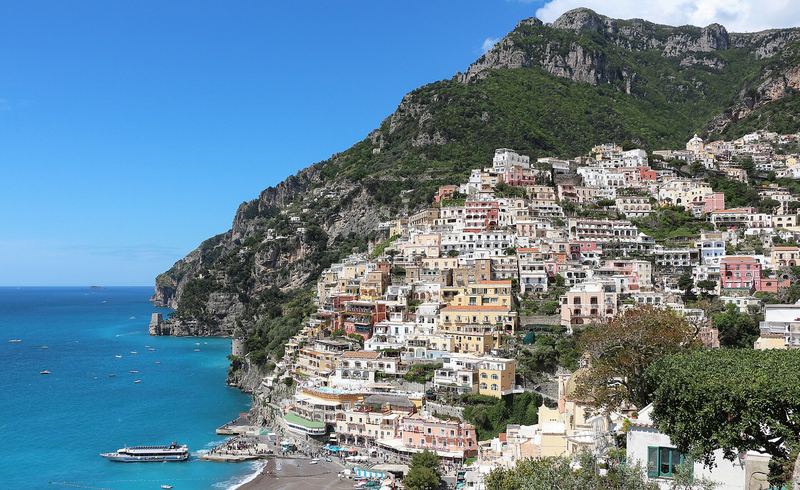
On the Amalfi Coast, do not drive. The coast road is narrow, parking is scarce and summer traffic rules restrict some cars. Use hotel transfers, the SITA bus for short hops and ferries between Amalfi, Positano and Capri.
Where to Stay
In Rome, sleep inside the historic center so you can walk home after dinner. The splurge is Hotel de Russie, a Rocco Forte hotel on Via del Babuino between Piazza del Popolo and the Spanish Steps, with a terraced Secret Garden. Smaller boutique hotels around Piazza Navona and Monti cost less.
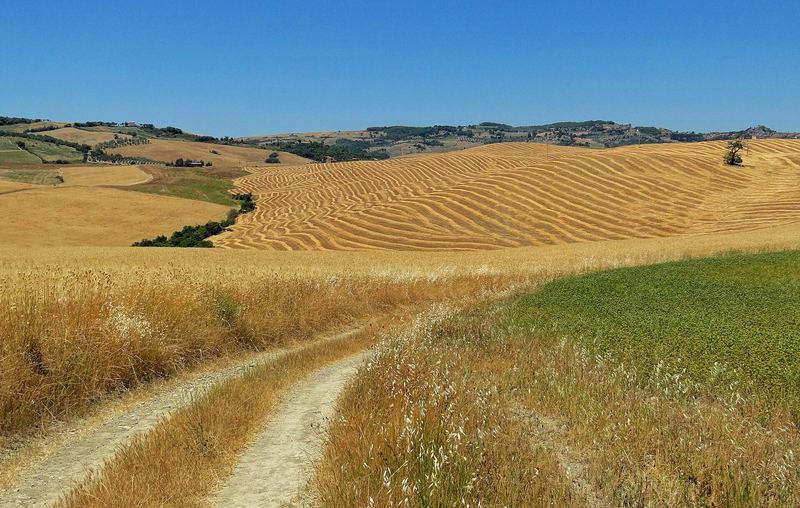
In Tuscany, choose a countryside base rather than a town. Borgo Santo Pietro, a medieval villa on a roughly 300-acre organic farm near Chiusdino, is our honeymoon pick. A family-run agriturismo in the Val d'Orcia costs far less and puts you closer to Pienza and Montalcino.
On the Amalfi Coast, your town shapes the trip. Le Sirenuse is the Positano classic. Hotel Santa Caterina, just outside Amalfi, has cliff elevators down to its own beach club. Caruso, A Belmond Hotel, sits high in Ravello. Monastero Santa Rosa is a 20-room former convent at Conca dei Marini.
When to Go
Late April, May, June and September are the sweet spots. Rome is warm without being punishing, the Tuscan hills are green or golden and the sea on the Amalfi Coast is swimmable from late May. Early October brings mellow light, the grape harvest in Tuscany and still-warm water, though a few coast hotels start to close by the end of the month.
July and August are peak season. Rome often runs well above 90°F, Tuscany is hot and dusty and the Amalfi Coast is at its busiest and most expensive. It still works if you plan sightseeing early and late and nap through the middle of the day.
Between November and March, many Amalfi Coast hotels close entirely. If those are your months, swap the coast for a longer stay in Rome and Tuscany, or look at Sicily instead.
Budget and Booking
Plan on roughly $450–1,000 a night for two in good mid-range to luxury hotels on this route, with the coast at the top of that range and the big-name Amalfi hotels well above it. These are approximate figures and they rise sharply in peak summer.
Book the Amalfi Coast first. The best hotels have limited rooms and often sell out for May through September six to nine months ahead. Reserve your boat day and any famous terrace dinners when you book the room. Rome and Tuscany are easier, though small farmhouse hotels also fill early for June and September.
Other costs to budget: high-speed train tickets, a rental car for three days, private transfers on the coast and timed tickets for the Vatican Museums, the Colosseum and the Borghese Gallery. Expect a nightly city tourist tax at each hotel, usually paid at checkout.
Make It Shorter or Longer
For a 9 or 10 day trip, keep Rome at three nights and the Amalfi Coast at four or five, then drop Tuscany. You lose the wine country but gain a calmer pace and one fewer travel day. The train from Rome to Salerno or Naples is fast, so the route stays easy.
With two weeks, add a fourth night in Tuscany and a sixth on the coast. Some couples split the coast between two hotels, for example three nights in Positano and three in Ravello, which gives you two very different views. Another option is two nights on Capri itself, which empties out once the day boats leave.
With 16 days, add Venice at the start on a separate open-jaw ticket. Fly into Venice, take the train to Florence, then follow this route south and fly home from Naples or Rome.
Honeymoon Tips
Pack light. You will carry bags onto trains and up the stairs of every Amalfi Coast town, so a medium suitcase each works better than one huge one. Comfortable sandals matter more than heels on cobblestones and steps.
Book the first slot at the Vatican Museums and Colosseum. Time Tuscan towns like Siena for early morning or late afternoon, when tour buses are gone. Most wineries need appointments; ask your farmhouse hotel to set up two tastings a day at most.
The sea on this coast is often deep right off the rocks, so swim where hotel staff or lifeguards are around and keep an eye on the wind on boat days. Carry a refillable bottle in Rome, where the public fountains run with drinkable water. Pickpockets work the busiest metro lines and buses, so keep phones in a front pocket.