Two Very Different Shapes of Coast
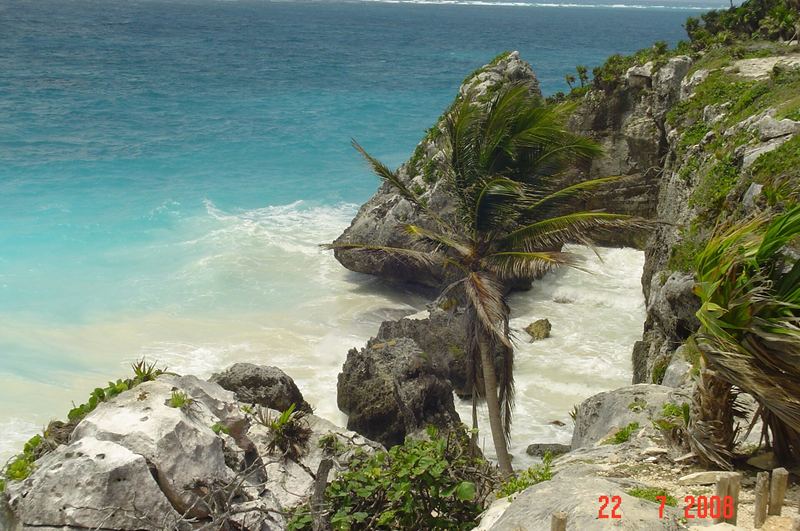
The Riviera Maya stretches for roughly 80 miles. Its character shifts as you drive. Puerto Morelos is low-key and close to the airport. Maroma and Mayakoba are resort enclaves with long beaches and lagoons. Playa del Carmen is a busy walking town built around Fifth Avenue, while Tulum mixes boutique hotels with a clifftop Maya site. Behind all of it lies jungle full of cenotes, the freshwater sinkholes that make this coast unlike any other beach destination.
Cozumel is compact by comparison. The west coast faces the mainland across a calm channel, with resorts strung south of the town of San Miguel and sunsets over the water. The east coast faces open sea and is barely developed, a long road of surf, rocks and simple palapa restaurants. The interior is low jungle with the San Gervasio ruins tucked inside.
If you like options and a different landscape each day, the mainland suits you better. If you like knowing a place well by the end of the week, the island wins.
Reef, Cenotes and Time in the Water
Both sit on the Mesoamerican Reef, the second-longest barrier reef in the world, but they use it differently. Cozumel's reefs are protected as a national park. Sites such as Palancar and Colombia start a short boat ride from the hotels. A steady current makes for easy drift diving, while nondivers can drift-snorkel along shallow reef with the current doing the work. Visibility is often excellent.
The Riviera Maya answers with variety. At Akumal you can snorkel beside green sea turtles grazing on seagrass with a licensed guide. Puerto Morelos has protected reef close to shore. And then there are the cenotes, where you float in fresh water under shafts of light in open pools or cave-like caverns. Nothing on Cozumel quite matches that.
For a couple where one dives and one does not, Cozumel is easier, since snorkel and dive trips often share boats. For couples who want a little of everything in the water, the mainland gives more range.
Getting There From the US
The Riviera Maya is one of the simplest honeymoon flights from the US. Cancún International Airport (CUN) has nonstops from dozens of US cities, often two to five hours in the air. Northern resorts such as Maroma and Mayakoba are about 30 to 45 minutes away, Playa del Carmen about an hour. The newer Tulum International Airport (TQO) helps if you are staying in the south.
Cozumel International Airport (CZM) has its own nonstops from hubs such as Dallas/Fort Worth, Houston and Miami, plus seasonal routes from other cities. When the timing works it is a lovely arrival, with most resorts 15 to 30 minutes from the runway. When it does not, you fly into Cancún, ride about an hour to Playa del Carmen and take the passenger ferry, which runs around 35 to 45 minutes.
Pre-book transfers either way. The Cancún arrivals hall is known for timeshare sellers. A waiting driver makes the first hour of your honeymoon far calmer.
Season, Sargassum and Storms
The two share a calendar. December through April is the sweet spot, with sunny skies, lower humidity and the calmest sea. That is also peak season, so book early around the holidays and spring break. November is a pleasant shoulder month on both. May is hot but often still dry.
The real difference is sargassum, the seaweed that washes up on Caribbean beaches mostly from late spring into summer. On the mainland it can affect any east-facing beach. Resorts rake daily, with conditions changing week to week. Cozumel has a quiet advantage here: the seaweed tends to land on the exposed east coast, while most resorts sit on the sheltered west side.
August through October is the heart of hurricane season for both, with September and October the wettest months. Prices fall then. If you book late summer or early fall, buy travel insurance and keep plans flexible. Diving on Cozumel stays good in the summer showers, which makes it a reasonable pick for a June honeymoon.
Where You Will Stay
The Riviera Maya is where this comparison is most lopsided. El Dorado Maroma has the Palafitos, widely credited as Mexico's first overwater bungalows, kid-free and all-inclusive. Hotel Xcaret Arte is a kid-free, art-filled resort whose rate covers dining, transfers and the Xcaret parks. In Mayakoba, Rosewood Mayakoba and Banyan Tree Mayakoba offer private pool villas set along freshwater lagoons and mangroves. Tulum adds boutique hotels with a more design-forward, bohemian feel.
Cozumel's stays are smaller in number and simpler in style. The best zone for most couples is the west coast south of San Miguel, where hotels face the calm channel and the reef, often with good snorkeling straight off the beach. There are a few kid-free all-inclusives and long-running upscale resorts, plus small hotels and rentals in town if you want to walk to dinner.
If the hotel is the centerpiece of your honeymoon, the mainland gives you more to dream about. If the hotel is mostly a base for time on the reef, Cozumel is plenty.
What Each One Costs
Both cover a wide range. Both also lean on all-inclusive pricing, which makes comparisons tricky. As an approximate guide, good midrange hotels on Cozumel run about US$150 to US$300 a night, with upscale resorts around US$400 to US$900 or more. The Riviera Maya stretches higher at the top, since the private villa resorts of Mayakoba sit among the most expensive stays in Mexico, but it also has strong-value all-inclusives that bundle food, drinks and sometimes transfers.
Outside the hotel, Cozumel tends to be cheaper day to day. Family restaurants in San Miguel serve cochinita pibil and grilled fish at local prices. A rental car for the east coast costs little. On the mainland, tours to cenotes, ruins and eco-parks add up fast, though they are also much of the fun.
Whichever you choose, carry some pesos for small vendors, tips and beach shacks. US dollars are accepted at resorts, but you usually get a better deal in local currency.
Doing Both in One Trip
This is one of the easiest pairings in Mexico. Ferries run often between Playa del Carmen and San Miguel, so splitting a week is simple. A common shape is four nights on the mainland at a lagoon villa or overwater bungalow, then three nights on Cozumel for reef days and slower evenings. You can also reverse it, finishing in Tulum for dinners and a sunrise at the ruins.
If you would rather not move hotels, a day trip works in either direction. From the Riviera Maya, take an early ferry for a snorkel boat to the southern reefs and be back for dinner. From Cozumel, cross to Playa del Carmen and hire a driver for a cenote and Tulum day.
One caution: check the cruise ship schedule before planning your Cozumel town day. On busy days thousands of passengers fill San Miguel, so use those days for boats or the empty east coast instead.