Forest Island or Full-Service Island
Langkawi feels like a nature reserve with a few excellent hotels in it. The island holds UNESCO Global Geopark status for its geology, so the scenery is limestone, jungle and mangrove rather than one more strip of resorts. Kilim Karst Geoforest Park in the northeast is a maze of mangrove channels between rock walls. In the northwest, the forest at Datai Bay comes right to the sand.
Phuket is livelier and more varied. Jungle-draped headlands separate coves with sand the color of brown sugar. The west coast has the big beaches, Old Phuket Town has pastel Sino-Portuguese shophouses and the island's southern tip at Promthep Cape draws a crowd at sunset. The calm and the busy sit close together.
If the honeymoon you picture is a walk with a naturalist before breakfast, Langkawi fits. If it is a villa pool in the afternoon and a different restaurant every night, Phuket does that better.
Flights and Transfers
There are no nonstop flights from the US to either island, so plan on roughly 20 hours or more of total travel.
Phuket International Airport (HKT) has direct flights from major Asian and Middle Eastern hubs, plus frequent short hops from Bangkok. That means more routings and more chances to use points. Resorts on the northwest coast are 15 to 20 minutes from the airport. Kamala and the west coast take about 40 to 45 minutes.
Langkawi International Airport (LGK) is served mainly from Kuala Lumpur, about an hour away on Malaysia Airlines, AirAsia or Batik Air, with some flights from Penang and Singapore. From the US, connect through Kuala Lumpur or Singapore. Datai Bay is about 40 minutes from the airport. Pantai Cenang is 15.
On the island, Langkawi's roads are quiet enough that renting a car is easy, with traffic on the left. Phuket's traffic is heavier. Use hotel transfers, Grab or a private driver rather than a scooter.
Same Sea, Same Seasons
Weather barely separates them. Both follow the Andaman Sea monsoon.
Langkawi's best stretch runs from about December to March, with flat seas, clear skies and reliable sunsets. April and May are hotter and stickier, with more afternoon storms but kinder rates. From about June to October the southwest monsoon brings heavy rain and rougher water. September is often the wettest month.
Phuket's beach season runs roughly November to April, peaking from December through February. March and April are hot, dry and often better value. From May to October, red flags go up on west-coast beaches and boat trips become less predictable.
Two small differences are worth knowing. Langkawi sees jellyfish most often from about January to June, so ask your hotel before long swims. Phuket's monsoon surf brings dangerous currents, so respect the flags. For a summer wedding, neither is ideal. Thailand's Koh Samui, on the Gulf side, is usually drier then.
Where You Will Stay
Langkawi's honeymoon stays cluster in a few spots. The Datai Langkawi is the classic: villas set among the trees on a calm bay backed by old rainforest, with nature walks led by resident naturalists. The Andaman shares the same bay. Four Seasons Resort Langkawi sits on the long pale beach at Tanjung Rhu, among mangroves and limestone islets. For something smaller and livelier, Casa del Mar is right on the sand at Pantai Cenang. Bon Ton has restored wooden village houses in gardens just inland.
Phuket has far more choice. Trisara is a hillside retreat on the quiet northwest coast, with private pool villas facing west over its own bay and the restaurant PRU. Keemala sits in the rainforest above Kamala, with 38 pool villas shaped like clay cottages, tents, tree houses and woven bird's nests. Amanpuri, Rosewood Phuket and the Laguna area add more options.
The rule on Phuket is location. Stay somewhere calm and visit Patong for an evening if you want it.
Budget Differences
At the top end, the two cost about the same. Langkawi's leading resorts and Phuket's best villas both run from several hundred dollars to well over $1,000 a night for two (approximate). The Datai typically starts around $800 a night (approximate), similar to an entry villa at Phuket's best-known retreats.
The gap shows in everything else. Langkawi is a duty-free zone, so wine and spirits cost far less than on the Malaysian mainland, where alcohol is heavily taxed. Grab rides are cheap and short. Night-market dinners cost very little.
Phuket gives you more range. You can find excellent pool villas well below the famous names. Thai street food, massages and private drivers are good value. Private boat charters to Phang Nga Bay are the big splurge and worth it.
In short, Langkawi is easier to keep calm and cheap outside the resort gate. Phuket rewards a slightly bigger budget with more to spend it on.
How You Will Fill the Days
Langkawi's best day is a private boat through the Kilim mangroves. Guides point out kingfishers, monitor lizards and white-bellied sea eagles, then lunch is fresh seafood at a floating fish farm. Ride the SkyCab early to the curved Sky Bridge, swim in the freshwater lake on Pulau Dayang Bunting and slide between the rock pools at the Seven Wells. End with a sunset sail from Telaga Harbour.
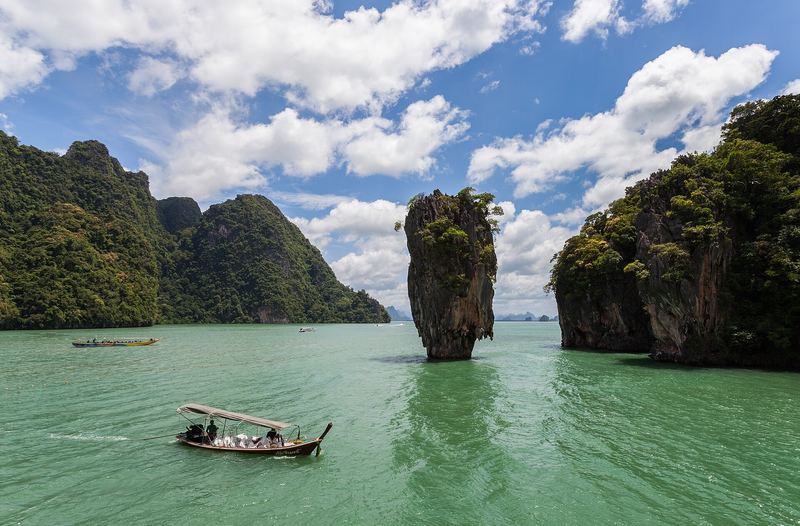
Phuket's essential day is Phang Nga Bay by private long-tail or speedboat. Kayak into sea caves and hidden lagoons, then drift past James Bond Island before the crowds arrive. Wander Old Phuket Town and its Sunday walking street market. Take a Thai cooking class together, or book a full-day trip to the Similan Islands between about mid-October and mid-May for clear water and granite boulders.
Phuket offers more to do. Langkawi has more wildlife and fewer people. Its quiet suits couples who want to do very little.
Food on Each Island
Phuket is the stronger food destination. The island has its own cooking, shaped by Chinese, Malay and Thai traditions: moo hong, a slow-braised pork belly, fiery southern curries and Hokkien-style noodles in Old Town. PRU at Trisara has long been recognized by the Michelin Guide. Several other island restaurants appear in it too. A beachfront seafood dinner where you pick your fish is an easy romantic night.
Langkawi's food is simpler and very good. Floating restaurants on the Kilim River serve fish, prawns and crab from the farm pens. Cenang's beach grills put out chili crab and butter prawns at night. The rotating night markets are where to try satay, ayam percik and kuih. Resort kitchens range from Malay tasting menus to Thai and Japanese. Most welcome outside guests for dinner.
On both islands, dress modestly away from the beach, especially at temples and mosques.
Splitting Your Nights
You can combine them, but there is no simple direct link, so it works best on a longer trip. Most couples connect through Kuala Lumpur, which turns the move into a travel day.
A more natural plan is to split nights within each island. On Langkawi, spend three or four nights at a secluded resort such as The Datai, then two near Pantai Cenang for easy restaurants and sunset walks on the sand. On Phuket, pair a villa on the northwest coast with a few nights in Krabi, a short drive or boat ride away, or add Bangkok or northern Thailand for temples and street food.
If you want both countries, fly into Phuket first while you are fresh, then finish on quiet Langkawi before connecting home through Kuala Lumpur or Singapore.