Landscape Versus Culture
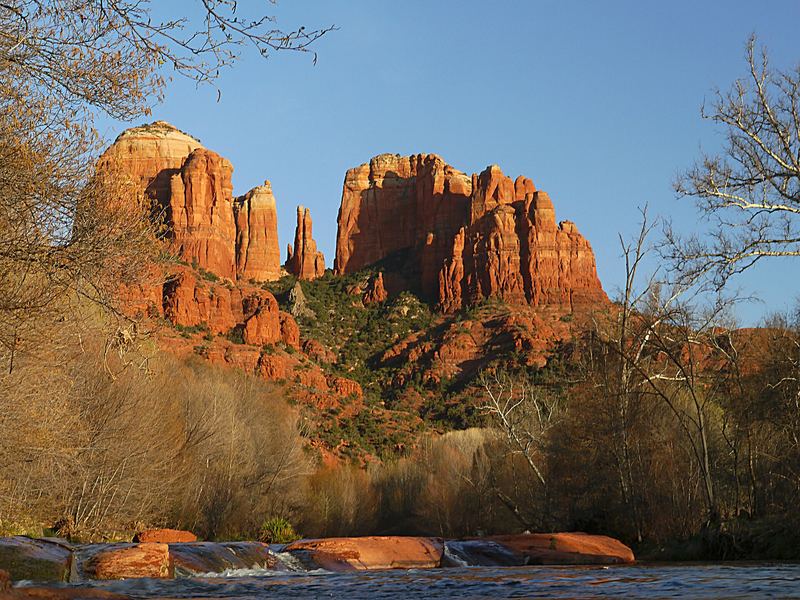
Sedona's star is the scenery. Driving in along State Route 179, Bell Rock and Courthouse Butte rise beside the road. The whole landscape seems to glow at sunset. National forest and wilderness wrap around the town. Many visitors also come for the vortexes, sites some believe radiate spiritual energy, while others just find the scenery restorative.
Santa Fe's star is its culture. City rules keep most buildings in Pueblo Revival or Territorial style, so the center is all rounded adobe, wooden vigas and portals. Native American, Hispanic and Anglo traditions show up in the jewelry sold under the portal of the Palace of the Governors, the art on Canyon Road and the chile on your plate. Artists from Georgia O'Keeffe onward have come for the light.
Sedona invites you outside. Santa Fe invites you to wander a compact old town, with the high desert of mesas and canyons waiting for day trips.
Resorts and Adobe Inns
Sedona's best stays are resort experiences. Enchantment Resort sits deep in Boynton Canyon, with casitas, private plunge pool suites and access to the Mii amo destination spa. L'Auberge de Sedona has fireplace cottages under sycamores along Oak Creek, with candlelit creekside dinners at Cress, minutes from Uptown. Ambiente, A Landscape Hotel, is a kid-free set of glass atriums with rooftop decks and fire pits for stargazing. West Sedona offers better value, while the canyons offer seclusion.
Santa Fe's best stays put you near the Plaza. Rosewood Inn of the Anasazi, a block away, has kiva fireplaces and strong regional design. La Fonda on the Plaza is a historic hotel with hand-painted details and a rooftop bar. Bishop's Lodge, an Auberge Resorts property in the foothills north of town, offers trails, horseback riding and a historic chapel. Ten Thousand Waves, a Japanese-style spa in the pines, has a small inn for couples who want to soak under the stars.
Hikes, Galleries and Day Trips
In Sedona, mornings belong to the trails. Take a sunrise balloon flight, then hike Devil's Bridge, a sandstone arch with sheer drops on both sides, or Cathedral Rock and the West Fork of Oak Creek. Ride a jeep along Broken Arrow, visit the Chapel of the Holy Cross built into the rock and browse Tlaquepaque's galleries. Sunset at Airport Mesa and a guided stargazing tour round out the day. The Grand Canyon is about two hours north.
In Santa Fe, spend an afternoon on Canyon Road, a lane of more than 80 galleries and sculpture gardens, then visit the Georgia O'Keeffe Museum. In summer, dress up for the open-air Santa Fe Opera after a tailgate picnic. Drive the High Road to Taos through Spanish colonial villages and the Santuario de Chimayó, or head to Abiquiú and Ghost Ranch for the red cliffs O'Keeffe painted. In early October, the Albuquerque International Balloon Fiesta fills the sky an hour away.
Spa Nights Under the Stars
Both are made for unwinding after a wedding. Sedona's spa culture is strong, with treatments blending massage, energy work and desert botanicals. Mii amo at Enchantment is the headline, while L'Auberge and Ambiente offer their own quiet retreats. As an International Dark Sky Community, Sedona makes stargazing easy, so check moon phases and aim for a new moon. Many couples also try a sound bath or a session with a local healer.
Santa Fe's signature soak is Ten Thousand Waves, where you can book a private outdoor tub after dark. Many couples call it their favorite memory of the city. Adobe inns with kiva fireplaces make winter evenings cozy, while the clear, high air brings big night skies just outside town.
One difference matters. Santa Fe sits at about 7,000 feet, well above Sedona, so the first day can bring headaches or fatigue. Drink lots of water, moisturize and go easy on margaritas the first night.
Chile, Wine and Dinner
Food is a bigger draw in Santa Fe. New Mexican cooking is its own cuisine, not Tex-Mex. The key question is red or green, meaning which chile sauce you want; ask for Christmas to get both. Try blue corn enchiladas, carne adovada, posole and sopaipillas with honey, plus a green chile cheeseburger. The city also has excellent fine dining with Southwestern ingredients, a margarita trail and wineries nearby, part of a winemaking history that goes back to Spanish missionaries.
Sedona's dining scene punches above its size, with Southwestern flavors like chiles, blue corn and prickly pear, plus plant-forward cafés. Many restaurants have patios facing the red rocks, so timing dinner for sunset is a priority. The Verde Valley wine region nearby has tasting rooms in Cottonwood, Jerome and Page Springs.
If you plan days around meals, Santa Fe gives you more to explore. In Sedona, the view from the table is often the highlight.
When to Visit
Sedona's classic seasons are spring (March to May) and fall (September to November), with warm days and cool nights for hiking. They are also the busiest and priciest. Summer brings heat well into the 90s and monsoon storms from roughly July to September. Winter is crisp and quiet, sometimes with snow on the red rocks and better rates.
Santa Fe is at its best in September and October, with sunny days, crisp nights, golden cottonwoods and roasting chile at the markets. May and June are dry and pleasant, with opera season opening in late June or early July. July and August bring monsoon storms and Indian Market, when hotels fill. Winter is cold with occasional snow on the adobe. The Christmas Eve walk on Canyon Road among glowing farolitos is one of the loveliest evenings in the Southwest. January through March is the cheapest time.
For a fall honeymoon, both are excellent. For spring, Sedona has the edge.
Prices and Putting Them Together
Santa Fe is generally easier on the budget. Plaza-area luxury hotels often run roughly $400 to $900 a night in high season. Sedona's top resorts typically run from roughly $700 to well over $1,500 a night in spring and fall. Both have cheaper inns and rentals. All figures are approximate.
For Sedona, fly into Phoenix (PHX), about two hours away, or Flagstaff (FLG), about 45 minutes. For Santa Fe, most couples fly into Albuquerque (ABQ) and drive about an hour north, though Santa Fe Regional Airport (SAF) has a few nonstops. You will want a car in Sedona. In Santa Fe the center is walkable, with a car useful for day trips.
The drive between them takes roughly six and a half hours along Interstate 40, so linking them makes a fine Southwest road trip of a week or more. Try four nights in Sedona with a Grand Canyon detour, then four in Santa Fe, adding Taos if time allows.