Caldera Views or Golden Coves
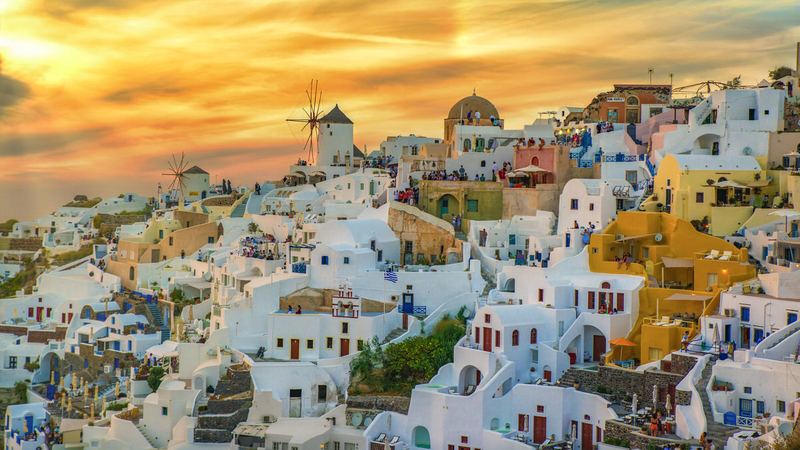
Santorini's scenery is vertical. From almost every terrace on the western rim you look down hundreds of feet to the flooded caldera and across to the volcanic islets in the middle. Hotels are built into the cliffs, which is why the views are so good and why there are so many stairs. What the rim does not have is beaches. Swimming means your pool, a caldera cruise, Ammoudi Bay below Oia, the Red Beach or the black sand at Kamari and Perissa on the east coast.
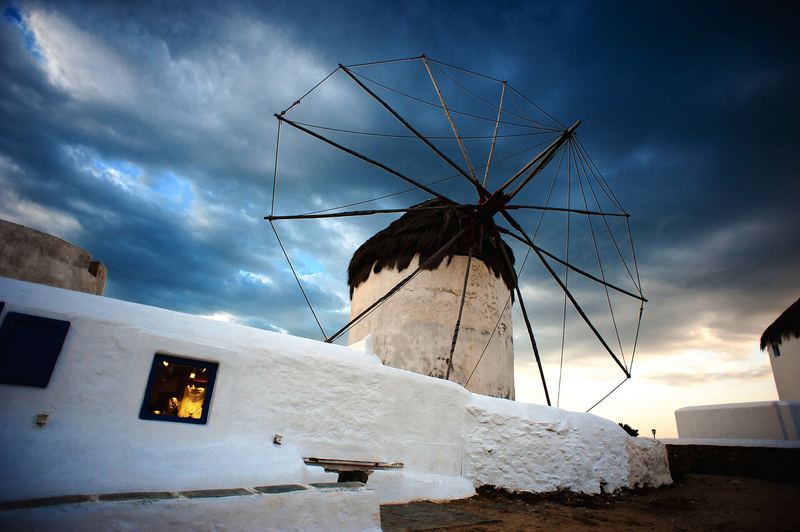
Mykonos is lower and softer, with golden sand. The south coast is lined with sheltered coves, from Ornos and chic Psarou to Platys Gialos, while Agios Sostis in the north is quieter. The water is clear enough to count pebbles. Mykonos Town, the Chora, is a maze of whitewashed lanes with Little Venice's houses hanging over the sea.
If you would rather look at the Aegean, choose Santorini. If you would rather be in it, choose Mykonos.
The Mood After Dark
Santorini evenings revolve around sunset. Crowds gather at Oia's castle, so many couples watch from their own terrace or from a catamaran instead. After that, dinners are long and nights are quiet, especially in Imerovigli, the highest point of the rim. Fira is the busiest village and the best for nightlife, but it is tame by Mykonos standards.
Mykonos is the Aegean's party island, with beach clubs where lunch turns into dancing and bars that hum until dawn. The good news for honeymooners is that it is entirely optional. Base yourselves at a resort with a private pool or beach, spend your days on boats and in coves, then dip into the energy for sunset cocktails in Little Venice and a late dinner in the Chora. Locals rarely sit down before 9 p.m.
Couples who want peace will find Santorini simpler. Couples who like a lively night once or twice will enjoy Mykonos more.
Suites, Pools and Where to Base Yourselves
Santorini has the stronger honeymoon suites. Katikies Santorini is the classic Oia choice, with white cave suites cascading down the cliff and three infinity pools. Canaves Oia Epitome, just beyond the village, trades caldera views for direct sea sunsets, with every suite and villa facing west over its own pool. Grace Hotel Santorini in Imerovigli has just 23 rooms, a showpiece infinity pool and Varoulko for dinner. Choose Imerovigli for calm and Oia for the famous lanes.
Mykonos has strong design and beach hotels. Cavo Tagoo, on a cliff just north of the Chora, is famous for its saltwater infinity pool and suites with private pools or hot tubs, plus a 24-hour shuttle into town. Santa Marina, on Ornos Bay, offers something rare on the island: a private sandy cove, with pool villas, butler service and a kid-free infinity pool.
On both islands, pay for a private plunge pool or hot tub. It becomes your retreat when the lanes get busy.
Best Months and the Meltemi
Both islands run from roughly April or May to October, with many hotels closed in winter. The sweet spots are similar: late May through June and mid-September through early October bring warm days, a swimmable sea and slightly thinner crowds. July and August are hottest, busiest and most expensive.
Mykonos has an extra factor in summer: the meltemi, a strong northerly wind that can blow for days in July and August. It keeps temperatures pleasant but makes north-facing beaches rough and some boat trips choppy. The south coast beaches are usually sheltered. Summer winds can also delay ferries between the islands, so do not book the last boat before your flight home.
Santorini's other summer factor is cruise ships, which crowd the lanes of Oia and Fira on busy days. Explore early in the morning and you will see the villages at their quietest. In April and late October, choose a hotel with a heated pool.
Things to Do Together
Santorini's best day is a catamaran across the caldera, with a stop to swim near the warm springs and sunset at sea. Walk part of the cliff path from Fira through Firostefani and Imerovigli toward Oia, about 6 miles in full, ideally in the early morning. Visit Akrotiri, the Bronze Age town preserved under volcanic ash. Tour a winery to taste dry, mineral Assyrtiko and amber Vinsanto.
Mykonos has Delos, the mythical birthplace of Apollo and Artemis, with temples, mosaics and the Terrace of the Lions about half an hour by boat from the Old Port. Go in the morning, since there is little shade. Charter a private boat along the south coast to swim in coves you can only reach by sea, then drive inland to Ano Mera for a taverna lunch in the square.
For couples with different tastes, both islands mix culture with water days. Santorini leans to wine and history; Mykonos leans to beaches and boats.
Food and the Bill
Both islands eat well. Santorini's volcanic soil gives intense cherry tomatoes for tomato fritters, creamy yellow fava, capers and white eggplant. Seafood tavernas at Ammoudi Bay are a classic lunch. Hotel restaurants such as Elements at Canaves Oia Epitome, Botrini's at Katikies and Varoulko at Grace offer tasting menus with views. Book sunset tables well ahead.
Mykonos punches above its size, with refined Greek tasting menus in town and seaside tavernas serving grilled fish and octopus. Try kopanisti (a tangy cheese spread) and louza, the island's cured pork.
Neither island is cheap. Santorini's caldera suites with private pools are among the priciest rooms in Greece in high summer. Mykonos is among the most expensive islands in Greece in July and August. June and September rates are often noticeably lower on both. On Mykonos, ask the price of sun beds, champagne and fish sold by weight at beach clubs before ordering, because bills climb fast.
Doing Both
This is the classic two-island Greek honeymoon and it works well. Ferries and high-speed boats link the islands several times a day in summer. Short flights via Athens are an alternative. Most US travelers connect through Athens or another European hub anyway. Mykonos Airport (JMK) is about 4 kilometers from town. Santorini's airport (JTR) is roughly 20 to 30 minutes from the caldera villages.
Plan three or four nights on each. Starting with Santorini gives you calm and views while you recover from jet lag, then Mykonos adds beaches and energy at the end. Reversing it works if you would rather finish with quiet sunsets. A week covers both comfortably. Ten days lets you add Athens or a quieter island such as Milos.
On both islands, taxis are limited, so pre-book hotel transfers. Pack soft bags: Santorini's caldera hotels mean stairs. Porters often carry luggage the last stretch through pedestrian-only villages.