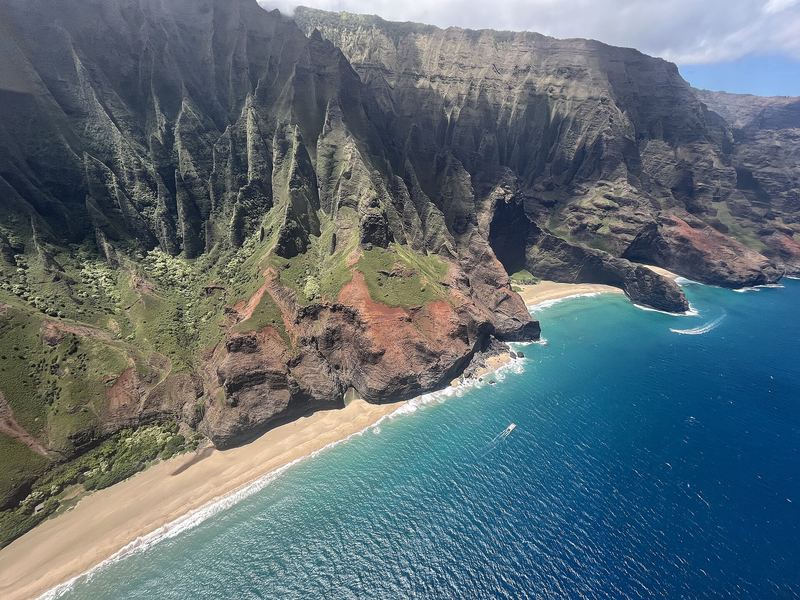
Scale and Scenery
Kauaʻi feels large in everything but population. The Nā Pali Coast is accessible only by boat, by helicopter or on foot. Waimea Canyon cuts a vast chasm through the west side. On the North Shore, the mountains behind Hanalei Bay are streaked with waterfalls. There are no high-rises and the towns are small, yet the landscape constantly reminds you how big the Pacific is.
St. John is intimate. The national park covers most of the island, so forested hills fall straight into a chain of bays with almost no development. Many beaches have only a pull-off, a path through sea grapes and a few other couples. Across the channel you can see Tortola and the British Virgin Islands. More than 20 marked trails cross the park, past Danish plantation ruins and petroglyphs, but the hikes are short and hot rather than epic. Kauaʻi is the island that makes you gasp. St. John is the island that makes you exhale.
In the Water
This is St. John's clear win. At Maho Bay, green turtles graze on seagrass in water shallow enough to stand in, best before 9 a.m. when the bay is glassy. Trunk Bay has an underwater snorkel trail with signs along the reef. Waterlemon Cay off Leinster Bay has healthier coral and eagle rays. On most days the sheltered north shore bays are calm enough for anyone.
Kauaʻi's ocean is more powerful and more seasonal. In summer, Tunnels Beach on the North Shore is good snorkeling and Nā Pali boat tours often add a snorkel stop, sometimes with spinner dolphins alongside. From October to April, big surf closes many North Shore beaches to swimming, though Poʻipū on the south shore stays calmer. Some famous beaches, like Hanakāpīʻai on the Kalalau Trail, have notoriously deadly currents. Lifeguarded beaches are the safest bets. Hawaiian monk seals and sea turtles need plenty of space. If one of you is a nervous swimmer, St. John is the kinder choice.
Getting There From the US
Where you live may decide this one. St. John is reached through Cyril E. King Airport (STT) on St. Thomas, which has nonstops from more than a dozen US cities including Atlanta, Charlotte, Miami, New York JFK, Newark and Dallas. New York to St. Thomas takes about four hours. From the airport it is a 30 to 45 minute taxi to Red Hook and a 20 minute ferry to Cruz Bay, with boats running about hourly through the day.
Kauaʻi's Līhuʻe Airport (LIH) has nonstops from several West Coast cities, with connections through Honolulu from elsewhere. From California that is a manageable flight. From the East Coast it means a long travel day with a connection and a five or six hour time change. Neither trip needs a passport for US citizens, though for St. John it is worth packing yours anyway, since a boat day to Jost Van Dyke in the British Virgin Islands requires one. On both islands, traffic is slow and roads are narrow.
Villas, Hotels and Costs
St. John is mostly a villa island. For a honeymoon that is often the best choice. Look for a pool and a view toward the BVI in the hills above Cruz Bay, Chocolate Hole or Great Cruz Bay. As a rough guide, a one-bedroom villa with a pool often runs about $400 to $900 a night in winter. Hotels are few: Gallows Point Resort has one-bedroom suites on the point by the ferry dock, The Westin St. John Resort Villas spreads over Great Cruz Bay with kitchens in every villa and Lovango Resort + Beach Club puts treehouses and glamping tents on a tiny cay ten minutes away by boat.
Kauaʻi has a clear standout hotel in 1 Hotel Hanalei Bay on the Princeville bluff, with views to Makana and the Bamford Wellness Spa. Expect well over $1,000 a night in high season. Poʻipū resorts and condos often cost less. Groceries and restaurants are expensive on both, since so much arrives by boat. All prices are approximate.
Best Months
St. John's best weather runs December through April: dry air, steady trade winds and highs in the low 80s. Villas book out months ahead and jeeps become scarce, so a winter honeymoon needs early planning. May and June are excellent and often overlooked, with warmer water, emptier beaches and lower rates. August through October is the heart of hurricane season. Some restaurants close for weeks in September.
Kauaʻi's seasons turn on the ocean rather than storms. May to September is the time for the North Shore and Nā Pali boat tours. October to April brings bigger surf and more rain to the North Shore, while humpback whales arrive offshore from roughly December. April to May and September to October balance weather, crowds and rates. Put simply, a winter honeymoon points toward St. John, a summer one points toward Kauaʻi and a late spring wedding works for either. If you travel to St. John in late summer or fall, buy insurance that covers named storms.
A Day in Each Place
A good Kauaʻi day starts in the clear morning at the Waimea Canyon lookouts, continuing up to Kōkeʻe for the view down into Kalalau Valley. After lunch in a small west-side town, you drive back toward Poʻipū for a swim, or head north for sunset at Hanalei Pier. Another day goes to a Nā Pali catamaran in summer or a doors-off helicopter flight. A third might be a guided Wailua River paddle and jungle walk to Secret Falls. Dinner is casual: a poke bowl, a shrimp shack or a sunset table at Kai Maikaʻi.
A good St. John day starts at Maho Bay with the turtles, then the stone windmill at the Annaberg sugar mill ruins and a swim out to Waterlemon Cay. Lunch could be tacos at Lime Out, a floating taco bar in Hansen Bay reached by boat or paddleboard. Late afternoon is the hike to Ram Head. Evening is a painkiller on a deck in Cruz Bay, then dinner with harbor views.
Getting Around and Practical Notes
You need a rental car on Kauaʻi. The highway does not make a full loop because the Nā Pali Coast blocks it, North Shore bridges are single lane and traffic through Kapaʻa can be slow. Reserve Hāʻena State Park entry early, since out-of-state visitors need advance reservations to reach Kēʻē Beach and the Kalalau Trailhead. Book summer boat tours early too. Pack reef-safe sunscreen, because Hawaii restricts certain ingredients.
On St. John, rent a jeep or small SUV and book it when you book flights. Roads are steep with tight switchbacks, traffic keeps left and free-roaming donkeys and goats wander onto the road after dark. Open-air safari taxis work if you stay in Cruz Bay. Arrive at popular beaches before 9 a.m., because day-trippers from St. Thomas fill Trunk Bay by midday. Mosquitoes can carry dengue in the Virgin Islands, so pack repellent. If you're pregnant or hoping to be soon, check CDC travel health notices.