Terraced River Gorge or Rolling Plains
The Douro is all vertical. Terraces climb the slopes so tightly that the hills look combed. The river below bends past one quinta after another. UNESCO lists the Alto Douro landscape as a World Heritage site. There are no big resort complexes, just estates spread along the river and its side valleys. Outside the small town of Pinhão you rarely see a crowd. The best views come from the viewpoints at Casal de Loivos or São Leonardo de Galafura at sunset.
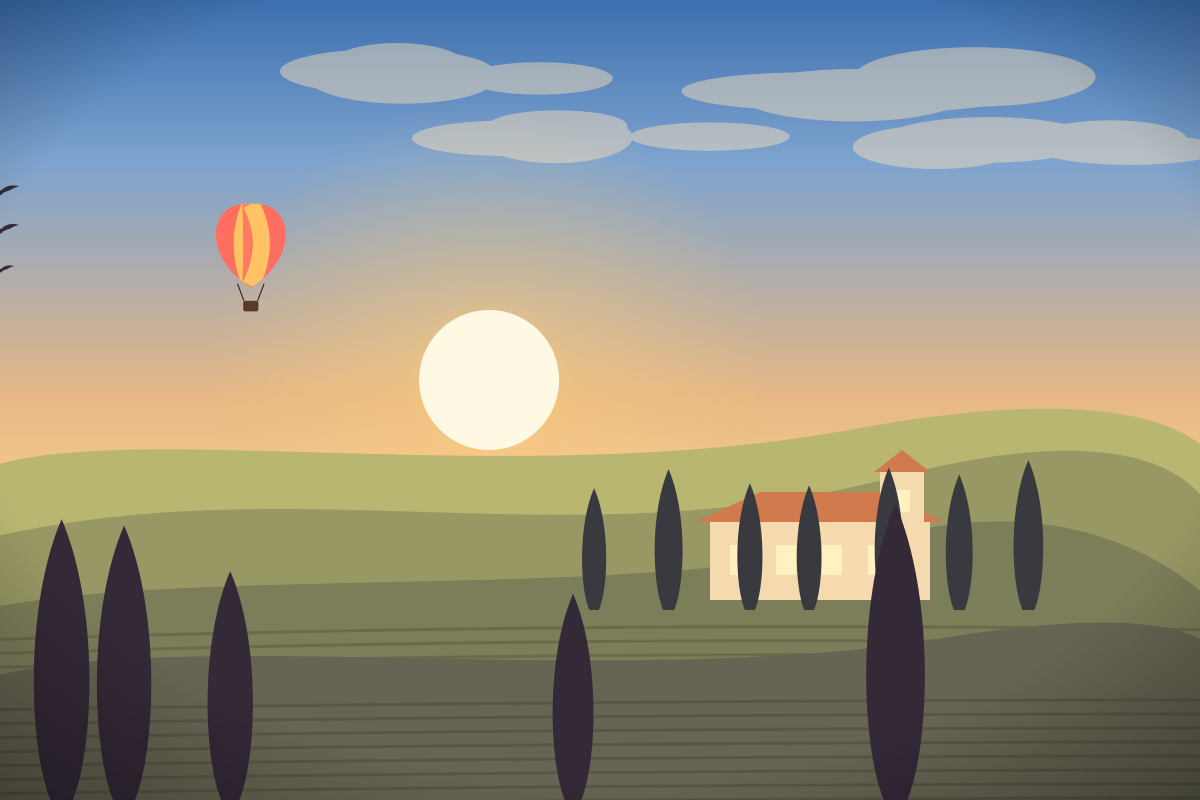
The Alentejo is horizontal. Golden plains stretch to the horizon under huge skies, dotted with cork oaks and olive trees. Storks nest on church towers. Hilltop towns like Monsaraz look over the Alqueva lake, while Évora's walled center holds a Roman temple and lanes of whitewashed houses trimmed in yellow. On the coast, the landscape shifts again to rice fields, pine forest and long sandy beaches.
Couples who want one jaw-dropping setting tend to pick the Douro. Couples who like variety tend to pick the Alentejo.
The Wine Experience
For serious wine lovers, the Douro is the bigger draw. You taste port where it grows, from white port and tonic as an aperitif to ruby, aged tawny and vintage. A 20-year-old tawny after dinner, with notes of caramel and walnuts, is the classic finish. The red table wines, built on Touriga Nacional and Touriga Franca, are now as celebrated as the ports. Ask about field blends from old vineyards, where dozens of grape varieties grow mixed together. Many quintas offer private tastings of older ports, vineyard picnics and cooking classes.
The Alentejo is more relaxed about wine. Its reds are generous and ripe, its whites fresh and easy. The standout experience is vinho de talha, wine fermented and aged in huge clay amphorae, a tradition dating to Roman times that survives around Vidigueira. Estate hotels pour their own bottles at dinner.
In short, the Douro is a wine pilgrimage. The Alentejo is a food and wine holiday.
Estate Hotels and Prices
In the Douro, base yourselves around Pinhão or between Régua and Lamego, which is closer to Porto. Six Senses Douro Valley occupies a restored 19th century manor near Lamego, with a large spa and a terrace above the vines, often from around $700 a night, as an approximate guide. The Vintage House sits on the riverbank in Pinhão. Winery stays such as Quinta Nova, Quinta do Vallado and Quinta da Pacheca, with suites built into giant wine barrels, let you sleep among the vines. Harvest dates sell out months ahead.
In the Alentejo, São Lourenço do Barrocal is a restored farming estate near Monsaraz with rooms in old workers' cottages, a vineyard and a pool among the oaks, typically from about $400 a night, as an approximate range. L'And Vineyards has suites with retractable ceilings for sleeping under the stars. On the coast, Sublime Comporta has cabins and a spa. Towns like Vila Nova de Milfontes cost much less.
Seasons and Heat
Both regions share a similar calendar, with spring and fall the best times.
In the Douro, September and early October are prime, since the harvest usually runs from mid-September into early October. Many estates invite guests to pick grapes or join the evening treading in stone lagares. In October the vines turn copper and gold. May and June are green and warm, with wildflowers and ideal pool weather. July and August get very hot in the valley, often well into the 90s and sometimes past 100°F.
In the Alentejo, April to early June is loveliest, with green fields, wildflowers and temperatures in the 70s. September and October bring the harvest and warm days. July and August are scorching inland, often in the high 90s and above, which is when the Atlantic breeze on the Comporta coast earns its keep.
Winter in both is quiet and cool, with bare vines, some closures and fireplaces. It suits couples who mostly want food and privacy.
Getting There and Driving
The Douro starts from Porto. Porto Airport (OPO) has a nonstop from Newark and seasonal service from Boston. From the city, the valley is about 1.5 to 2 hours by car. The romantic alternative is the regional train from São Bento station, which follows the river for the last stretch to Régua and Pinhão in about 2.5 hours. Once there, a car or private driver helps, since quintas sit on steep, narrow roads and taxis are scarce. If you plan to taste seriously, hire a driver for a day.
The Alentejo starts from Lisbon Airport (LIS), which has nonstops from about a dozen US cities. Évora is about 1.5 hours east by highway and Comporta about 1 to 1.5 hours south. Trains reach Évora, but a car is essential to reach the estates. Roads are quiet and well kept, with electronic tolls on highways.
If you would rather not drive, the Douro is easier to manage with a train and a driver.
Food on the Table
Douro cooking is hearty mountain food. Look for roast kid goat, veal from the local Mirandesa breed, smoked sausages and potatoes roasted in olive oil. Many quintas cook family recipes for guests. Estate dinners, paired with the house wines, are often the best meals of a stay.
Alentejo cooking turns humble ingredients into some of the most satisfying food in Portugal. Porco preto, the native black pig raised on acorns under the cork oaks, is grilled as secretos or cured as ham. Açorda is a fragrant bread soup with garlic, coriander and a poached egg. Migas and slow lamb stews fill out the menu. Sericaia, a cinnamon custard cake served with Elvas plums, is the dessert to order. Local cheeses from Serpa and Évora go well with amphora wine.
If food matters as much as wine, the Alentejo has a slight edge for variety. If the bottle is the point, choose the Douro.
Beyond the Vineyards
In the Douro, activities circle the river. Take a boat from Pinhão, ideally a small converted rabelo in late afternoon light. Drive the N222 between Régua and Pinhão, often called one of the finest drives in Europe. Two or three tastings a day with a long lunch between them is plenty, since the roads are slow.
The Alentejo offers more range. Watch sunset from the walls of Monsaraz, then join a stargazing session at the Dark Sky Alqueva reserve, one of the first places certified for its night skies. Walk Évora's lanes at dusk. Near Comporta, ride horses on the beach, visit the stilt fishing pier at Carrasqueira and kayak the Sado estuary, home to bottlenose dolphins.
Doing both is possible, though they sit at opposite ends of the country. A two-week route might run Porto and the Douro, then the train to Lisbon, then the Alentejo and the Algarve. With a week, pick the one that fits your arrival city.